
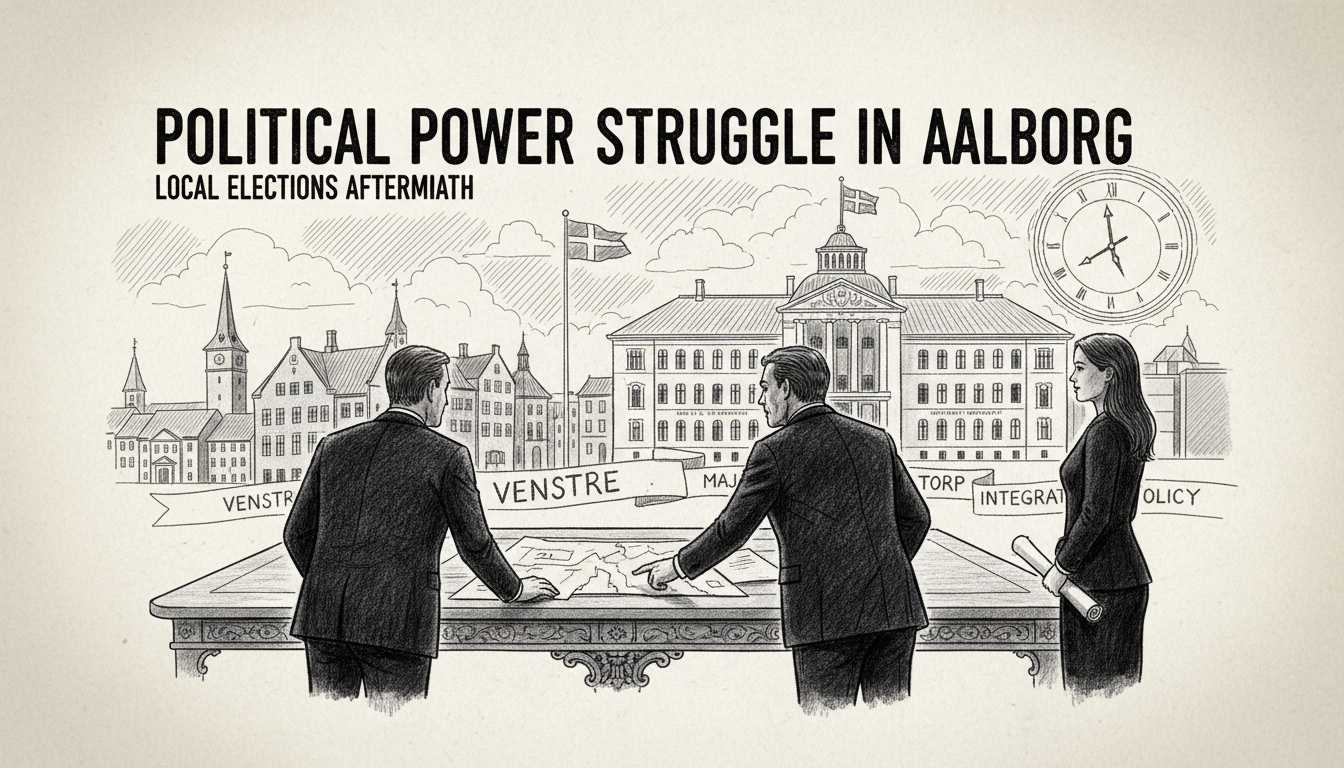
A dramatic political reshuffle unfolded in Aalborg following recent municipal elections, revealing deep tensions within Denmark's liberal party Venstre. The internal conflict centers on who should hold powerful committee leadership positions after the party failed to secure both allocated posts despite being the largest conservative faction.
Lasse Frimand Jensen appears likely to retain the mayor's position, while the two committee leadership posts went to Venstre's Jan Nymark Rose Thaysen and Conservative candidate Morten Thiessen. This outcome created immediate controversy because Maja Torp, who received 3,285 personal votes—more than 500 above Thaysen—was excluded from a leadership role despite her strong voter support.
The situation reflects broader challenges within Danish society news, where personal popularity sometimes conflicts with party hierarchy. Torp expressed disappointment about not receiving a position given her electoral performance, telling reporters she had actively pursued a committee leadership role because of her strong voter mandate.
Both politicians subsequently revealed a unique power-sharing agreement that could reshape Copenhagen integration models. Their arrangement specifies that the party's lead candidate will always hold the committee leadership position, with Torp having the opportunity to take over mid-term if she wins the party leadership in two years.
This political maneuvering demonstrates how Danish welfare system priorities often get caught in internal party dynamics. Municipal expert Roger Buch noted similar arrangements have occurred elsewhere, citing Slagelse Municipality where Social Democrats and Liberal Alliance initially agreed to share the mayor's position before abandoning the plan.
Buch emphasized that such agreements rely entirely on trust between politicians, noting they cannot be legally enforced if disagreements emerge. This observation proves particularly relevant in Aalborg's case, where political alliances have shown remarkable fragility in recent days.
The instability began when Jes Lunde from the Social Liberal Party initially supported Jensen as mayor, then briefly believed he could secure the position himself with conservative backing. Within three hours, the situation reversed again when Conservative Vibeke Gamst broke with her party to support Jensen instead.
These rapid political shifts highlight ongoing challenges within Denmark immigration policy implementation at the municipal level. Local power struggles often impact how integration programs and social services actually reach residents, with committee leadership positions directly influencing budget allocations and program priorities.
Maja Torp remains optimistic about her future prospects, telling supporters she hopes her strong voter support will be recognized as an opportunity within the party. Her case illustrates how personal popularity increasingly influences Denmark social policy negotiations, potentially reshaping traditional political pathways.
The Aalborg situation demonstrates that Danish political stability often depends on fragile agreements between individuals rather than rigid party structures. As municipalities nationwide implement new integration initiatives, such internal conflicts could affect how effectively policies translate into community-level programs.