
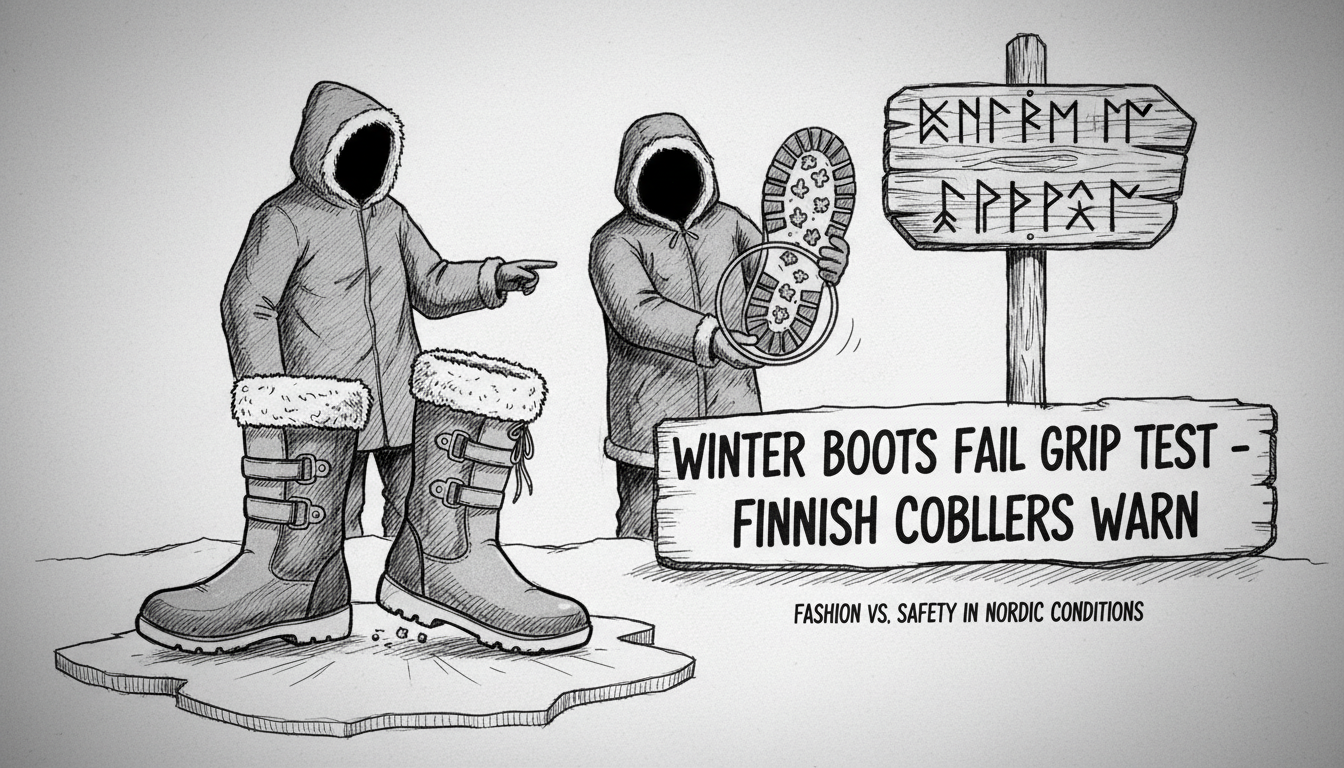
Choosing winter footwear in Finland's changeable climate presents real challenges. The weather shifts from freezing snow to thawing slush and back to ice. This creates slippery conditions where ice skates might seem more practical than shoes.
What makes the best winter boots for slippery Finnish conditions? Finnish footwear manufacturer Pomarin's sales manager Matti Noponen emphasizes sole material selection. He recommends thermoplastic rubber (TR) as the optimal choice. This material appears in car tires and resists wear while staying flexible in extreme cold.
Flexibility matters greatly for traction. Noponen explains flexible soles maintain grip without becoming rigid. Sievin Jokinen's CEO Juha Jokinen agrees about material softness. He notes soles must remain soft even in freezing temperatures.
Both experts highlight tread pattern importance. Deep patterns with sharp angles in multiple directions work best. Noponen says deeper grooves perform better in slushy conditions where water needs escape routes. Any texture beats completely smooth soles, which become dangerously slippery.
Transverse grooves often outperform longitudinal ones. They provide better forward friction during movement. Overly geometric patterns can create effectively flat surfaces. Variation remains essential rather than uniform designs.
Many winter boots feature specialized grip soles combining different rubber hardnesses. Softer rubber in central areas improves initial contact traction. Denser rubber along edges increases durability, particularly important since heels typically wear fastest.
Noponen discourages using spring-summer sole materials like polyurethane in winter. While lightweight and flexible for warm weather, they fail in cold conditions.
Master cobbler Ville Hasala confirms good winter soles need height and deep, irregular patterning. This helps snow and slush grip rather than slide. Like others, he recommends TR rubber for Finnish winters.
Consumers face challenges identifying sole materials, especially online. Hasala encountered disappointing online purchases where patterned soles still slipped or hardened in cold.
He avoids flat or very low-profile winter boots personally. Height provides insulation against ground cold. Popular Ugg-style boots with flat soles perform poorly in Finland despite warmth. Customers frequently bring them for traction enhancements. Knockoff versions perform worst with dangerously poor grip.
Cobblers commonly repair winter boots with worn heel taps. Soft rubber soles providing excellent grip wear quickly on urban asphalt. This creates a trade-off between maintaining flexibility and achieving durability.
The reality is many fashionable winter boots simply don't meet functional requirements for Nordic conditions. Consumers should prioritize technical specifications over style when navigating icy winters.