
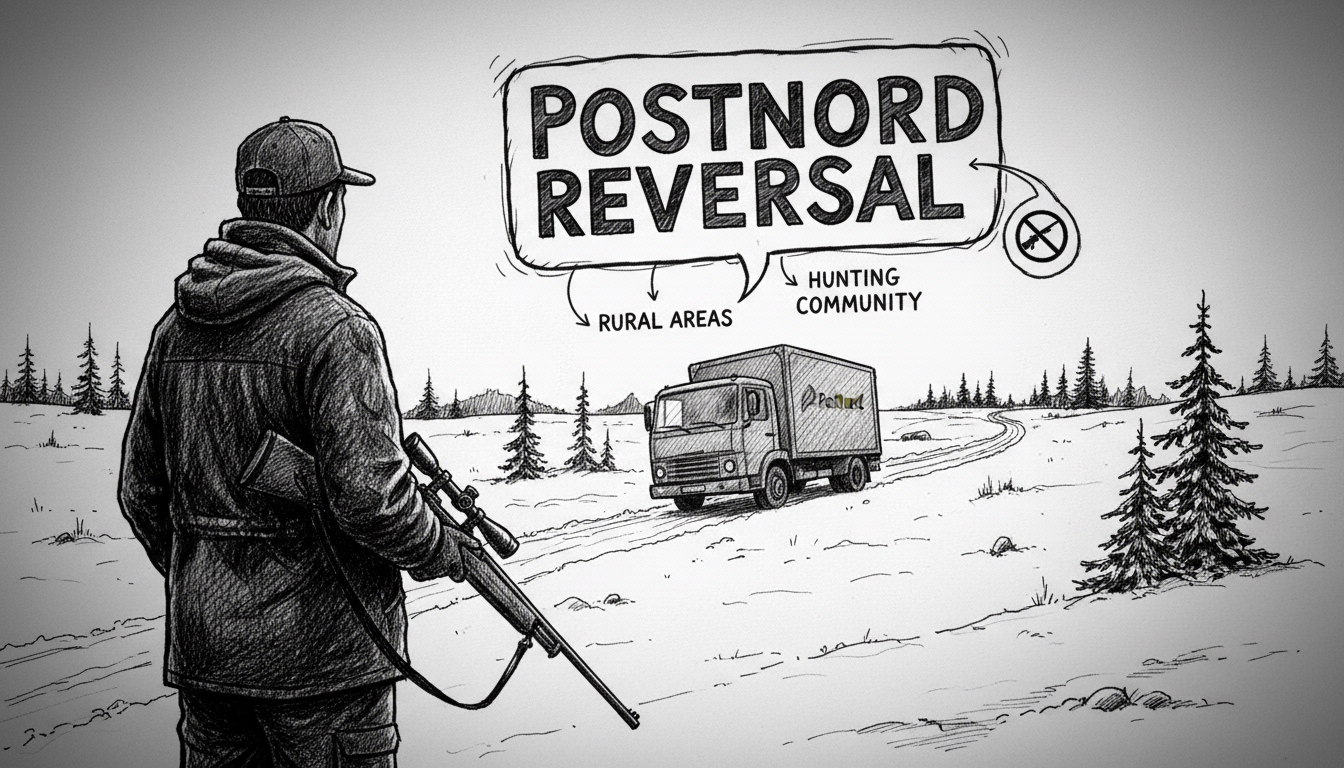
Sweden's national postal service has reversed its controversial plan to ban private weapon shipments. PostNord announced it will pause the decision following strong criticism from hunting communities across the country.
The ban was scheduled to take effect at the start of the new year. It would have prohibited individuals from sending firearms or weapon components through the postal system. This created immediate concerns for Sweden's hunting community, which relies heavily on postal services for equipment transport.
Anders Porelius, PostNord's press manager, acknowledged the company had listened to the feedback. He stated in an email that hunters had raised valid concerns about the practical consequences. Porelius noted that PostNord currently represents the only viable shipping option for many rural residents.
The reversal came after political pressure mounted quickly. PostNord's CEO was summoned to appear before Parliament's traffic committee to explain the original decision. The company now plans to convene discussions with stakeholders to find a sustainable solution for all parties involved.
This situation highlights the unique challenges facing Sweden's postal system. Many remote communities depend entirely on PostNord for essential services. The country's vast rural areas and dispersed population create logistical hurdles that private carriers often cannot address profitably.
Sweden has one of Europe's highest rates of gun ownership per capita, primarily driven by hunting traditions. Approximately 300,000 Swedes hold hunting licenses, representing about 3% of the population. Hunting remains deeply embedded in Swedish culture, particularly in northern regions where it represents both recreation and practical wildlife management.
The proposed ban raised questions about how Swedes would maintain and repair firearms without accessible shipping options. Many specialized gunsmiths and repair services operate in urban centers, requiring rural hunters to ship their equipment for maintenance.
PostNord's initial decision appeared to overlook these practical realities. The swift reversal demonstrates how essential services must balance regulatory concerns with practical community needs. The company now faces the challenge of developing a solution that addresses security concerns while supporting legitimate hunting activities.
What happens next remains uncertain. PostNord has committed to dialogue but has not specified a timeline or framework for finding alternatives. The temporary pause provides breathing room but leaves long-term questions unanswered about firearm logistics in Sweden's remote regions.
This episode reflects broader tensions between urban policy-making and rural realities in Nordic countries. Similar challenges have emerged in Norway and Finland, where national services struggle to balance efficiency with accessibility in sparsely populated areas.