
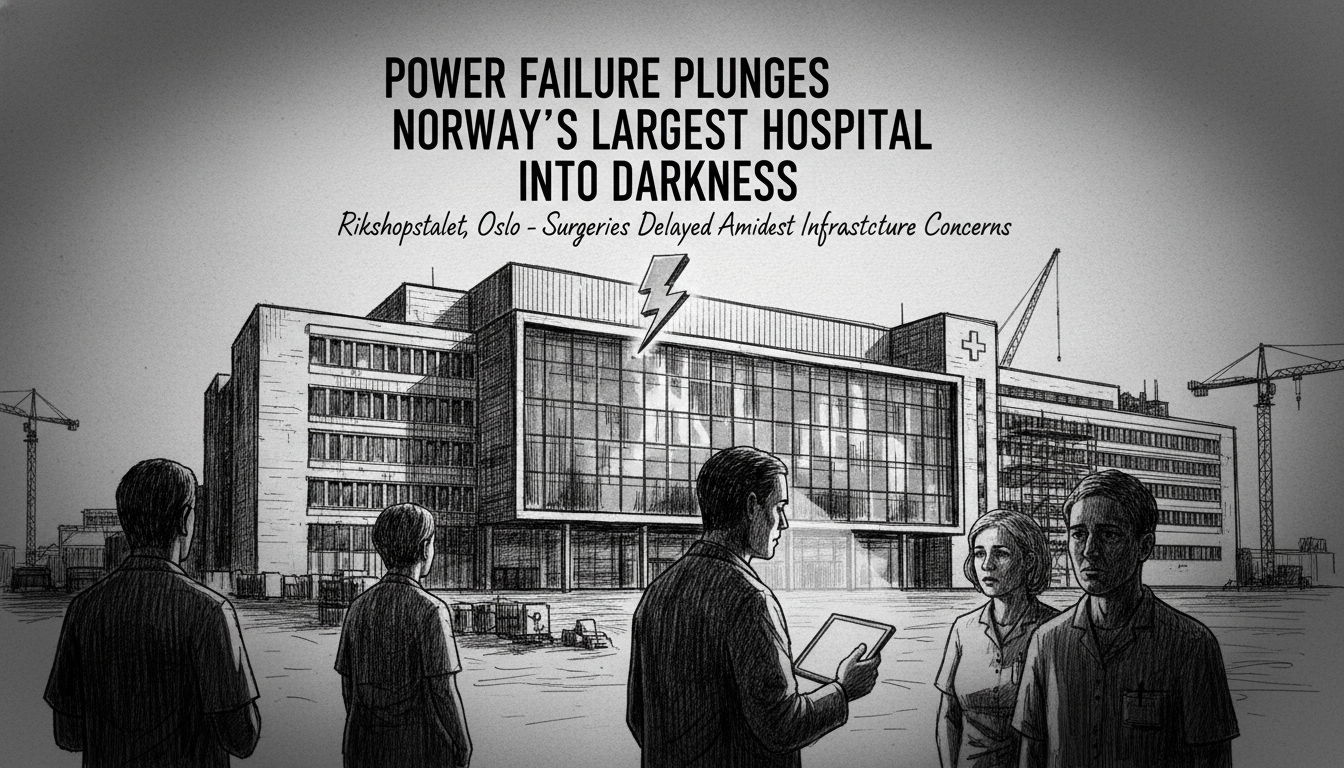
Norway's largest hospital, Oslo University Hospital Rikshospitalet, activated emergency procedures on Thursday after a power supply failure. The incident forced the postponement of scheduled surgeries and created operational challenges within the critical facility. Hospital officials confirmed the disruption, stating normal power supply was interrupted for several hours.
Anders Bayer, a press officer for the hospital group, said in a statement that emergency protocols were immediately enacted. 'Rikshospitalet does not have normal power supply. Emergency procedures are in effect. Surgeries are postponed. We are working to solve the problem,' Bayer stated around midday. The cause of the failure remained unknown at the time.
An employee described how parts of the building grew cold and staff were instructed to reduce electrical load on the system. The hospital's crisis management team monitored the situation closely, though the general alert level was not elevated. By early afternoon, the hospital reported the problem was resolved.
Notably, the local power grid operator's outage map showed no registered power failures in the surrounding Oslo area. This points to an internal infrastructure issue rather than a broader grid failure. Rikshospitalet is a central part of Oslo University Hospital, the nation's largest medical institution with over 25,000 employees. Extensive construction work is currently underway on and around the hospital site, a potential factor in such disruptions.
This event raises immediate questions about infrastructure resilience in vital public institutions. Norway prides itself on reliable public services and advanced infrastructure, making such failures at a flagship hospital particularly concerning. The incident occurred without external grid problems, suggesting vulnerabilities in on-site systems or their integration with ongoing construction projects.
For international observers, this highlights a tension within the Norwegian model. The country invests heavily in public welfare and maintains sovereign wealth from oil and gas revenues, yet basic operational reliability can face unexpected tests. The hospital's swift activation of emergency protocols shows preparedness, but the underlying cause demands scrutiny. Similar incidents in recent years at other Nordic hospitals have sparked debates about maintenance budgets and the strain of aging facilities coupled with modern expansion.
Patients and their families experience direct impact from such disruptions, with delayed surgeries creating anxiety and potential health consequences. The event serves as a stark reminder that even in nations with robust public systems, critical infrastructure requires constant vigilance and investment. The hospital's statement did not specify how many surgeries were affected or the criteria for postponement, details that will likely emerge in coming days.
What happens next involves a technical investigation to pinpoint the failure's origin. The hospital administration must review its emergency power systems and coordination with construction managers. For the Norwegian public, it is a case study in how their high-trust society manages unexpected crises in its most essential institutions. The response was procedural and calm, but the occurrence itself is a procedural failure that warrants a transparent review.