
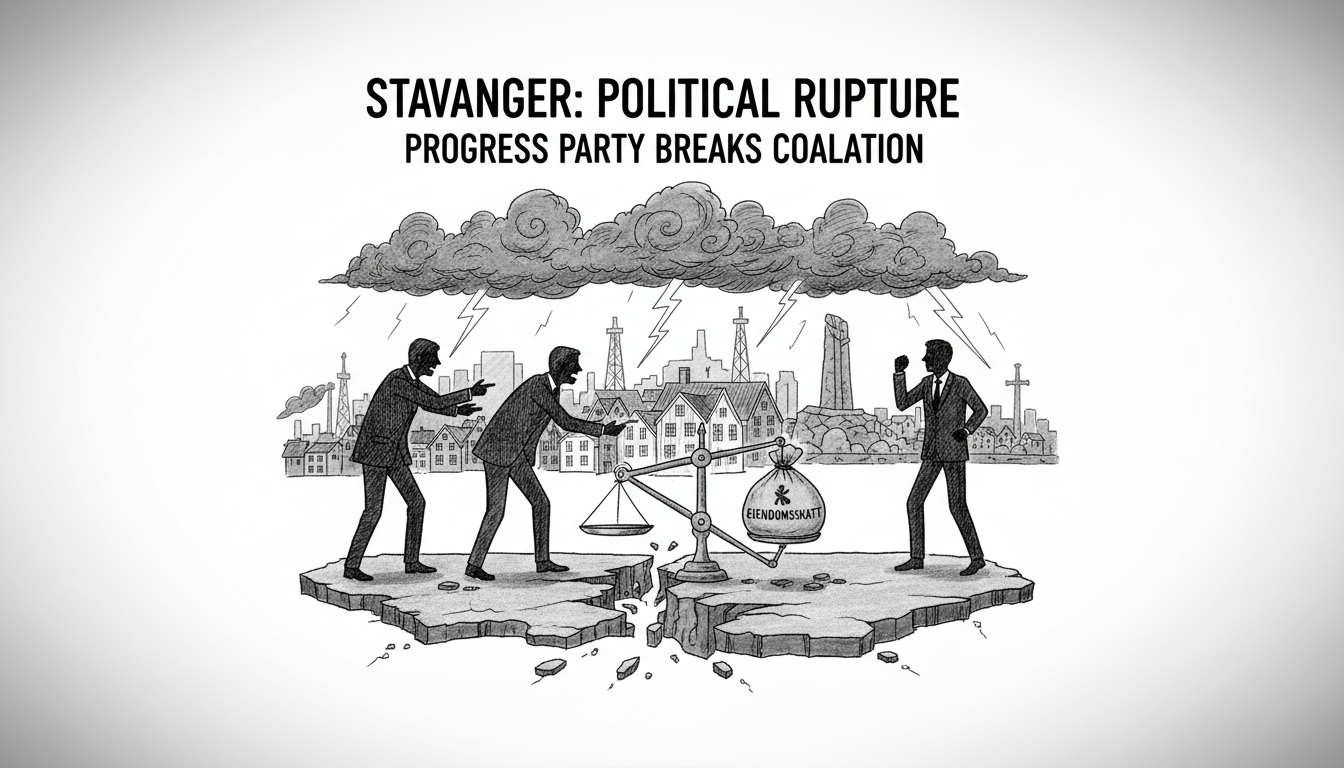
The Progress Party has dramatically exited Stavanger's ruling conservative coalition. This political rupture occurred during heated budget negotiations. The split centers on a controversial proposal to reintroduce municipal property tax.
Sources confirm the Progress Party abandoned negotiations on Thursday. The remaining coalition partners had united behind the tax proposal. These parties include the Conservatives, Christian Democrats, Liberals, Center Party, and Pensioners' Party.
Their plan involved implementing a 0.1% property tax with a 750,000 krone exemption threshold. This tax structure would generate approximately 77 million kroner in additional municipal revenue. Stavanger faces pressing budget constraints that make these funds crucial.
This political development signals deeper ideological divisions within Norway's conservative bloc. The Progress Party has historically positioned itself as the anti-tax alternative to more centrist conservative parties. Their departure from coalition discipline over taxation matters reflects this core identity.
Norwegian municipal politics operate through delicate coalition agreements. Local governments typically form when multiple parties negotiate shared platforms. These arrangements can fracture when fundamental policy disagreements emerge, especially regarding taxation.
Property tax represents one of Norway's most contentious political issues. Many municipalities eliminated the tax during periods of economic prosperity. Now, with tighter budgets and increased service demands, some local governments are reconsidering this revenue source.
Stavanger's economic situation adds complexity to this political crisis. As Norway's energy capital, the city has experienced both boom periods and recent challenges in the oil sector. Municipal finances face pressure from fluctuating energy markets and changing economic conditions.
The coalition collapse raises immediate questions about Stavanger's governance stability. Without the Progress Party's support, the remaining coalition partners must either renegotiate their budget proposal or seek alternative governing arrangements. This could potentially involve cross-bloc cooperation with opposition parties.
International observers should note that Norwegian local politics often preview national trends. What happens in Stavanger today might influence tomorrow's national debates about taxation and conservative coalition dynamics. The Progress Party's firm stance against property taxes demonstrates their commitment to core principles, even at the cost of political alliances.
What happens next remains uncertain. The municipality needs to pass a budget, and the political landscape has fundamentally shifted. Other parties must now calculate whether to compromise on the tax issue or risk further political instability.
This situation exemplifies the constant tension in coalition politics between principle and pragmatism. The Progress Party chose principle, while their former partners prioritized municipal finances. The consequences of this choice will unfold in coming weeks as Stavanger seeks new governing solutions.