
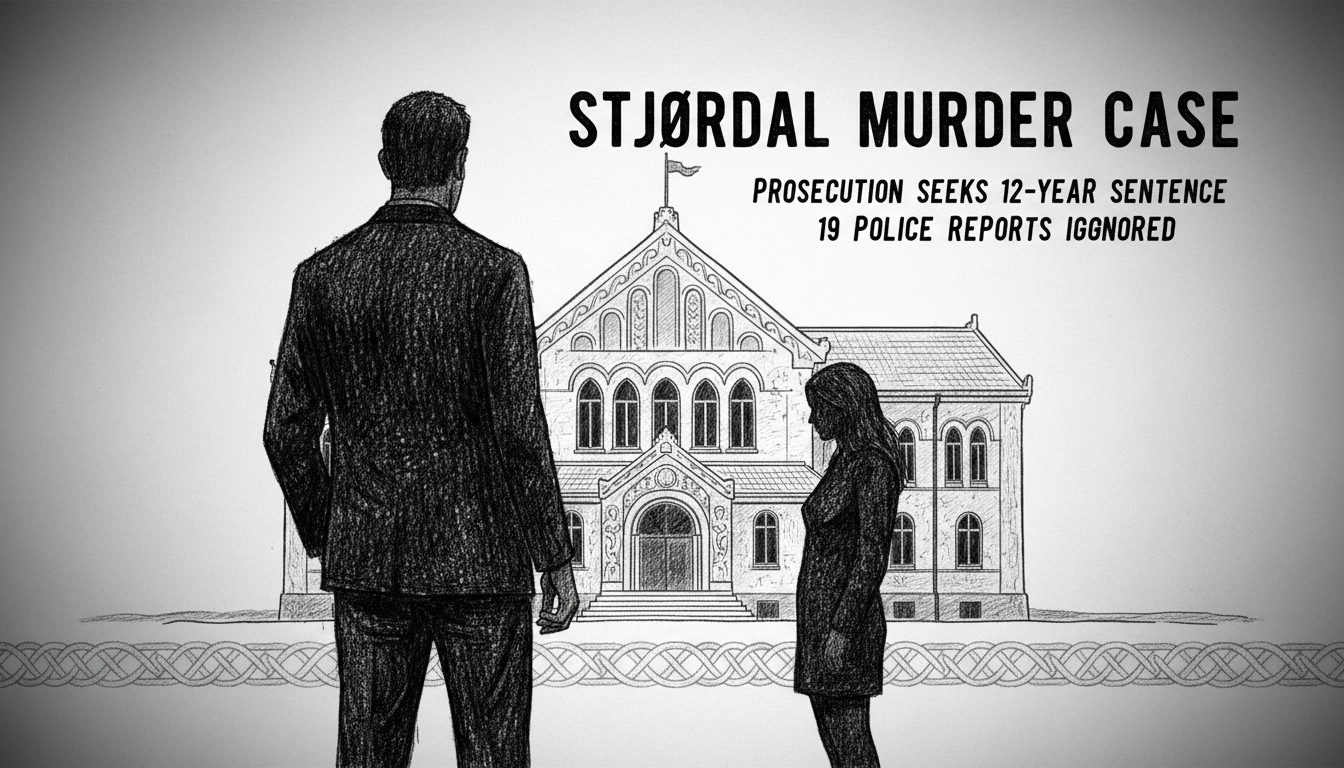
Norwegian prosecutors requested a 12-year prison sentence Friday for the killing of 20-year-old Linea Bjørnnes. The young woman was allegedly suffocated by her neighbor in their municipal housing block in Stjørdal last December.
Prosecutor Kaja Strandjord told the Trøndelag District Court the case involved aggravating circumstances. She described how Bjørnnes had contacted police for help the day before her death, resulting in a no-contact order against the accused man.
That order allegedly angered the defendant. Police records show he admitted pushing Bjørnnes hard to her bedroom floor. The prosecutor claims he deliberately stuffed toilet paper deep into her throat and used a scarf during the assault.
In her closing argument, Strandjord stated the evidence shows the man acted with clear intent to kill. The prosecution maintains this was a premeditated murder.
Defense lawyer Kjell Jarle Myrland presented a different version in court. He argued his client never intended to kill Bjørnnes, noting the man claimed to have loved her and been in a relationship with her.
The defense suggested the court should consider convicting for negligent homicide instead. Myrland referenced his client's statement that he ensured Bjørnnes could breathe through her nose during the incident.
Court records reveal a troubling history between the two. Bjørnnes had reported the man to police 19 times for violence and violations of restraining orders. Previous cases against him were dropped due to questions about mental competency.
A forensic psychiatric evaluation presented Friday found the defendant showed no signs of psychosis during the killing. Psychologist Kåre Nonstad described a man with marked egocentricity and underlying vulnerability to stress and substance abuse.
Blood tests detected multiple drugs in the defendant's system after the incident. The court must now weigh conflicting accounts about what happened in that Stjørdal apartment last winter.
The stark contrast between prosecution and defense arguments leaves the court with fundamental questions about responsibility and intent in this tragic case.