
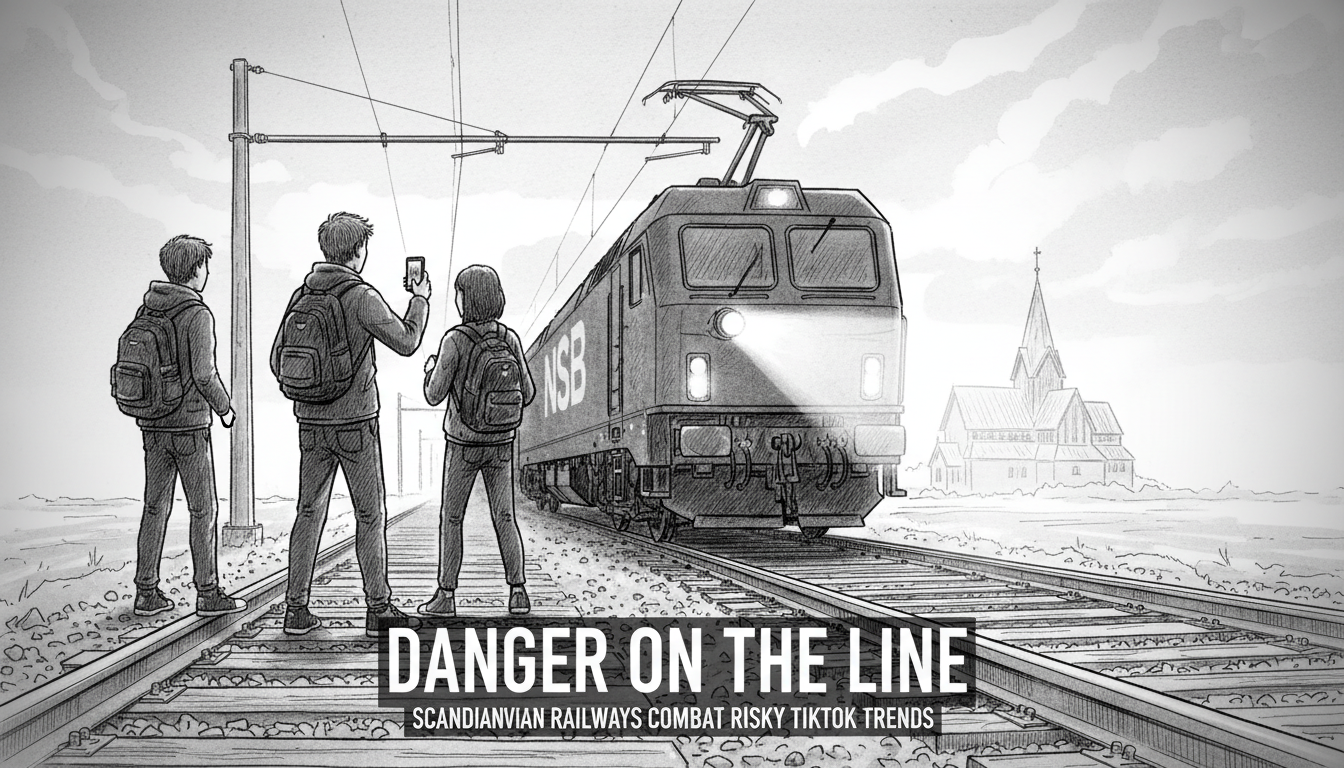
Railway authorities across Scandinavia are confronting a dangerous new challenge as social media trends lead children and teenagers to risk their lives on active train tracks. Norway's state railway company has taken direct action by distributing 1,600 warning letters to schools located near railway lines. This preventive measure addresses growing concerns about young people using train platforms and tracks for filming content and taking selfies.
Norwegian railway officials report at least 78 documented incidents involving children near or on railway property. The company plans follow-up school visits to educate students about the severe dangers of trespassing on railway infrastructure. A senior advisor with the Norwegian railway authority described the increasing number of young people on tracks as deeply concerning.
In Denmark, railway officials observe similar troubling patterns. The press manager for Denmark's rail network confirms this represents a growing problem nationwide. He notes that many incidents likely go unreported, suggesting the actual number exceeds official statistics. Despite ongoing safety campaigns, railway companies face steadily increasing occurrences of track trespassing.
The phenomenon stems primarily from TikTok trends encouraging risky behavior for social media content. Young people seek dramatic footage by filming themselves on active railway tracks, fundamentally underestimating the dangers involved. Railway experts emphasize that trains cannot stop quickly, even at low speeds, making such behavior potentially fatal.
This situation highlights broader challenges in Danish society regarding youth engagement and public safety education. The response from Scandinavian railway authorities demonstrates how traditional institutions must adapt to address social media-driven behaviors. Municipalities and social centers across Denmark now face the task of complementing these railway safety efforts with local educational initiatives.
Community leaders express concern about the gap between digital literacy and real-world risk awareness among young people. The coordinated approach between Norwegian and Danish railway companies represents a regional effort to protect public safety. Their actions reflect the Scandinavian welfare system's preventive approach to social problems, though officials acknowledge the difficulty of combating viral online trends.
Railway safety professionals stress that tracks are active transportation corridors, not photography locations. They emphasize that electricity powers many railway systems through hidden third rails and overhead lines, creating invisible hazards. The combination of high-speed trains and unpredictable stopping distances makes railway environments particularly dangerous for unauthorized access.
As social media continues influencing youth behavior, public institutions must develop new communication strategies that resonate with younger audiences. The Scandinavian response demonstrates how traditional safety messaging must evolve to address contemporary challenges in digital society.