
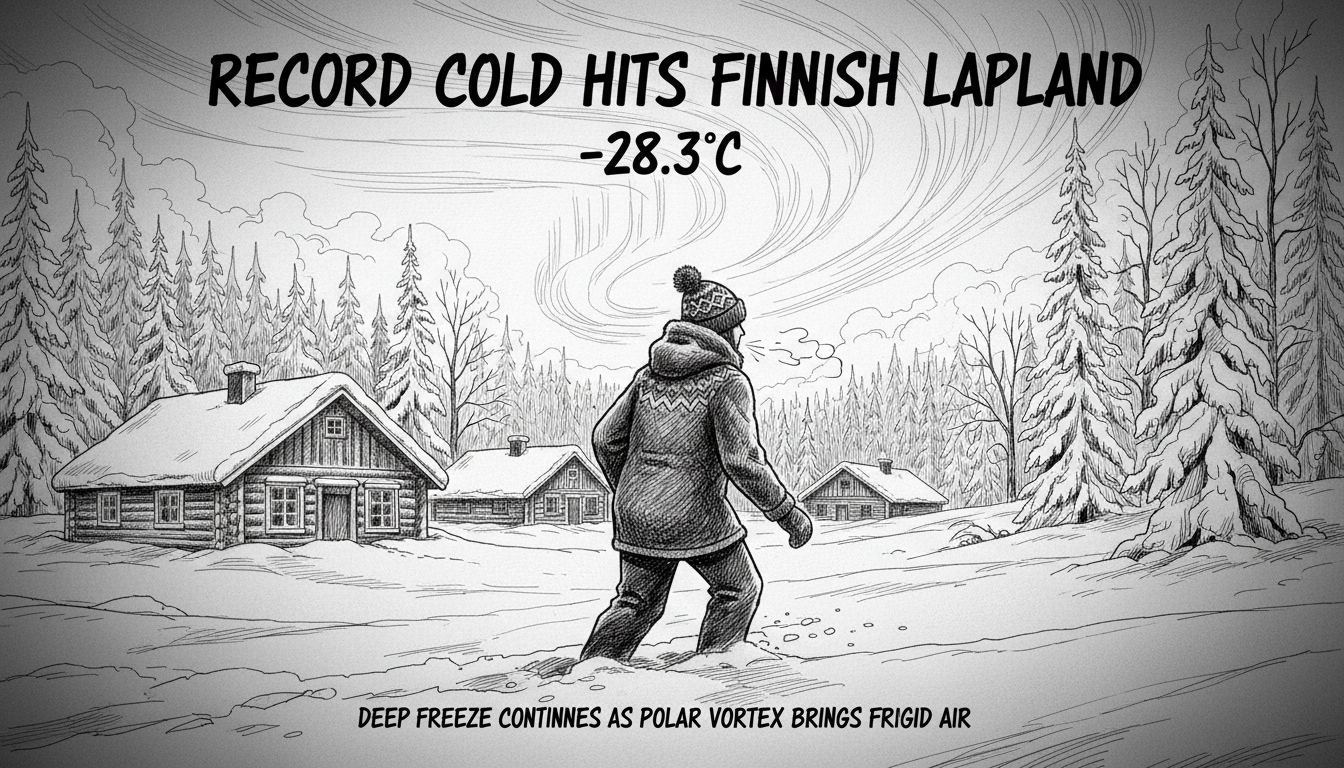
A record-breaking cold snap gripped Finnish Lapland on Sunday morning. The mercury plunged to -28.3°C (-18.9°F) in Savukoski's Tulppio area. This marks the coldest temperature recorded so far this autumn-winter season.
Meteorologists predict even colder conditions could arrive during the coming week. Clear skies and low-lying areas in Lapland might experience temperatures dropping to -30°C (-22°F). The polar vortex from the northern polar region will push frigid air masses across Finland.
Forecasters describe next week's weather pattern as consistently wintery nationwide. From Monday through Friday, Finland should expect calm and light-wind winter conditions. Southern and central regions will see cloudy weather with occasional breaks in cloud cover. Precipitation will mainly appear as snow showers, though southern areas might experience occasional rain or sleet showers.
Temperatures will vary significantly across regions. Southern Finland will hover between -3°C and +3°C (26°F to 37°F). Central areas will range widely from 0°C to -8°C (32°F to 18°F). If clouds break, central regions could drop below -15°C (5°F) overnight.
Northern Ostrobothnia and Kainuu regions will experience -5°C to -15°C (23°F to 5°F) temperatures. Under clear skies, readings might fall below -20°C (-4°F) during nighttime hours. Lapland will generally maintain -10°C to -20°C (14°F to -4°F) conditions both day and night.
Such extreme cold poses serious challenges for residents and infrastructure. Heating demands spike dramatically during these deep freezes. Transportation systems face increased risks of mechanical failures and hazardous road conditions. Elderly residents and homeless populations require special attention during temperature extremes.
Finland's infrastructure is generally well-prepared for harsh winter conditions. Buildings feature exceptional insulation standards nationwide. Most vehicles utilize block heaters and winter tires become mandatory during colder months. Municipalities activate cold weather protocols when temperatures drop below certain thresholds.
The weekend forecast remains uncertain according to meteorological services. These early winter extremes demonstrate how climate change creates weather volatility. While Finland expects cold winters, such record-breaking early season temperatures remain noteworthy.
International visitors should note that proper winter clothing becomes essential during Finnish cold snaps. Multiple layers, windproof outerwear, and adequate footwear prevent cold-related health issues. Travel plans should account for potential transportation delays during extreme weather conditions.