
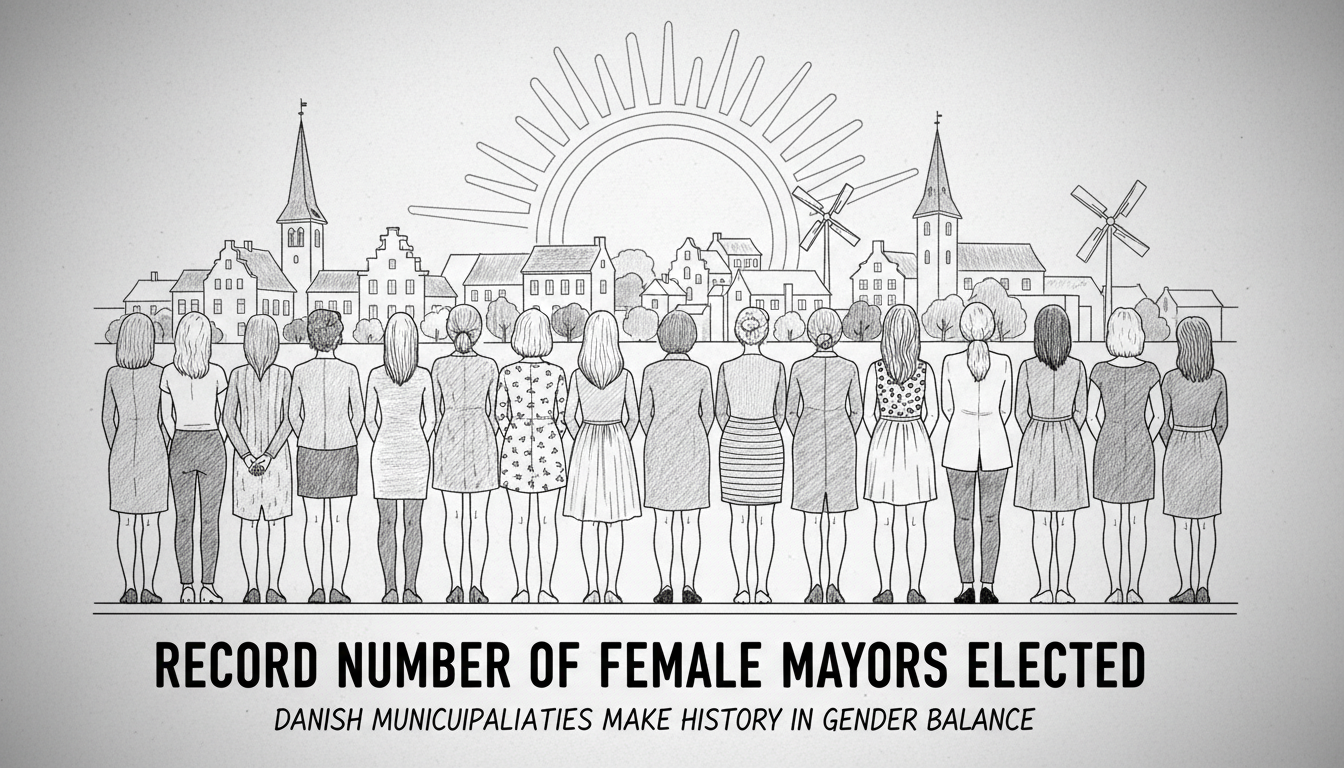
Danish municipalities are witnessing an unprecedented shift in local leadership. A record twenty-seven communities now have female mayors following recent local elections. This represents substantial progress from just twenty-one female mayors after the previous election cycle. The political landscape continues evolving as more women assume top municipal positions nationwide.
Odsherred Municipality recently selected Hanne Pigonska as their new mayor. This appointment brings the total to twenty-seven female mayors across Denmark's ninety-eight municipalities. Local elections have demonstrated growing gender balance in community leadership roles. The trend shows consistent improvement in female political representation at municipal levels.
Copenhagen integration efforts often begin with diverse leadership representation. The capital city will welcome Sisse Marie Welling as its new mayor. Her election signals potential changes in how Denmark social policy approaches urban challenges. Municipal governments play crucial roles in implementing national welfare programs and local integration initiatives.
Danish society news frequently highlights education and employment statistics for immigrants. Female leadership may bring different perspectives to these ongoing discussions. Research suggests diverse councils often develop more comprehensive social policies. This could impact how Danish welfare system services reach vulnerable populations.
Several returning mayors secured their positions through re-election. Greve's Pernille Beckmann and Herning's Dorte West both won new terms. Their continued leadership provides stability amid changing political dynamics. Experience matters in managing complex municipal administrations and budgets.
Newly elected mayors bring fresh approaches to local governance. Cities like Allerød, Egedal, and Frederikssund will see first-time female mayors. These leaders face immediate challenges in housing, education, and community services. Their success could influence future Denmark immigration policy implementation at local levels.
Political diversity appears across the new leadership landscape. Mayors represent multiple parties including Venstre, Social Democrats, and Conservative People's Party. This partisan variety suggests broad support for female leadership transcends traditional political divisions. Voters seem focused on candidate qualifications rather than party affiliation alone.
Formal confirmation awaits constituent meetings scheduled for early December. Municipal councils must officially ratify these leadership selections. The process ensures democratic procedures are properly followed. Final numbers may shift slightly pending these official proceedings.
This political development reflects broader Scandinavian trends toward gender-balanced governance. Neighboring countries have also seen increasing female political representation in recent years. The Nordic model often emphasizes equal participation across societal institutions. Denmark's progress aligns with regional values of inclusion and equal opportunity.
Local governments significantly impact daily life through schools, social services, and infrastructure. Female leadership may bring renewed attention to childcare, elderly care, and community programming. These areas traditionally see stronger engagement from women politicians. The practical effects on Danish welfare system delivery warrant observation.
International readers should understand Danish municipalities operate with considerable autonomy. They control education, social services, and local planning decisions. This decentralization means mayoral elections directly affect community wellbeing. The record female representation could reshape how local services address diverse population needs.
Political analysts note that female mayors often prioritize different policy areas than male counterparts. Social services, education, and community development frequently receive heightened attention. This could influence how integration programs operate in cities like Copenhagen and Aarhus. The changing leadership landscape merits ongoing monitoring.