
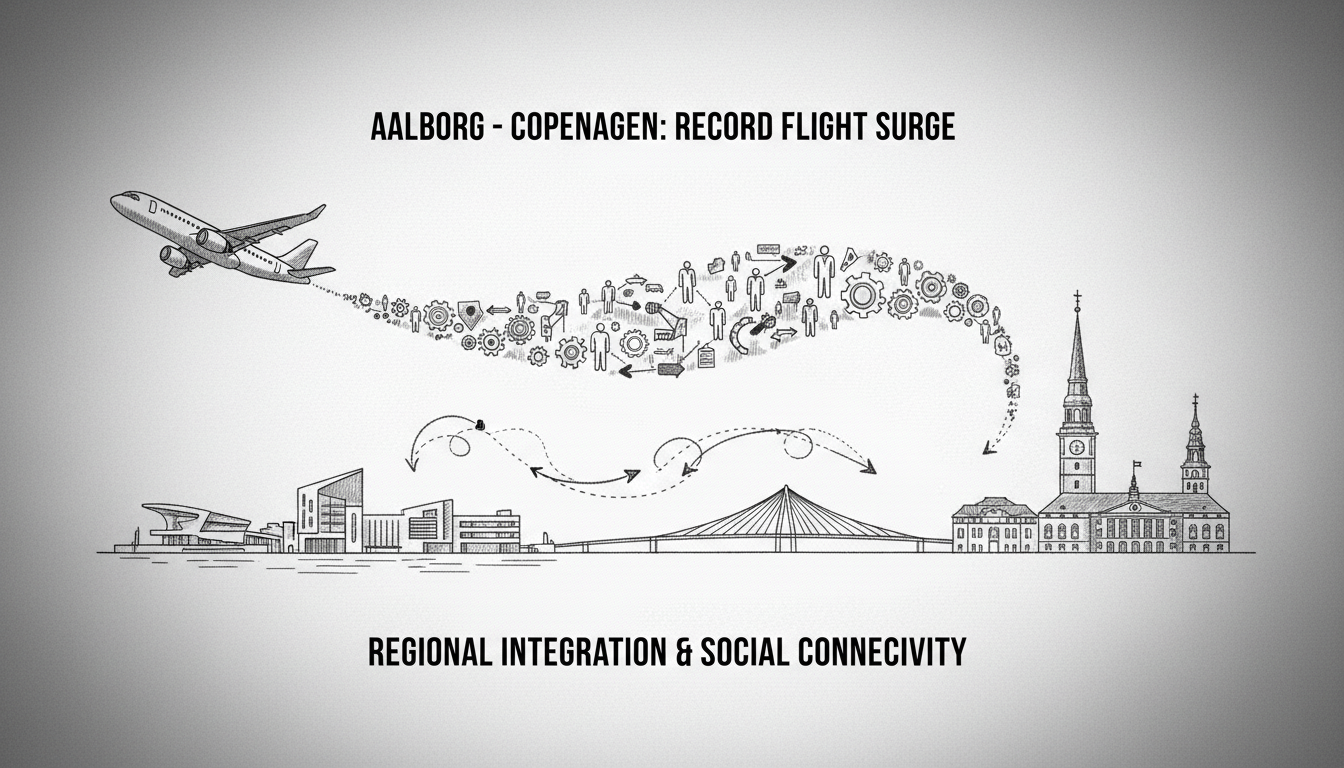
A quiet revolution is unfolding in Danish air travel. The route between Aalborg and Copenhagen has never been more popular. New figures show near-explosive growth in passenger numbers. This trend reveals more than just travel habits. It reflects deeper shifts in Denmark's social and economic geography.
Aalborg Airport Director Niels Hemmingsen noted a major increase compared to the same period last year. Passenger numbers on the Copenhagen route jumped by 21.3 percent. He said more travelers are discovering the convenience of flying to the capital. Copenhagen Airport's extensive international network serves as a major draw. The airport confirmed Aalborg remains among its top five preferred destinations.
This surge contributed to a passenger record for the month. The broader picture shows solid growth across all routes at Aalborg Airport. In the Third Quarter, 117,222 passengers passed through Aalborg's terminal. That represents a substantial increase of 10.8 percent year-over-year.
As a reporter focused on Danish society and integration, I see this data through a specific lens. This is not merely a transportation story. It speaks to the changing nature of regional integration within Denmark. Aalborg, Denmark's fourth-largest city, is a major hub for education and business in Northern Jutland. The dramatic increase in air traffic suggests stronger professional and personal ties to the capital region.
This connectivity has direct implications for Danish social policy and the welfare system. Easier access between regions supports labor mobility. It allows professionals to work in Copenhagen while maintaining family life in Aalborg. It enables students to access educational resources in both cities. For new residents and immigrants, this air bridge can be crucial. It connects them to embassy services, specialized healthcare, and cultural communities in the capital that might not exist locally.
Municipalities in Denmark often discuss physical and social infrastructure as separate issues. This flight data shows they are deeply connected. Reliable, frequent transportation is a prerequisite for successful regional development and integration. Social centers in Copenhagen that serve specific diaspora communities may now be more accessible to people living in Aalborg. This can affect how integration services are planned and funded.
What does this mean for Denmark's immigration policy and broader social cohesion? Increased internal mobility can help distribute the benefits and challenges of a diverse population. It prevents cultural enclaves from becoming isolated. It allows skills and perspectives to circulate more freely across the country. The Danish welfare system relies on a high level of employment and economic activity across all regions. This kind of connectivity supports that goal.
The raw numbers tell a simple story of travel demand. The underlying reality is about connection, opportunity, and the evolving shape of Danish society. When people and ideas move more freely, integration in its broadest sense becomes more possible. This flight route, now busier than ever, is a tangible artery in that process.