
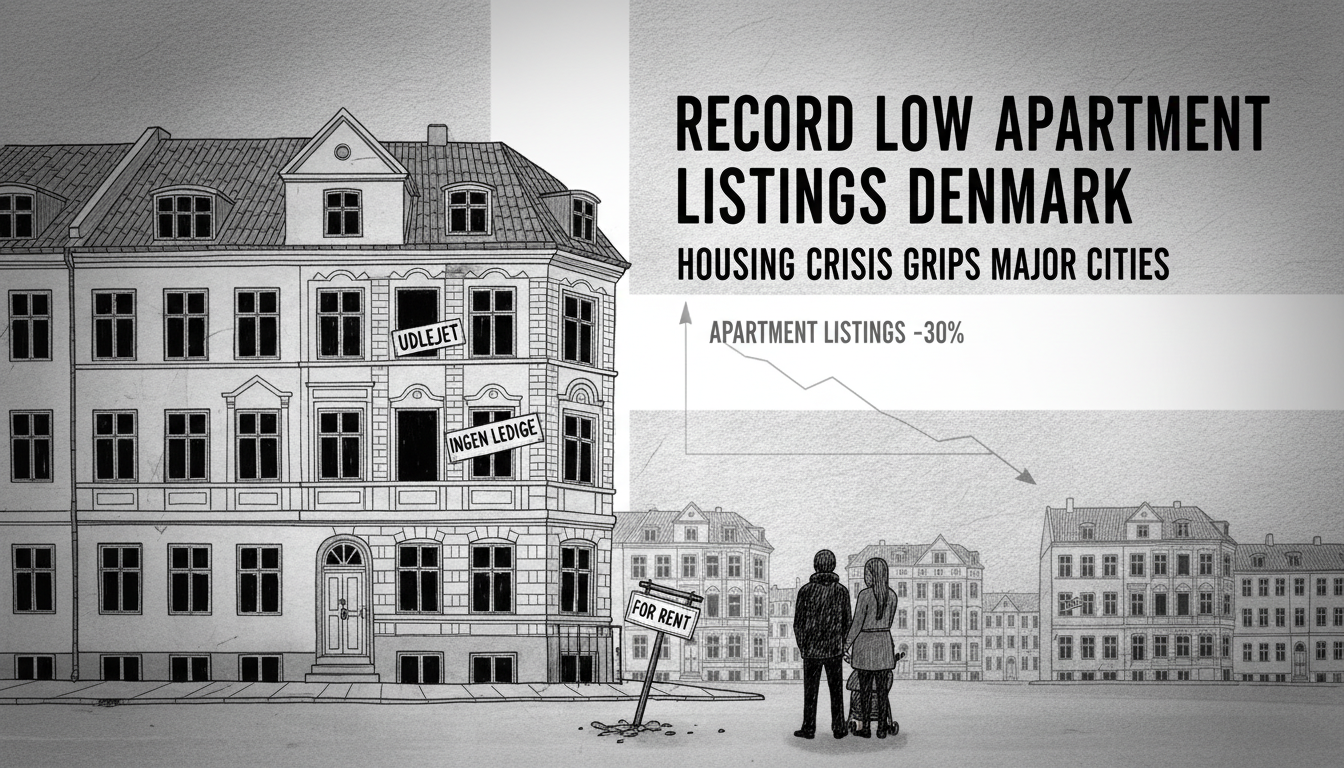
The number of apartments for sale in Denmark has dropped to its lowest level in nearly three years. New data shows a national decline of almost 25 percent over the past year. The situation is most acute in Copenhagen and Aarhus, where housing seekers face dramatically shrinking options. This scarcity is driving prices upward and creating significant challenges for new residents and young families trying to enter the housing market.
In Copenhagen Municipality, only 1,014 owner-occupied apartments are currently listed. This represents a 34 percent decrease from the same period last year and is the lowest number recorded since tracking began over a decade ago. The trend is even more pronounced in Aarhus Municipality, where available listings have been cut in half. Now just 402 apartments carry 'for sale' signs in Denmark's second-largest city.
Birgit Daetz, a housing economist and communications director at the property portal that compiled the data, describes the current market as 'quite special.' She said in an analysis that high demand in both Copenhagen and Aarhus has created intense activity levels, with many apartments selling quickly. This noticeably thins out the supply. When buyers have fewer properties to choose from, it pushes prices up significantly, a pattern observed throughout the year.
The same downward trend, though less severe, applies to the supply of villas and townhouses. Approximately 32,000 such properties were for sale at the start of December, a decline of nearly 11 percent year-on-year. The drop has affected all regions, with the Capital Region and Region Zealand experiencing the largest decreases. Daetz noted that while a seasonal dip in supply is not unusual, the current annual decline is relatively large. For villas and townhouses, one must look back to the third quarter of last year to find a period with less supply.
This housing crunch intersects directly with broader questions of integration and social policy in Denmark. A tight housing market presents a formidable barrier for newcomers, including international workers and students, who are vital to Copenhagen's economy and cultural fabric. Municipal social centers and integration programs often cite housing access as a primary obstacle for successful settlement. When affordable entry points into the ownership market vanish, it can exacerbate social divides and limit mobility.
The Danish welfare system traditionally supports housing stability, but current pressures test its resilience. High prices in urban cores may push residents further from job centers, increasing commute times and straining public infrastructure. For local governments, the shortage complicates planning for sustainable community growth and diversity. Some experts suggest that without intervention, the market dynamics could indirectly influence Denmark immigration policy by making metropolitan areas less accessible to foreign professionals whose skills are in demand.
Looking ahead, the government has signaled intentions to make it easier for tenants to establish cooperative housing associations, known as 'andelsboliger.' This model could provide a more affordable path to homeownership. However, such reforms take time to impact supply. For now, the data paints a clear picture of a constrained market where demand vastly outpaces availability, with tangible consequences for social cohesion and economic inclusion in Denmark's largest cities.