
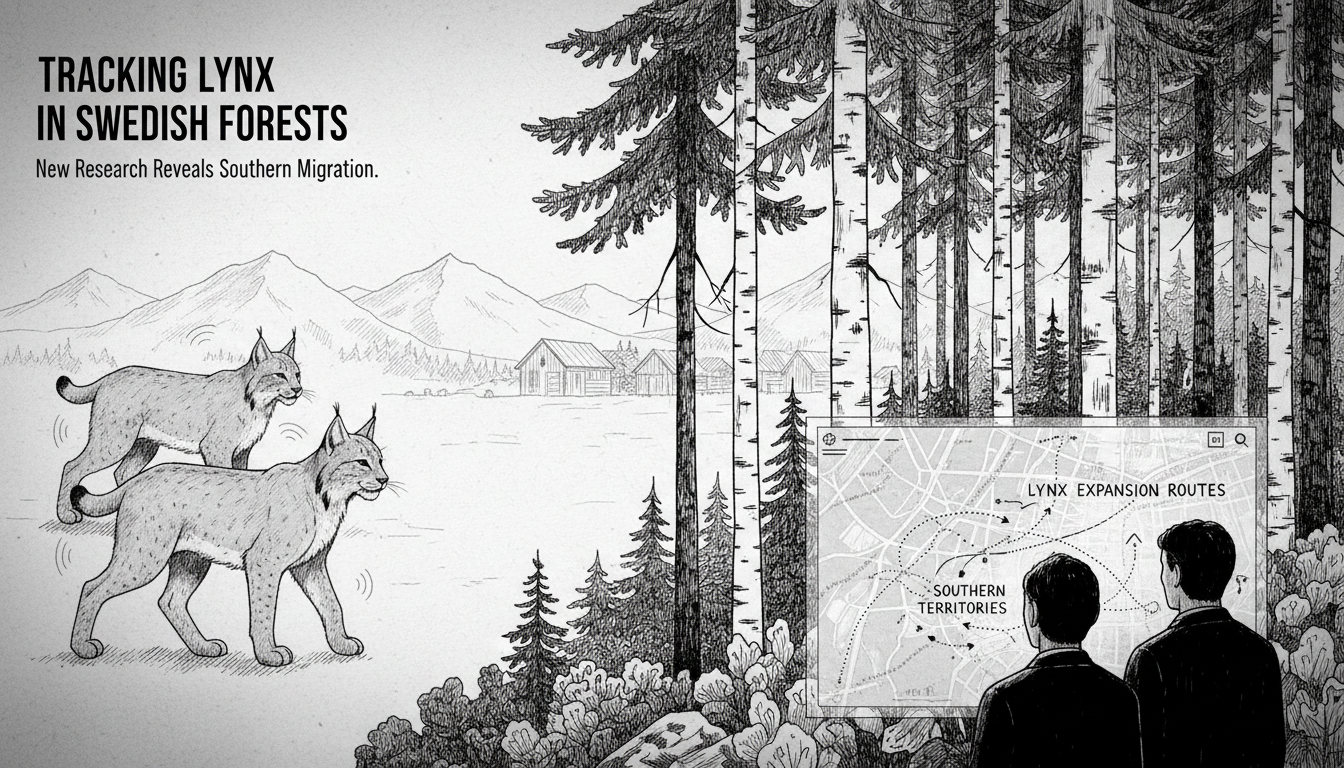
Scientists at the Swedish University of Agricultural Sciences are monitoring approximately ten lynx across central Sweden. The research team captures the wild cats using traps and fits them with GPS collars. These tracking devices automatically detach when the study period concludes after eighteen months.
Örjan Johansson, one of the lead researchers, acknowledged the temporary stress capture causes the animals. He confirmed all research methods receive approval from ethical committees. The team works diligently to minimize any discomfort during the process.
Sweden's lynx research program began in the 1990s. Scientists have observed the predators gradually expanding southward over recent decades. About ten years ago, most lynx remained north of lakes Hjälmaren and Mälaren. These large water bodies previously formed a natural boundary for their territory.
Johansson noted increasing numbers have crossed both lakes in recent years. He suggested one bolder individual might have initially taken the risk. Others then followed the pioneering cat's successful example.
The university shares the lynx movements through their online platform. Public visitors can follow the cats' hunting patterns and read about their territorial expansion. Researchers find the tracking data fascinating and want to share their discoveries.
Some might worry about people disturbing the animals using published locations. Johansson clarified this concern is unfounded. The team only releases positions that are one to three weeks old. By publication time, the lynx have long moved elsewhere. Random forest walks offer better lynx spotting chances than following these outdated coordinates.
The tagged lynx primarily roam Södermanland county, south of Stockholm. They also frequent adjacent regions including Västmanland, Östergötland, and the Stockholm metropolitan area. This expansion into more populated regions shows remarkable wildlife adaptation.
Tracking large predators like lynx requires careful balance between research and animal welfare. The steady southward movement suggests these cats are successfully adapting to human-dominated landscapes across central Sweden.