
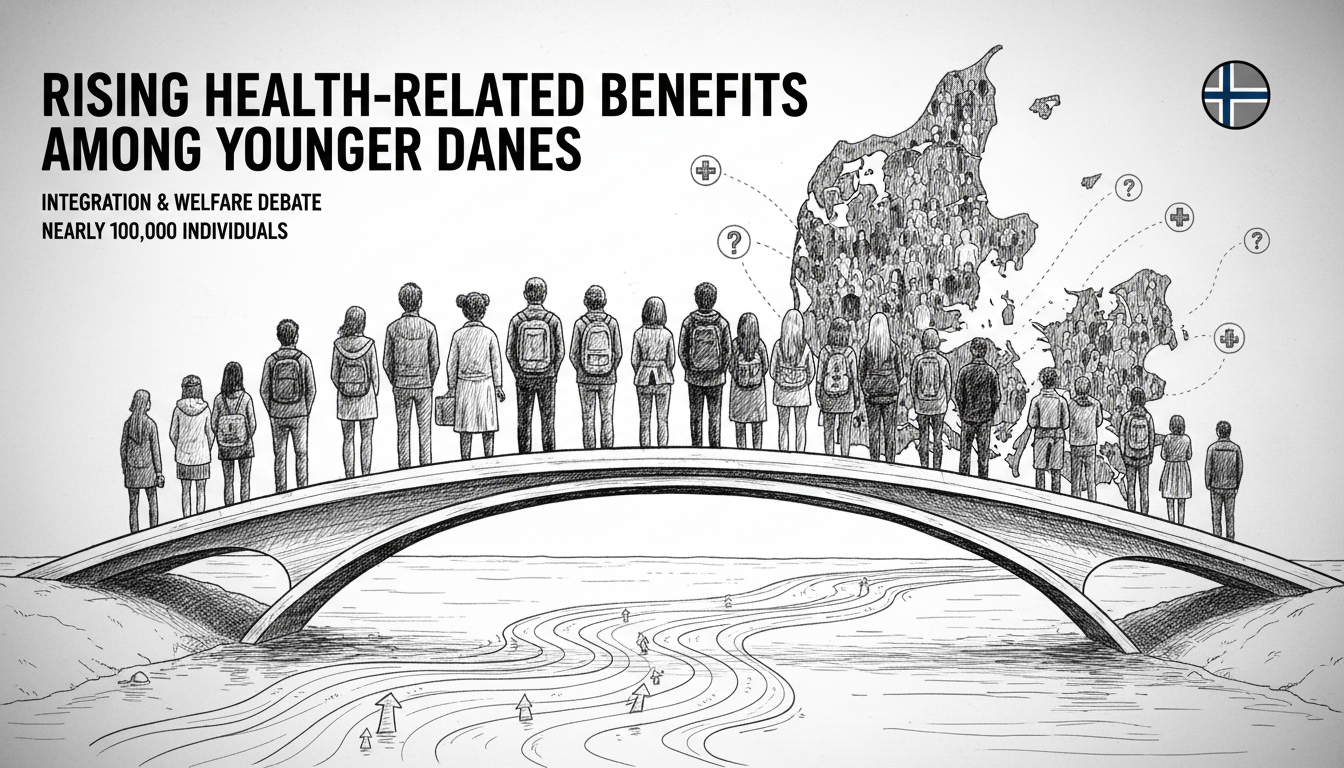
Nearly 100,000 Danes under the age of 45 now receive temporary health-related benefits. This figure includes individuals on sickness benefits, rehabilitation, and resource programs. The data comes from a recent analysis by a major Danish research foundation. The proportion of younger adults on these benefits has grown steadily over the past decade and a half. It increased from 5.2 percent to 6.0 percent. This trend raises immediate questions about the future of the Danish welfare system and its capacity for integration. It also highlights pressures on social policy in cities like Copenhagen.
These benefits are a core part of Denmark's social safety net. They provide crucial support for people who cannot work due to illness or injury. The rise suggests more young people are facing health challenges that affect their ability to participate in the labor market. Community leaders in Copenhagen integration programs express concern. They note that long-term reliance on benefits can create barriers to social and economic inclusion. Municipal social centers, which administer many of these programs, report increasing caseloads.
What does this mean for Danish society news? The numbers point to a tangible strain. A welfare system praised for its robustness must now adapt to changing demographic and health realities. The increase is not dramatic, but it is consistent. It reflects broader trends in mental and physical health among younger generations. Experts point to factors like workplace stress, changing job markets, and evolving social pressures. The Danish welfare model is designed for resilience, but its sustainability relies on a high employment rate. When more people of working age need support, the math becomes harder.
This situation has direct implications for Denmark immigration policy and integration efforts. A key goal for newcomers is successful entry into the labor market. If native-born Danes are struggling with health-related work barriers, the challenge may be even greater for immigrants navigating a new system. Successful integration often depends on stable employment and social participation. Health issues can disrupt this path. Municipalities across Denmark are tasked with supporting both groups, often with limited resources. The data underscores a need for proactive health and employment services that can prevent long-term dependency.
The personal impact is profound. For the 98,600 individuals represented, this is not a statistic. It is a reality of navigating life with a health condition. It involves interactions with caseworkers, medical assessments, and financial uncertainty. The goal of these benefits is temporary support leading to recovery and return to work. Yet, the rising numbers suggest that for some, the path back is becoming longer or more difficult. This affects family stability, personal well-being, and community cohesion. It is a human story behind the policy figures.
Looking ahead, Danish social policy must address the root causes. Is the education system adequately preparing young people for the demands of modern work? Are workplaces doing enough to support employee mental and physical health? The conversation in Danish municipalities is shifting from pure welfare provision to prevention and early intervention. The strength of the Danish model has always been its adaptability. This new data provides a clear signal that adaptation is once again necessary. The focus must remain on creating a society where all citizens, regardless of origin or health status, can contribute and thrive.