
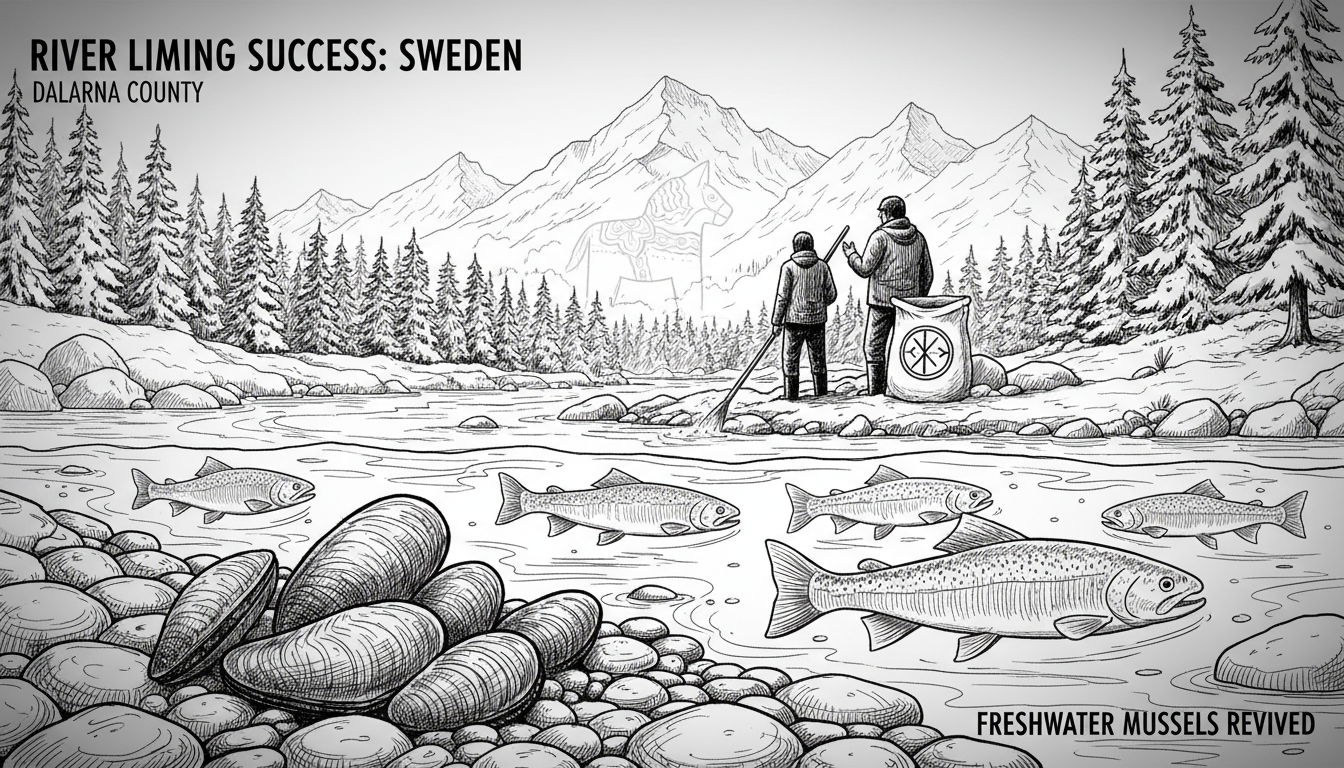
Environmental officials in Dalarna County report water chemistry improvements after limestone treatment. The project aims to help acid-sensitive freshwater pearl mussels recover.
Klara Blomdahl, an environmental officer with the county administrative board, said their theory suggested overly acidic water caused the decline. Initial liming already shows promising results in water quality tests.
Trout fry numbers increased during summer electrofishing surveys. These young fish are highly sensitive to acidification and share a symbiotic relationship with freshwater pearl mussels.
Male mussels release sperm to fertilize females. Females then release glochidia larvae that attach to trout or salmon gills. The larvae remain attached for about one year before dropping to the riverbed to develop into mature mussels.
Blomdahl explained that more trout means more potential attachment sites for mussel larvae. The long-term hope is that liming will boost mussel populations, but visible results will take time.
It takes approximately ten years from when a female releases larvae until new mussels become visible. Freshwater pearl mussels rank among Earth's longest-living animals, with the oldest known specimen reaching 280 years.
This protected species serves as both an indicator and umbrella species for healthy waterways. Sweden lists the freshwater pearl mussel as critically endangered.
The mussels require clear, oxygen-rich water and depend on salmon or trout for reproduction. They grow slowly and reach sexual maturity only after 15-20 years.
Approximately 600 Swedish waterways host freshwater pearl mussel populations. The species has enjoyed legal protection since 1994.
While early indicators are positive, the decade-long reproduction cycle means real success won't be measurable for years. This highlights the patience required in ecological restoration projects.
Source: Swedish Agency for Marine and Water Management