
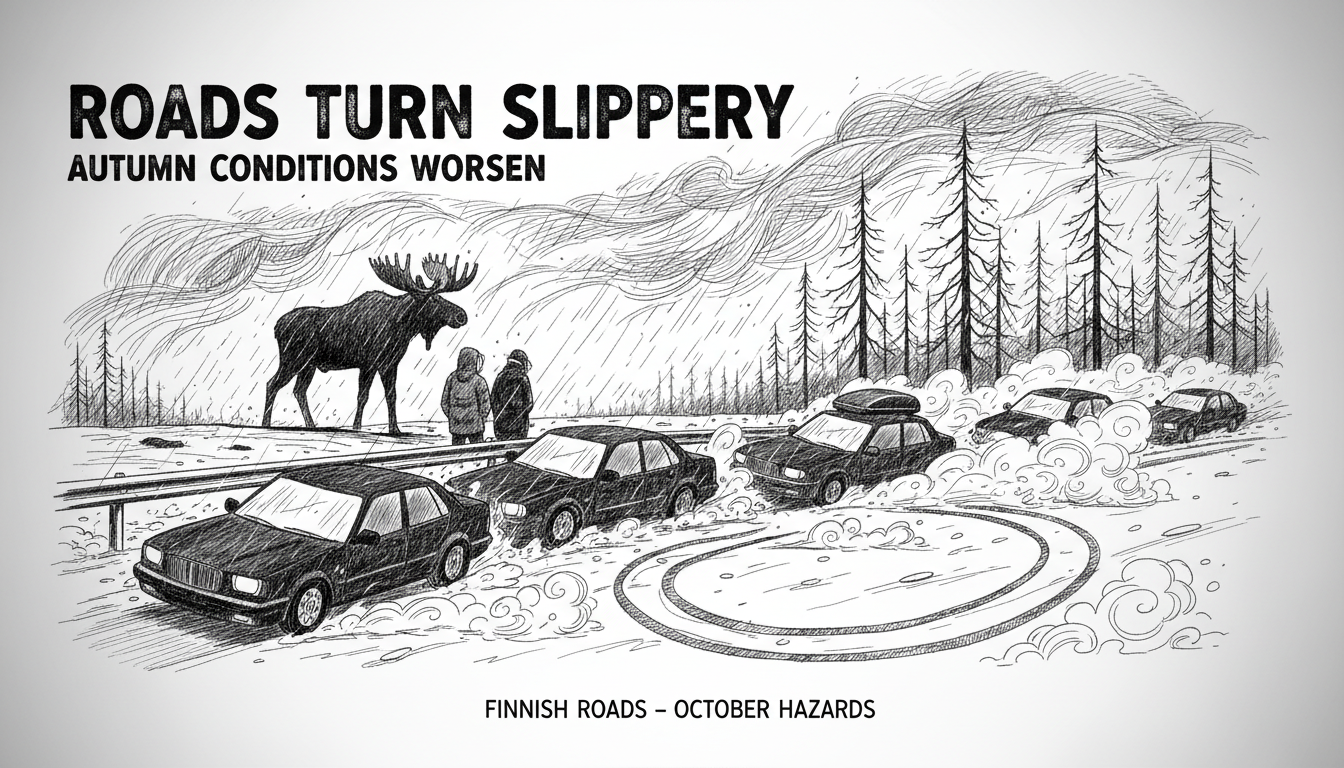
Insurance company data shows vehicle skidding accidents increase sharply from October onward. Multiple chain-reaction collisions across Finland last weekend provided a stark reminder of changing road conditions.
Many accidents occur when weather surprises drivers, visibility drops, and people feel rushed. Adjust your driving style and schedule well before winter arrives. Check your tire condition, switch to winter tires on time, and allow extra travel time.
As autumn progresses, temperatures drop, visibility worsens, and overnight frost becomes common. Roads require patience and anticipation. Follow weather forecasts carefully and install winter tires promptly when conditions demand.
Vehicle headlights and their adjustments also play a crucial safety role. Automatic headlights operate based on surrounding light levels and may not detect visibility reduced by rain or fog.
Finnish traffic law requires winter tires from November through March when weather conditions necessitate them. In practice, drivers often need to switch tires earlier.
Winter tires must have at least 3mm tread depth, but traction actually begins deteriorating before that point. Tire condition significantly affects how vehicles handle rain or ice.
Each tire contacts the road with only a palm-sized area. As tires wear down, this contact patch shrinks further, reducing vehicle control according to safety officials.
Road safety experts note that many drivers underestimate how quickly autumn conditions deteriorate. The transition between seasons often catches motorists unprepared despite annual warnings.