
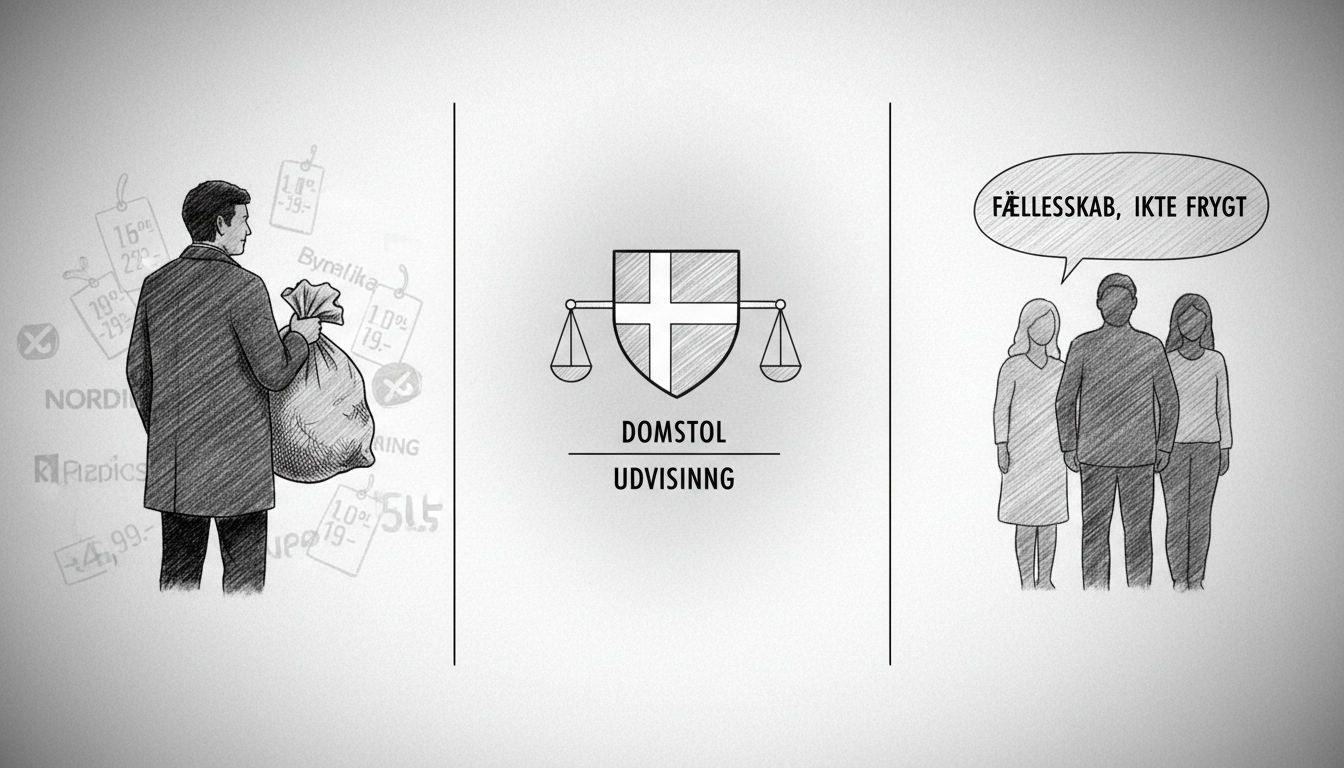
A Romanian man received a prison sentence and permanent expulsion from Denmark this week. The court convicted him for stealing perfume worth 270,000 kroner, coffee valued at 48,000 kroner, and other food items. The thefts occurred across multiple regions including Zealand, Jutland, Funen, Lolland, and Falster over a three-month period. Police arrested the man in early September following an investigation led by their foreign national control department. The prosecutor described the crimes as extensive and organized thefts from grocery stores. The court agreed with the prosecution's request for both prison time and a permanent ban from re-entering Denmark.
This case highlights ongoing challenges within Danish society news concerning organized crime groups operating across borders. The conviction reflects Denmark's strict immigration policy regarding criminal activity by foreign nationals. Danish authorities frequently emphasize that serious crimes committed by non-citizens will result in deportation. This approach remains a cornerstone of Denmark immigration policy debates. The sentence demonstrates how the Danish welfare system protects businesses from systematic theft that ultimately affects consumer prices and community safety.
Community leaders in Copenhagen integration programs note that such cases create complex narratives. They argue that isolated criminal incidents should not define public perception of entire immigrant communities. Statistics on integration show that the vast majority of foreign-born residents in Denmark contribute positively to society. Recent education statistics indicate that second-generation immigrants are increasingly completing vocational and higher education programs. Yet high-profile criminal cases often dominate public discourse about immigration.
Municipal social centers across Denmark work to prevent marginalization that can lead to criminal involvement. These centers provide language courses, job training, and community activities. Their funding and effectiveness remain topics within Denmark social policy discussions. The convicted man's age, fifty-two, raises questions about what pathways existed for legal employment or support. Did he have access to integration services? Could earlier intervention have prevented this criminal pattern? These questions matter for policymakers evaluating prevention strategies.
The geographical spread of the thefts, from Zealand to Jutland, suggests a coordinated operation. This pattern concerns local police districts that must collaborate across regions. It also shows how criminal networks exploit the open borders within the Scandinavian region. Danish police have increased coordination with European counterparts in recent years. They focus on tracking organized groups that move between countries. The permanent entry ban serves as both punishment and deterrent. It signals that Denmark will not tolerate foreign nationals who abuse their residence privileges through serious crime.
What does this mean for broader Copenhagen integration efforts? Community advocates stress the importance of distinguishing between individual criminals and entire communities. They point to successful integration stories that rarely make headlines. Meanwhile, political debates about Denmark immigration policy continue to reference such court cases. The balance between strict enforcement and supportive integration remains a central tension in Danish society. This case will likely be cited in future policy discussions about deportation rules and crime prevention. It underscores the complex reality behind simple headlines about foreign-born offenders.