
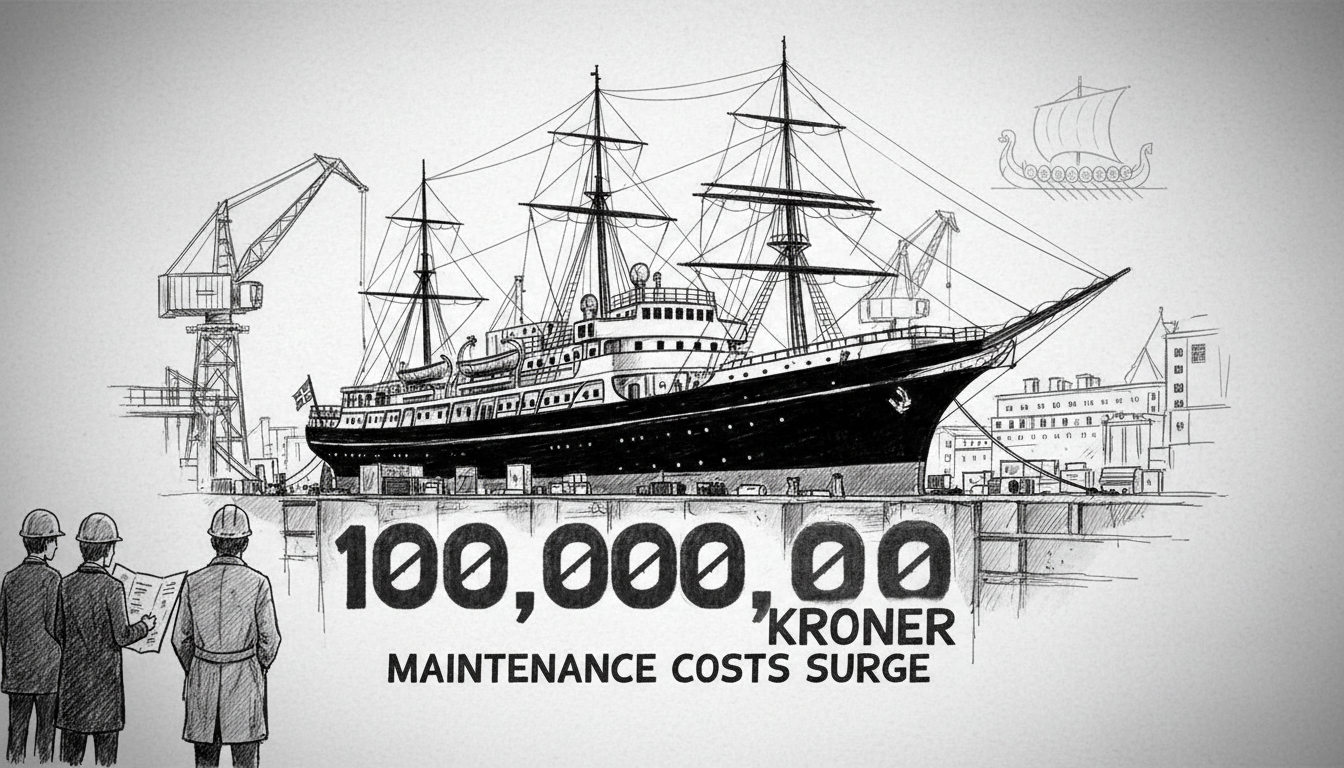
The Royal Yacht Dannebrog returns each year to its winter home at the naval station in Frederikshavn. This historic vessel undergoes seasonal maintenance in the northern Danish port. Recent inspections revealed the 1932-built ship requires far more extensive work than officials initially anticipated.
The Danish Ministry of Defence's Materiel and Procurement Agency recently adjusted the maintenance framework agreement. Costs jumped from 72 million kroner to 100 million kroner. Officials discovered the royal vessel's condition was fundamentally worse than expected during the agreement period.
Workers systematically examined every part of the ship. They completely dismantled the interior and measured all steel components. Crews replaced worn steel sections and upgraded fire safety systems to modern standards. The maintenance task proved substantially more comprehensive than original projections indicated.
This cost overrun highlights the challenges of maintaining aging maritime heritage. The royal yacht serves as both a functional vessel and floating national symbol. Such historical ships often reveal hidden deterioration during detailed inspections. The Danish royal family uses Dannebrog for official duties and summer voyages through Danish waters.
Nordic countries face similar preservation dilemmas with their historic vessels. Norway's royal yacht Norge and Sweden's former Vasa Museum ship both required massive conservation investments. These projects demonstrate how maritime heritage demands ongoing financial commitment beyond initial estimates.
International readers might wonder why Denmark invests so heavily in a royal yacht. The vessel functions as a mobile embassy and represents Danish maritime tradition worldwide. It hosts state visits and promotes Danish trade interests during foreign port calls. The ship also provides summer accommodation for the royal family during official tours of Danish territories.
What does this cost increase mean for Danish taxpayers? Defence officials emphasize that the work ensures the vessel's operational safety and preserves national heritage. The investment extends the ship's service life for future generations. Similar preservation debates occur worldwide when maintaining historic government assets.
The substantial budget adjustment reflects honest reassessment rather than poor planning. Maritime experts know that full restoration costs often emerge only during disassembly. This transparency about escalating expenses shows responsible management of public funds.
The royal yacht's maintenance exemplifies how cultural preservation intersects with practical governance. Denmark balances modern fiscal responsibility with preserving historical assets that define national identity. This approach reflects broader Nordic values of transparency and long-term thinking about cultural heritage.