
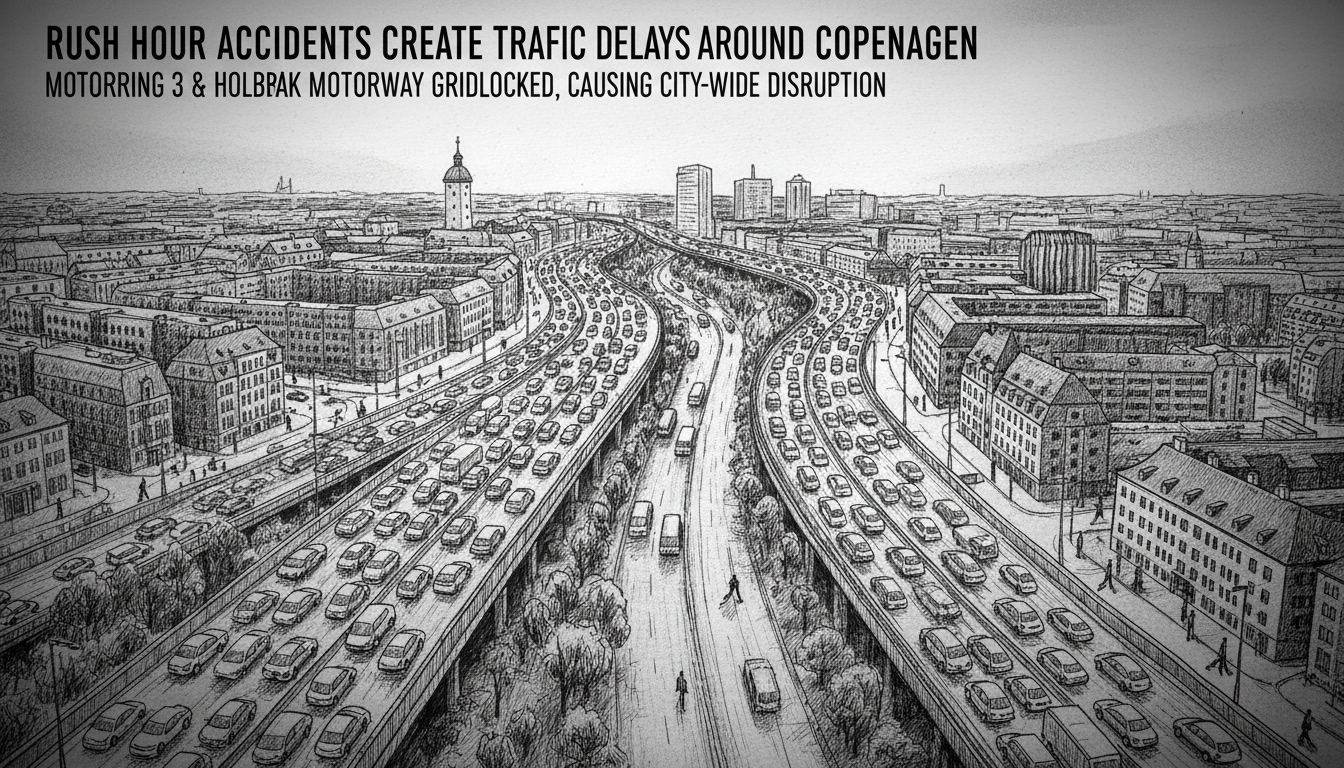
Two separate accidents during the Tuesday evening rush hour created significant traffic delays on key motorways around the Danish capital. The incidents occurred on Motorring 3 and the Holbæk Motorway, both critical arteries for commuters entering and leaving Copenhagen. Traffic authorities reported the collisions caused lane closures and substantial queues, disrupting the homeward journey for thousands. This kind of event highlights the pressure on Copenhagen's transport infrastructure as the city grows. It also tests the daily resilience of its diverse commuting population, from international professionals to local workers.
The first accident happened on Motorring 3 in the northbound direction between the Gladsaxe and Buddinge exits. It initially blocked the left lane, creating a queue that stretched back to the Rødovre motorway junction. Emergency services cleared the scene by moving vehicles to the emergency lane, reopening all three lanes later in the evening. The second incident occurred on the Holbæk Motorway toward Copenhagen, near the Brøndby junction on the ramp connecting to Motorring 3. One lane was closed there, with rescue services dispatched to the scene. A queue formed quickly, beginning at the Vallensbæk N exit.
For international observers and new residents, such traffic disruptions are more than an inconvenience. They are a window into the challenges of urban integration and daily life in a compact, densely populated Nordic capital. Copenhagen's transport network is generally efficient, but it operates at near capacity during peak hours. Events like these accidents reveal the system's fragility. They also show how a single point of failure can impact a wide region, from the suburbs to the city center.
From a social policy perspective, reliable public and private transport is a cornerstone of the Danish welfare model. It enables access to education, employment, and community services. Prolonged disruptions can disproportionately affect lower-income commuters and those living in peripheral municipalities who rely on these corridors. These are often the same areas with higher concentrations of immigrant and newcomer populations. Traffic jams are not just about lost time. They can mean missed language classes, late arrivals for shift work, or complications for family logistics. Municipal social centers and integration programs frequently note transportation as a key factor in successful settlement.
The response from road authorities was reportedly swift, with clear communication about lane reopenings. This operational efficiency is a standard expectation in Denmark. Yet, the recurring nature of rush-hour accidents prompts questions about long-term infrastructure planning. Copenhagen continues to attract new residents, increasing strain on its road networks. The city's ambitious climate goals also push for a shift from private cars to public transit and cycling. Today's events underscore the practical tension between current commuting patterns and future sustainability targets. They remind us that social integration happens not just in classrooms or job centers, but also in the daily grind of the commute, where patience is often tested.