
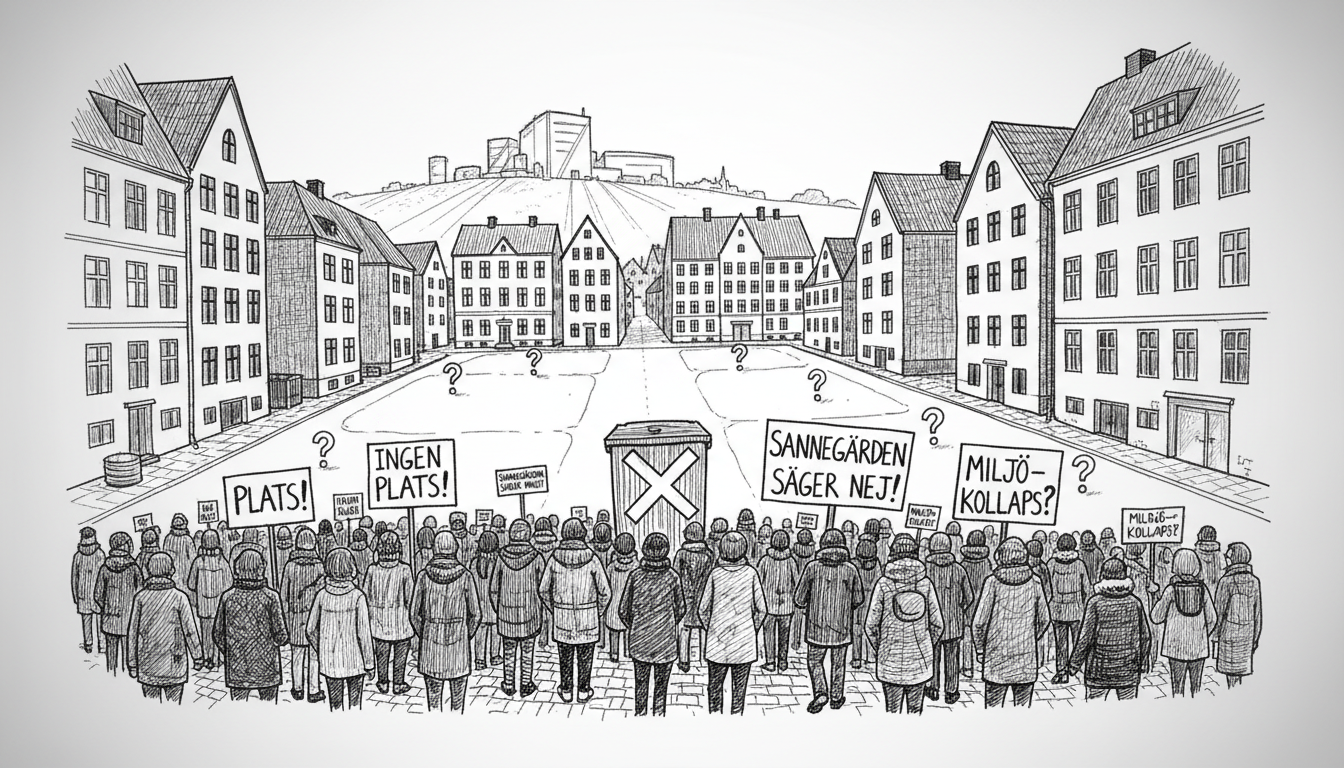
New government requirements for property-close collection of packaging and food waste create major problems for housing cooperatives in Gothenburg. Multiple housing associations in the Sannegården area report having no land available to meet the new regulations. The local municipality offers no solutions to address the space shortage.
Residents face repeated rejections when seeking assistance. Housing board chair Rosita Roman describes the situation as receiving 'no after no after no' from authorities.
Gothenburg's dense urban architecture presents unique challenges for waste management infrastructure. Many Swedish cities struggle to implement national environmental policies in older neighborhoods with limited space.
The government's push for improved recycling clashes with practical urban planning realities. Housing cooperatives now bear the burden of finding space for multiple new waste containers without adequate support.
This situation highlights how well-intentioned environmental policies can create unintended problems at the local level. Municipal authorities and national policymakers appear disconnected from the physical constraints residents face daily.