
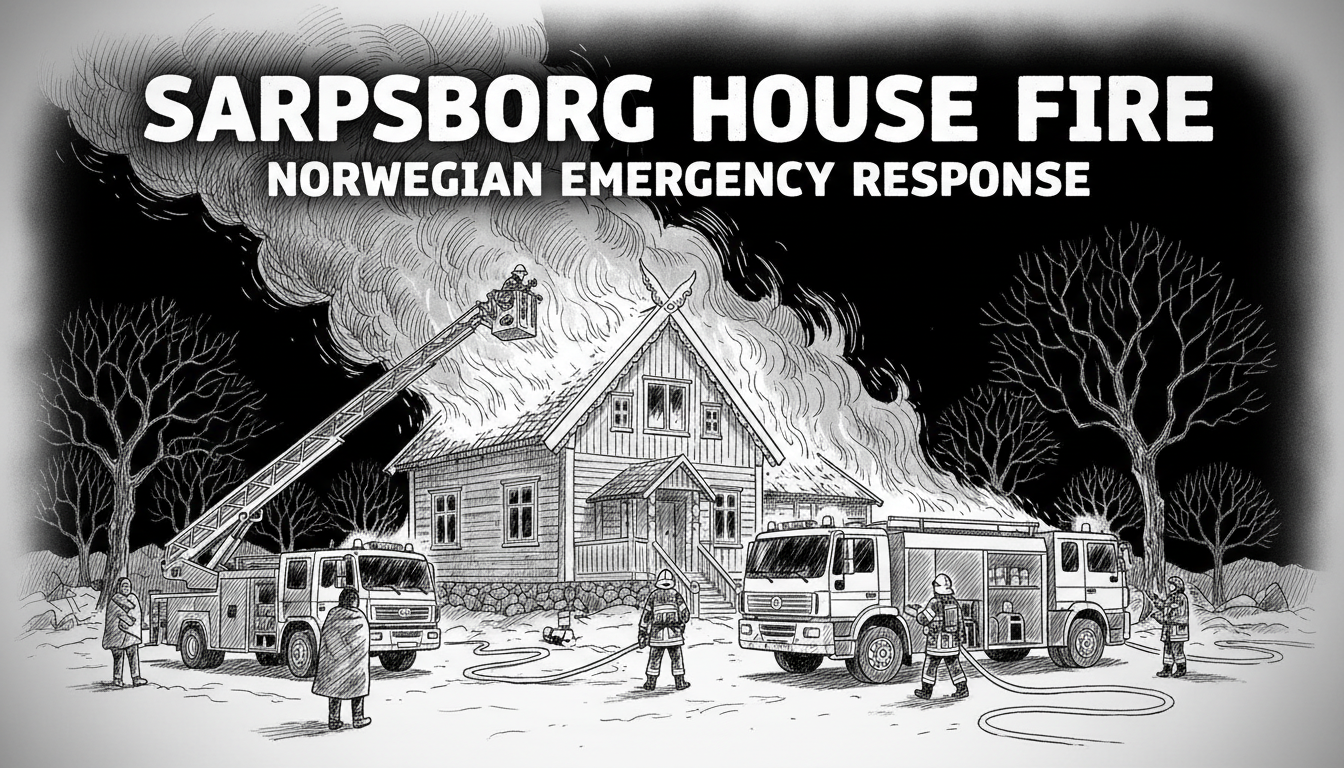
Emergency services responded to a house fire in Sarpsborg on Monday evening. The incident led to the evacuation of a nearby residence. The burning house was under renovation and unoccupied at the time. Authorities reported smoke blowing toward a neighboring home. Residents there were evacuated as a precaution. The fire service quickly established control over the blaze. An initial concern about the fire spreading to a garage was later dismissed. Officials stated no further evacuations were necessary. The situation was described as stable and contained.
This incident in Sarpsborg, a key industrial city in Østfold county, offers a window into Norway's emergency preparedness protocols. Norway maintains a highly decentralized response system. Local police districts and municipal fire brigades coordinate initial actions. The Øst police district managed this operation. Their swift containment prevented a more serious event. Such efficiency is a product of Norway's significant investment in public safety infrastructure. This investment is funded by the nation's sovereign wealth fund. The fund derives its capital from oil and gas revenues.
Norwegian building safety regulations are notably strict, especially for renovation projects. The fact the fire occurred in a house under renovation raises immediate questions. Contractors must follow specific fire prevention measures during work. These rules are enforced by local building authorities. A failure to adhere can result in severe penalties. The investigation will likely examine whether all protocols were followed. This is standard procedure after any structural fire in Norway.
For international observers, this small-scale event connects to larger Norwegian themes. The country's wealth allows for robust public services. Its low population density demands efficient, remote-capable emergency teams. The response in Sarpsborg demonstrates this capability in action. It also shows the societal expectation of safety and order. Major incidents are rare, but the system is tested by smaller events like this one. The outcome reinforces public trust in the authorities.
The broader context involves Norway's ongoing urban development. Many older homes in cities like Sarpsborg are undergoing renovation. This increases fire risk during construction phases. Municipalities constantly balance development with safety enforcement. The Storting, Norway's parliament, periodically reviews national building codes. These reviews often follow incidents that expose potential weaknesses. While this fire was minor, it serves as a real-world test of the current regulatory framework.
Looking ahead, the focus will shift to the investigation's findings. The police and fire authorities will file a report. Insurance assessments for the damaged property will begin. The evacuated families will return home after air quality checks. For the community, it is a reminder of ever-present risks. For the system, it is a routine validation of its readiness. The seamless response in Sarpsborg is the expected norm, not an exception, in modern Norway.