
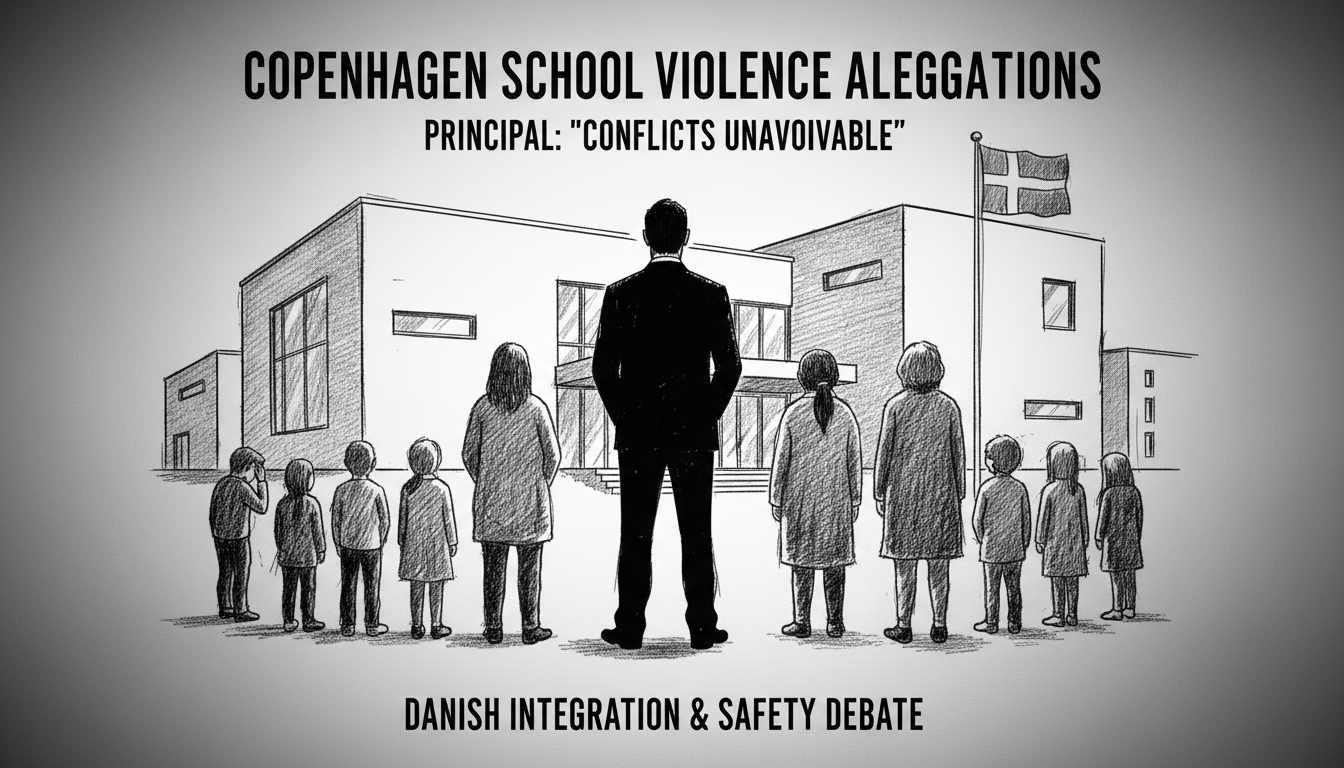
A Copenhagen primary school faces a difficult reality check. Parents of sixth-grade students describe a troubling environment. They report bruises, physical fights, and a deep sense of insecurity among their children. The school's principal acknowledges the challenges but offers a different perspective. In a large public school, conflicts are sometimes unavoidable, the principal stated. This situation highlights a recurring gap in Danish society news. There is often a divide between the daily experiences of families and the institutional viewpoint of schools.
The school is located in Vanløse, a district of Copenhagen. This area, like many others, grapples with the complex demands of Copenhagen integration. The Danish welfare system traditionally provides strong support for public education. Yet stories like this one test its resilience. Parents feel their concerns are not being heard or addressed with sufficient urgency. They see visible signs of distress in their children and want immediate action. The school leadership points to the broader context of managing hundreds of students from diverse backgrounds. They emphasize ongoing efforts to improve the social environment.
This is not an isolated incident in Danish social policy discussions. National statistics on integration and education often reveal friction points. A recent report from the Ministry of Immigration and Integration showed that children with an immigrant background can face specific social challenges in schools. The report did not link this directly to violence but to broader social inclusion. Municipalities across Denmark, including Copenhagen, run social centers and programs aimed at preventing youth conflict. The effectiveness of these programs is a constant topic of debate among community leaders and officials.
What does this mean for the Danish model? The system is built on trust and a high degree of social cohesion. When parents publicly question the safety of a core institution like the folkeskole, it signals a crack in that foundation. The principal's comment about unavoidable conflicts is honest. It also risks sounding dismissive to frightened parents. The real test for Danish immigration policy and local social policy is in the response. Will there be a concrete, transparent plan to restore trust? Community leaders in similar districts often call for more resources for specialized pedagogical staff and conflict mediators.
The path forward requires bridging that perception gap. It demands clear communication between the school administration and parents. It also requires the municipality to provide tangible support. The story from Vanløse is a microcosm of a larger national conversation. It asks how Denmark maintains its renowned social stability in an increasingly complex urban environment. The answer will depend on whether the system can listen, adapt, and prove that safety and inclusion are not just ideals but daily realities in its schools.