
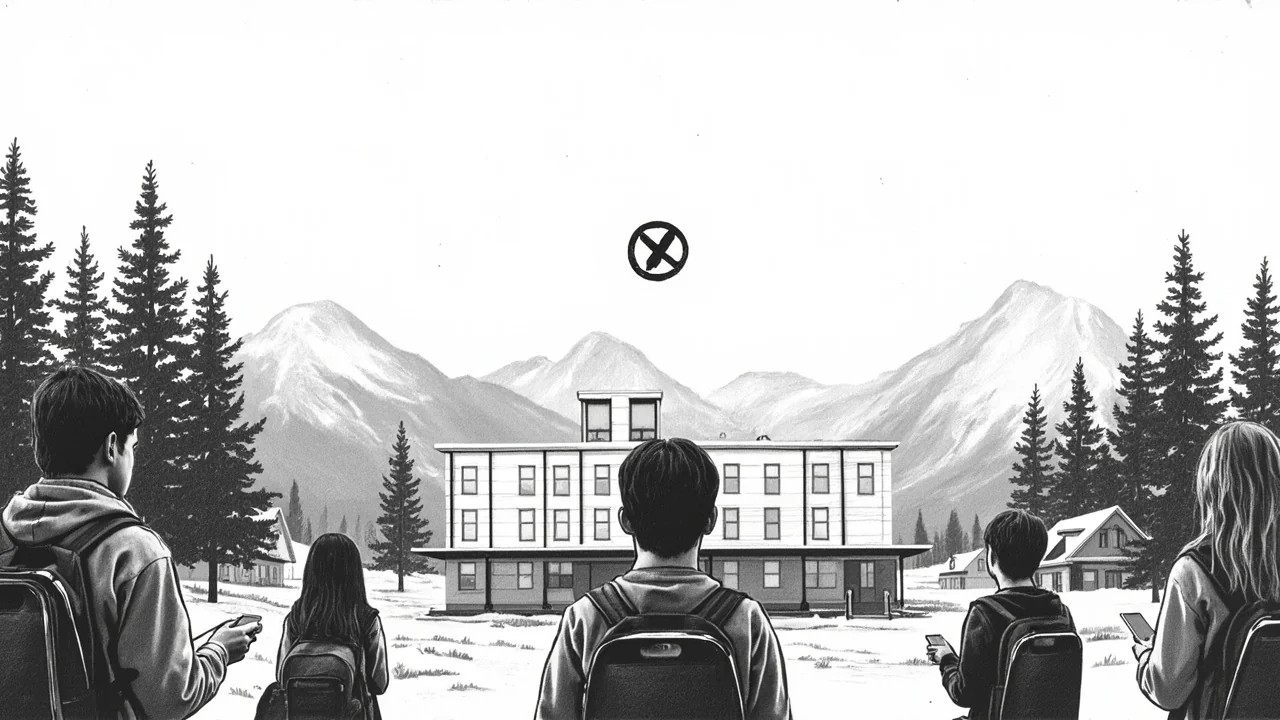
Sweden's government will ban mobile phones for students in every primary school and after-school center starting this autumn term. Education Minister Simona Mohamsson (L) confirmed the national mandate, stating it aims to improve focus and social interaction during the school day. The policy, outlined in a formal referral to the Council on Legislation (lagrådsremiss), mandates students surrender devices at the start of the day and reclaim them after classes. This move from Rosenbad centralizes a rule already practiced by roughly 80 percent of Sweden's schools, where principals have held local authority to impose bans for several years.
From Local Authority to National Mandate
For years, Sweden's education system operated on a principle of local autonomy, allowing individual school principals to set their own mobile phone policies. This resulted in a patchwork where about four out of five primary schools already had some form of restriction in place. Minister Mohamsson's announcement represents a significant shift, transferring this decision-making power from individual school heads to the Swedish government. The policy shift requires a formal legislative amendment, which is why the proposal has been sent for review to the Council on Legislation, a standard step for assessing the legal quality of government bills before they reach the Riksdag. The Riksdag is expected to debate the bill after the council's review, with the government aiming for implementation by the start of the autumn term in August.
The Minister's Rationale and Scope
In her statements, Minister Simona Mohamsson framed the ban as a tool for enhancing educational quality and childhood development. "All of Sweden's pupils will return to a mobile-free school after the summer break," Mohamsson said. "They will hand in their phones at the beginning of the school day and get them back after." She emphasized that the time between should be dedicated to learning and, during breaks, to socializing with friends, playing football, or reading a book. The ban's scope is comprehensive, applying not only to classroom hours but also to leisure-time centers (fritidshem) and open leisure activities for school-age children. This broad application underscores the government's intent to create phone-free zones for young children throughout their entire structured day within the public education system.
Legislative Pathway and Implementation
Swedish government policy follows a defined bureaucratic process. The current proposal is at the remiss stage, where relevant authorities and organizations can submit their opinions on the draft legislation. Following this consultation, the government will finalize a bill to present to the Swedish Parliament. A simple majority vote in the Riksdag is required for the law to pass. The government districts responsible for education policy have signaled strong support, suggesting a high likelihood of passage. Implementation will then fall to Sweden's 290 municipalities and independent school operators, who manage the nation's approximately 4,800 primary schools. They will be tasked with establishing uniform procedures for collecting, storing, and returning mobile phones, a logistical challenge that will require clear guidance from the National Agency for Education.
Historical Context and Existing Frameworks
This is not the first time the Swedish government has intervened in school social policy. Past Riksdag decisions have set national guidelines on issues like homework and bullying. The move to a national phone ban aligns with a broader, ongoing debate about children's screen time and mental health, topics frequently discussed in Stockholm politics. The existing Swedish Education Act (Skollag 2010:800) already grants schools the authority to regulate items that disturb the educational environment. The new law would specifically codify mobile phones as such an item, removing any ambiguity or variance between schools. This creates a uniform standard, ensuring a student in Stockholm operates under the same rules as a student in rural Dalarna.
The Road to Autumn Term Implementation
The timeline is tight. For the ban to be active after the summer break, the legislative process must proceed without significant delay. The Council on Legislation typically reviews proposals for three months, after which the government finalizes the bill. A Riksdag vote could occur in the spring or early summer. Given the government's majority and the prevalence of existing local bans, significant political opposition is not anticipated. However, the discussion may involve amendments concerning exceptions for educational use or students with special needs. The coming months will see detailed scrutiny of the proposal's wording by parliamentary committees, a standard step in Sweden's consensus-driven policy-making process. The final policy text will determine the precise contours of Sweden's new mobile-free school environment.