
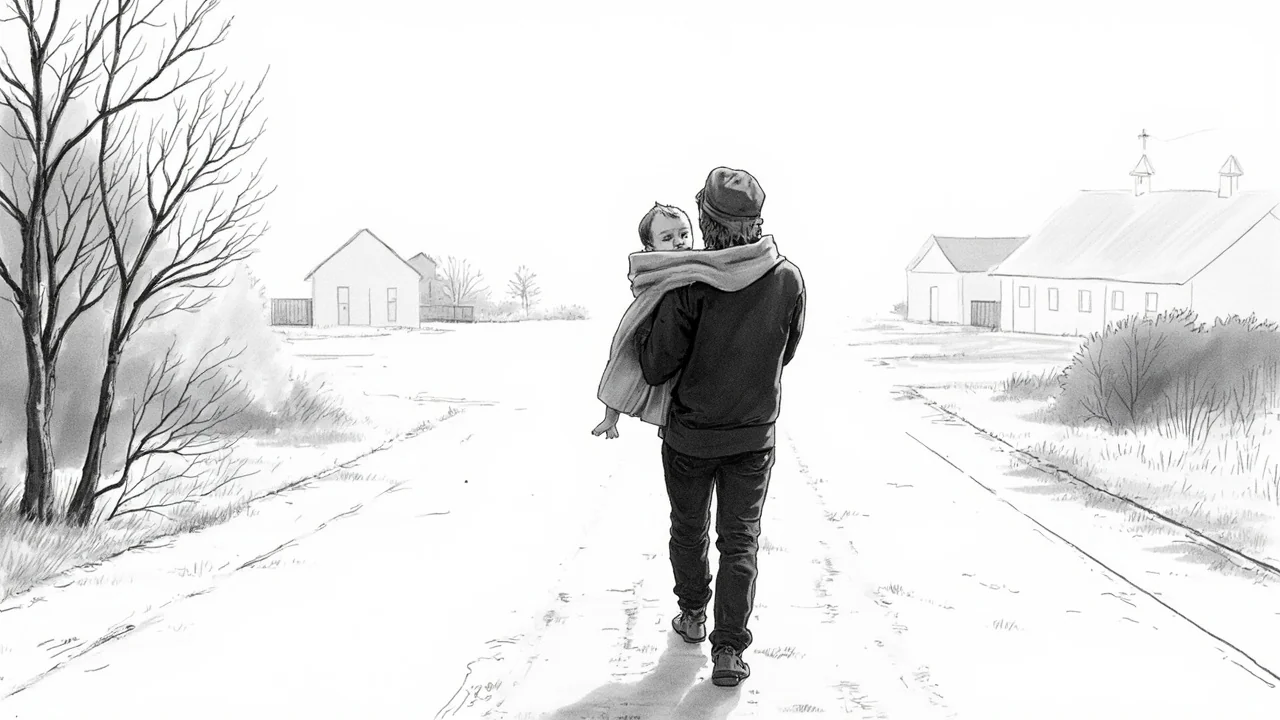
Sweden immigration news has sparked national concern after authorities ordered the deportation of an eight-month-old boy born in Stockholm to Iran—a country he has never visited. The infant, whose entire family legally resides and works in Sweden, lacks a residence permit due to a policy change that closed a legal pathway for children of certain migrant workers.
A Family Caught in Policy Shifts
The boy’s mother obtained a work permit in 2022 under a temporary government measure known as "spårbyte" (track change). This allowed individuals who had previously been denied asylum—but who secured employment—to remain in Sweden legally. At the time, their newborn son was expected to gain residency through family ties. But in April 2023, the Swedish government removed the possibility for dependents of spårbyte recipients to obtain residence permits. The child, born after this cutoff, now falls into a legal gap: his parents are authorized to live and work in Sweden, but he is not.
Migrationsverket, Sweden’s migration agency, has ruled that the infant must be deported to Iran alongside his parents if they choose to accompany him. However, current security conditions in Iran have led to a nationwide pause on all deportations to the country. For now, the family remains in limbo—legally present, yet with their youngest child officially marked for removal.
Life in Limbo in Stockholm
The family lives in a modest apartment in Rinkeby, a neighborhood in northern Stockholm known for its diverse immigrant communities. Neighbors describe them as quiet, hardworking, and deeply integrated. The father works night shifts at a warehouse, the mother recently started part-time cleaning work after maternity leave. Their older child attends preschool nearby.
“We just want our baby to be safe here, where he was born,” the mother said in a statement. “He’s never even left Stockholm. How can they send him to a country he doesn’t know?”
Friends and local advocates have rallied around the family, organizing petitions and contacting members of parliament. A community center in Husby hosted a small gathering last week, where residents shared stories of similar cases—children born in Sweden denied legal status due to bureaucratic timing.
The End of Spårbyte and Its Ripple Effects
The spårbyte policy was introduced as a pragmatic solution during labor shortages, particularly in sectors like construction, healthcare, and logistics. It offered a second chance to thousands who had initially sought protection but were later able to support themselves through employment. Between 2021 and early 2023, over 5,000 people received work permits under this track.
But the program came with limitations. When it ended abruptly in April 2023, no transitional provisions were made for newborns or newly formed families. Children born after that date to spårbyte permit holders were excluded from automatic residency—a detail many applicants say they were never clearly informed about.
Legal aid organizations report a growing number of such cases. While exact figures aren’t publicly available, lawyers note a sharp increase in appeals involving infants and toddlers caught in the same situation. “These aren’t abstract policy debates,” said one immigration attorney familiar with the case. “We’re talking about babies who’ve only ever heard Swedish lullabies.”
Legal Battle and National Debate
The family has appealed Migrationsverket’s decision to the Migration Court, arguing that deporting an infant to a country with no familial or cultural ties violates both Swedish constitutional principles and international child protection standards. Their case hinges on Article 3 of the UN Convention on the Rights of the Child, which states that the best interests of the child must be a primary consideration in all actions concerning them.
Yet Swedish migration law prioritizes formal eligibility over discretionary humanitarian grounds in most routine cases. Without a residence permit application approved before the April 2023 cutoff, the child has no legal basis to stay—even though his parents’ status is fully compliant.
The case has ignited debate across political lines. Center-left lawmakers call it a “bureaucratic cruelty,” while some on the right defend the rule of law, arguing that exceptions could encourage irregular migration. Public opinion appears divided, though social media reactions show widespread sympathy for the infant.
What Happens Next?
For now, the deportation cannot proceed due to the suspension of returns to Iran. The Swedish government has cited deteriorating human rights conditions and active unrest as reasons for the pause, which has been in place since late 2022. This gives the family temporary relief—but no long-term solution.
If the Migration Court upholds Migrationsverket’s decision, the child will remain in legal limbo indefinitely, unable to access certain public services or travel outside Sweden. If the court rules in the family’s favor, it could set a precedent for dozens of similar cases.
Meanwhile, the boy continues his daily routines: naps in a crib near the kitchen window, visits to the local park in Tensta, and weekly check-ups at the maternal health clinic. To neighbors, he’s just another Stockholm baby. To the state, he’s an undocumented foreigner.
As Sweden grapples with shifting migration policies and labor market needs, this case raises urgent questions about belonging, bureaucracy, and what it truly means to be Swedish. Is citizenship defined by paperwork—or by the sound of your first words, the streets you crawl on, the country that holds your birth certificate?
With no clear path forward, the family waits. And so does their eight-month-old son—born in Sweden, raised in Sweden, but told he doesn’t belong.
Read more: Sweden Rate Cut Delivers Instant Relief to Floating Mortgage....
Read more: Stockholm Faces Acute Shortage of Roofers.