
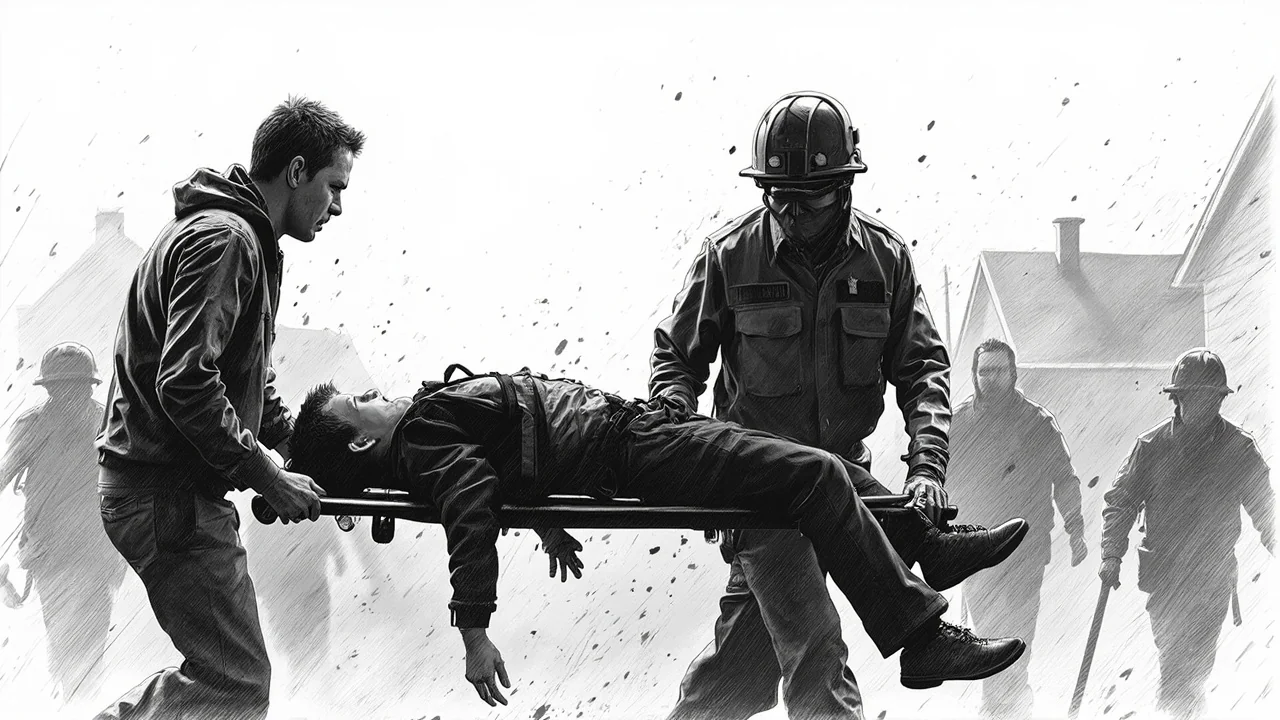
Sweden's annual fireworks debate has reignited after a teenage boy was hospitalized with serious burns in western Stockholm. The incident occurred in Beckomberga on Monday afternoon, with police describing the events leading to the accident as a form of 'play.' The boy, described as being in his early teens, was conscious and able to speak after being struck by a rocket. Authorities have filed a police report and are contacting the parents of all children involved, signaling a case that touches on Swedish society, parenting norms, and the nation's complex relationship with pyrotechnics.
A Monday Afternoon in Beckomberga
The scene was a residential area in Beckomberga, a suburb known for its mix of apartment blocks and green spaces. It was just after 2 PM on a Monday. School was out for the day. According to police, a group of boys were together, engaged in what was initially termed 'lek' – the Swedish word for play. This simple word now carries a heavy weight. The play involved fireworks, a common yet controversial feature of Swedish life, particularly in the lead-up to major celebrations like New Year's Eve and Walpurgis Night. The exact nature of the play remains unclear, but it ended with one boy being hit by a rocket, suffering burns significant enough to require immediate hospital transport.
Police were quick to respond. They spoke with the other boys present, all around the same age. The legal machinery began to turn. A formal report was made for a crime against the law on flammable and explosive goods. More significantly, police stated that the parents or guardians of all the children involved would be contacted. They also announced that reports would be filed with social services, a standard procedure in Sweden when children are involved in serious incidents, focusing on the child's welfare and the family's situation. This dual approach – legal and social – is classic Swedish protocol, aiming to address both immediate wrongdoing and underlying causes.
The Swedish Fireworks Dilemma
This accident is not an isolated event. It taps directly into a perennial Swedish cultural conversation. Every year, as darkness descends early over Stockholm, reports surface of fireworks being misused. They are set off in playgrounds, thrown from balconies in suburbs like Rinkeby or Tensta, or used in confrontations. For many young people, especially in areas where boredom and a lack of recreational facilities are reported, fireworks represent accessible excitement. They are powerful, loud, and visually spectacular. The thrill often overshadows the very real danger.
Yet, fireworks also hold a cherished place in Swedish tradition. The bright explosions against the dark winter sky are a central part of celebrating New Year's Eve. On April 30th, during Valborg (Walpurgis Night), bonfires are accompanied by fireworks to welcome spring. There's a cultural tension here. The same item that marks communal celebration can, in another context, become a source of injury and anti-social behavior. Retail sales of stronger fireworks are restricted to adults over 18, but enforcement is challenging. The incident in Beckomberga shows that children still gain access, with sometimes terrible consequences.
Parenting and Responsibility in the Swedish Welfare State
The police decision to contact all parents and involve social services points to another core Swedish value: collective responsibility for children. The concept of 'vårdnadshavare' – guardians or custodians – is strong. Society expects parents to know where their children are and what they are doing. When something goes wrong, the system doesn't only look at the child who was hurt or who lit the fuse; it examines the context of all the children present. This can be jarring for those from cultures with a more individualistic approach to blame.
Social services in Sweden, or 'socialtjänsten,' are not solely a punitive body. Their involvement is meant to assess if a child is at risk or if a family needs support. In a case like this, they might explore questions of supervision, the child's peer group, or underlying issues. This reflects the Swedish societal model, which aims to be preventative. The goal is to stop the next accident, not just process the last one. For the families in Beckomberga, this means navigating both the shock of the accident and the scrutiny of the state's support-and-control apparatus.
The Aftermath and a Search for Solutions
The boy's condition, while serious, was initially described with the cautiously positive Swedish terms 'vaken och talbar' – awake and able to speak. His road to recovery, however, may be long. Burn injuries are painful and carry risk of infection and lasting scarring. The psychological impact on him and his friends, who witnessed the accident, should not be underestimated. A moment of play turned into a traumatic event that will likely define that Monday afternoon for years to come.
So where does this leave the fireworks debate? After similar incidents, calls for stricter bans inevitably grow louder. Some municipalities have experimented with public fireworks displays only, removing the element of private use. Others argue for better education, starting in schools, about the dangers. There's also a practical challenge. Sweden's long coastline and borders make illicit importation relatively easy, meaning bans on legal sales may not stop determined individuals.
Perhaps the Beckomberga incident will fade from the news cycle, another brief report in a cold season. But for those involved, and for the community, the echoes will remain. It highlights a gap between law and reality, between tradition and safety, and between childhood curiosity and adult consequence. As Sweden moves toward its next major festival, parents in Stockholm and beyond will likely have a renewed conversation with their teenagers. They'll discuss the line between fun and danger, while authorities ponder if the cultural love for a sparkling sky is worth the very real cost seen on a Monday afternoon in a western suburb.