
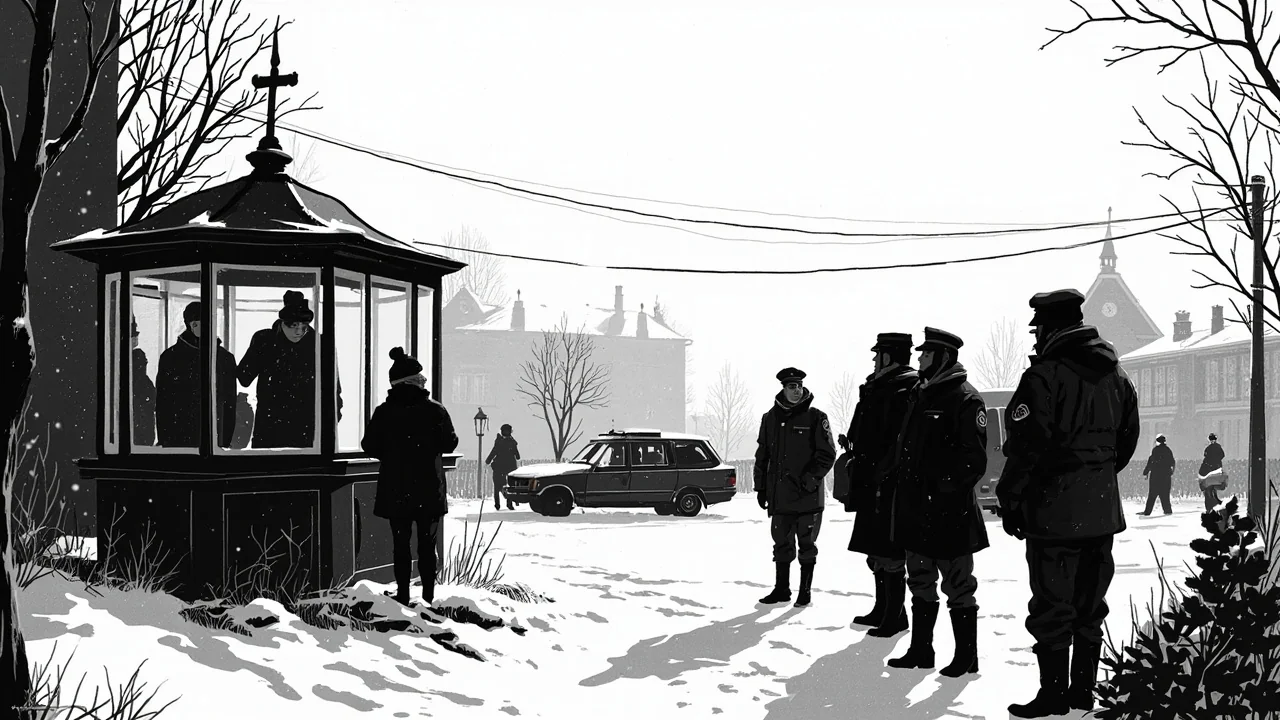
Sweden police shot and killed a man on Christmas Day in Boden after he murdered a 55-year-old woman and attacked her daughters. The violent domestic incident in northern Sweden has concluded with prosecutors ruling the officers acted in self-defense, closing the case without charges. This story, emerging from a quiet residential area, touches on the raw nerves of domestic violence and the extreme pressures faced by first responders.
A Christmas Morning Turned Violent
The call came in around noon on December 25th. For hours before that, a nightmare had unfolded inside a villa in Boden. A 55-year-old woman was murdered. Two of her adult daughters were seriously injured. The alleged perpetrator was a man known to the family. One daughter, after enduring the violence for several hours, managed to alert the police. Four officers responded to the domestic disturbance call, arriving at the house shortly after 12 PM. Two of them entered the home. What they found was a scene of horror—injured women lying on the floor. The initial priority was to secure the scene and aid the victims. But the situation was far from stable.
Vice Chief Prosecutor Bengt Åsbäck from the Special Prosecution Chamber described the moments that followed. The officers had barely begun to process the scene when the man appeared. He moved to attack them with a knife. "They have been, as I assess it, completely surprised," Åsbäck stated. "At close range, they were forced to discharge their weapons. They have, as I assess it, defended themselves from serious or potentially fatal knife violence." The man was shot and died at the scene. The two injured daughters received urgent medical care.
The Legal Aftermath and a Closed Case
The swift legal review that followed is standard procedure in Sweden whenever police use lethal force. The Special Prosecution Chamber, which handles investigations into police misconduct, took charge. Prosecutor Bengt Åsbäck's investigation focused on whether the officers' actions constituted a crime or were justified as self-defense, or nödvärn. After examining the evidence, Åsbäck concluded the police acted lawfully. They faced an immediate, close-range threat with a deadly weapon. Their response was deemed proportionate to the danger. Consequently, the preliminary investigation has been dropped. No further legal action will be taken against the officers involved.
This outcome, while legally clear-cut, does little to soften the human tragedy. A family is shattered. A mother is dead. Her children are traumatized, both by the initial violence and the violent end they witnessed. The officers, too, are left to carry the psychological weight of the event. "It's a terrible situation for everyone involved," a local resident told me, preferring to remain anonymous. "We think of this as a quiet neighborhood. This kind of violence... it's not what you expect on Christmas, or any day." The community of Boden, a municipality known for its military presence and tight-knit communities, is now grappling with this domestic tragedy that spilled into public view.
The Silent Epidemic Behind Closed Doors
While the police shooting concludes the legal narrative, the story truly begins with the domestic violence that preceded it. This case highlights a grim reality in Swedish society, one that persists despite the country's progressive reputation. Domestic violence is often a hidden crisis, escalating behind closed doors until it erupts, sometimes fatally. The fact that the violence lasted for hours before police were called is a tragic, common element in such cases. Victims can be isolated, threatened, or psychologically unable to seek help until it is too late.
Sweden has strong laws against violence towards women and active support networks. Organizations like Roks (The National Organization for Women's and Young Women's Shelters in Sweden) work tirelessly. Yet, as this case in Boden shows, the system can only intervene when the violence is reported. The Christmas timing adds another layer of painful complexity. Holidays, with their financial pressures, family gatherings, and increased alcohol consumption, can be a trigger point for domestic abuse worldwide. In Sweden, the long, dark winter days of mörkertid in the north can also exacerbate feelings of isolation and stress.
A Community in Mourning
The aftermath in Boden is one of quiet mourning and support. There is no public anger directed at the police, according to local sentiment. The focus is on the surviving family members. In Swedish culture, there is a strong concept of ordning och reda—order and tidiness. This event violently disrupts that sense of order. The community response will likely follow a characteristically Swedish pattern: practical support, respect for privacy, and an avoidance of sensationalism. A collection for the family may be organized discreetly. Neighbors will offer help without intrusion.
This stands in contrast to how police shootings often ignite public debate in other nations. In Sweden, trust in state institutions like the police remains relatively high. The transparent, independent investigation by the Special Prosecution Chamber is a key part of maintaining that trust. The quick, clear conclusion likely prevents the speculation and controversy that can fester in other contexts. However, it does not answer the deeper, more uncomfortable questions about how to prevent such violence in the first place. How does a society stop a man from murdering a woman in her own home on Christmas Day?
Looking Beyond the Headline
The Boden case is not a story about police brutality. It is a story about domestic violence with a tragic, double-ending. It forces us to look at the moments before the police arrived. What signs might have been missed? What barriers did the victims face in seeking earlier help? These are the difficult questions that remain after the legal file is closed. Sweden continues to work on these fronts, with ongoing public awareness campaigns and efforts to strengthen early intervention.
For the people of Boden, life will slowly return to normal. The snow will continue to fall on the quiet streets. But in one villa, and in the hearts of the officers who responded, the memory of that Christmas Day will endure. The case may be closed in the eyes of the law, but the process of healing for the survivors and the community is just beginning. It serves as a stark, sorrowful reminder that the most profound dangers can exist not in public spaces, but in the private places we call home. How many other silent crises are unfolding right now, waiting for a desperate call to break the silence?