
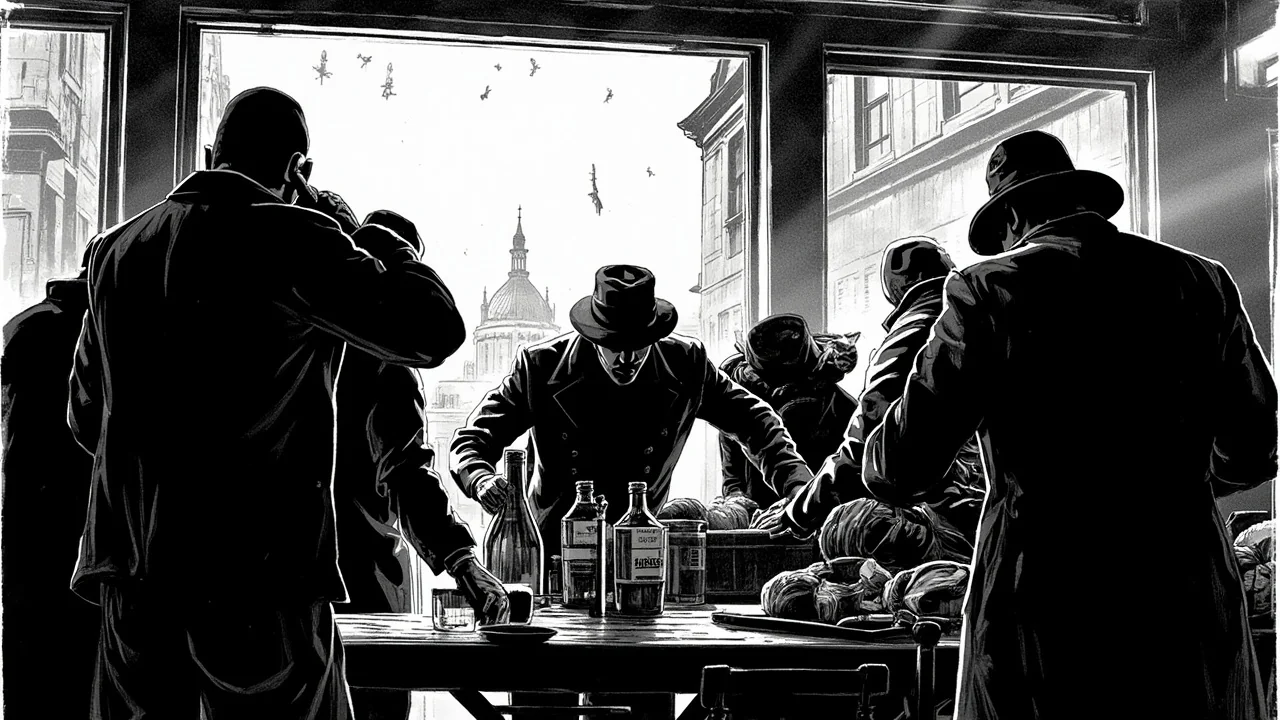
Swedish police are hunting what they suspect could be a single, large-scale bootleg alcohol mixing hub in Stockholm. The theory emerges after a string of cases where young people were poisoned by liquor, and two men were recently convicted for selling dangerous spirits to minors. It's a troubling trend for Sweden's capital.
Ola Åkesson, a community police officer, is blunt about it. “It's completely unbelievable that we've managed to arrest the same perpetrator three times in the same area and for the same crime,” he said. One of the men was arrested three times in the Konradsberg area on Kungsholmen. All three arrests happened near schools. That detail gnaws at locals. It suggests a brazen operation, targeting the most vulnerable.
A Pattern on Kungsholmen
The Konradsberg area isn't some shadowy back alley. It's a residential part of Kungsholmen, that island in central Stockholm known for its city hall and quiet waterfront paths. The fact this is happening here, next to places where kids study and play, adds a layer of grim irony to Stockholm's usually orderly streets. One man was convicted for three serious violations of the Alcohol Act. The other for one. Their sentences? Conditional sentences with community service, and one month in prison with probation. For some, the punishment feels light given the potential harm.
“We're still investigating,” police said, when asked about the central mixing hub theory. They're piecing together whether these aren't just isolated sellers, but foot soldiers for a larger, more organized supply chain. The bootleg booze isn't just cheap vodka; it's often laced with dangerous substances like methanol, which can cause blindness or death. That's what makes this more than just underage drinking—it's a public health crisis.
The Systembolaget Paradox
This hits a nerve in Swedish culture. Sweden has Systembolaget, the state alcohol monopoly. It exists to control consumption, promote responsible drinking, and guarantee product safety. The system is a cornerstone of the Swedish social contract. But it also creates a black market. High prices, strict age limits, and limited hours drive some—especially curious teenagers—to seek alternatives. The black market fills a demand the legal market deliberately suppresses. It's an old story, but with new, dangerous chapters.
Walking through Kungsholmen now, there's a tension. Parents glance more warily at groups of teens. The local kiosk owner might shake his head, recalling the ambulance sirens last autumn. Sweden's relationship with alcohol is complex, a mix of strict control and weekend binges. This bootleg trade exploits that very complexity. It preys on the desire to circumvent the rules, turning a cultural quirk into a lethal gamble.
What the Convictions Reveal
The recent court cases offer clues. The repeated arrests in the same small zone point to a fixed operational base. It's not a moving target. It's embedded. For police, catching the same guy three times is both a success and a frustration. It shows they can nab the low-level dealers, but it also hints at a resilient network that simply replaces them. The product keeps flowing. The convictions themselves are a tool, a way to map connections and pressure smaller players to talk about who's above them.
Without a central mixing point, producers work in small, scattered batches. That's harder to track but limits scale. A single hub suggests ambition. It suggests an operation producing enough toxic liquor to supply a significant part of the underground market in central Stockholm. That's the scary part of the police theory. They're not looking for a guy in a basement with a few bottles. They're looking for a warehouse, equipment, and distribution logistics.
The Neighborhood Impact
The human impact is felt in places like Kungsholmen's residential blocks and schoolyards. Trust erodes. “You think you know your neighborhood,” one resident told me near Fridhemsplan. “Then you hear this. It changes how you see things.” The social contract isn't just about buying alcohol; it's about feeling safe in your own community. When profit from poisoning kids is made steps from a school gate, that contract is broken.
Swedish society prides itself on safety and fairness. This bootleg trade is a direct attack on those values. It bypasses all the controls—the taxes, the age checks, the health regulations—that are meant to protect people. The police response now is twofold: bust the sellers on the street, and follow the trail back to the source. The street busts are visible. The investigation into the possible hub is the silent, crucial part.
Looking Ahead
So where does this go? The police have a theory. They have location patterns from the Konradsberg arrests. They have convicted individuals who might provide information. The next phase is the grind of surveillance, financial tracing, and forensic analysis of seized spirits. It's meticulous work. The goal isn't just another arrest; it's dismantling the potential heart of the operation.
For Stockholm, the question hangs in the crisp spring air. Is there a factory of fake vodka hidden somewhere in the city, pumping out poison? The police are acting like there might be. And for parents on Kungsholmen, and in neighborhoods across Stockholm, that's a terrifying thought. They're left hoping the system—the police, the courts, the very Swedish model of control—can catch up with the reckless greed operating in its shadows. The story of Sweden's bootleg booze problem is still being written, one investigation at a time.