
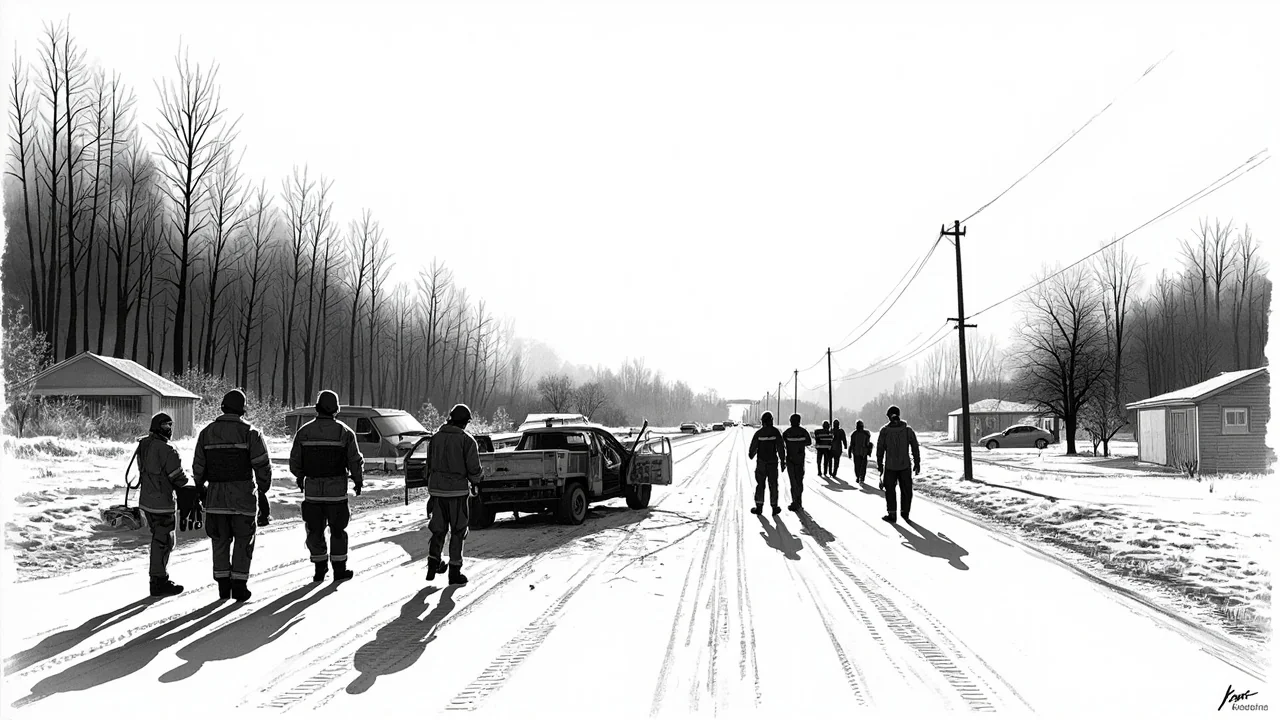
Sweden's roads saw another serious incident Tuesday morning when a collision in Kalix sent one person to hospital. The alarm came at 8:30 AM after a car ended up sideways across the roadway, completely blocking traffic. Three people were involved in the accident that halted the morning commute in this northern municipality.
For residents of this small coastal town in Norrbotten County, the flashing blue lights and blocked road were a stark reminder of winter's persistent dangers. While the specific cause remains under investigation, the timing aligns with Sweden's challenging transition from winter's grip to spring's thaw. This single event opens a wider conversation about road safety, infrastructure, and community in Sweden's northern reaches.
A Northern Commute Interrupted
Kalix, with a population just over 15,000, is a community where most people know their neighbors. A serious crash on a main road disrupts the rhythm of the entire town. The road was completely blocked initially, a common protocol to allow emergency services to work safely and for police to document the scene. For those stuck in the resulting queue, the wait was more than an inconvenience—it was a moment of collective concern. "You see the ambulance and your heart sinks," says local shopkeeper Erik Lundström, who often drives that route. "You wonder if it's someone you know. It makes you slow down for the rest of the week."
This reaction is typical in close-knit Swedish communities, where individual events resonate deeply. The incident occurred on an ordinary Tuesday morning, a time when people are heading to work or school, making the disruption and the shock more palpable. The human impact of such events extends far beyond those directly involved, touching witnesses, first responders, and the entire community that hears the sirens.
The Context of Swedish Road Safety
Sweden is globally renowned for its Vision Zero traffic safety policy, an ambitious goal to eliminate all road fatalities and serious injuries. The approach has drastically reduced deaths over decades by focusing on systemic safety—better road design, lower urban speed limits, and safer vehicles. Yet, challenges remain, particularly in rural and northern areas like Norrbotten.
Long, dark winters, frequent ice and snow, and vast distances between communities create unique hazards. While Swedish drivers are generally adept at winter conditions, accidents like the one in Kalix highlight the ever-present risk. "The policy work is national, but the risk is local," explains traffic safety analyst Lena Pettersson. "A wet patch of ice, a moment of distraction, or an animal on the road can have severe consequences on a high-speed rural route. The margin for error is smaller."
Statistics show that while overall traffic fatalities in Sweden are among the world's lowest, a significant portion of serious collisions occur on rural roads outside major cities. The investment in maintaining and upgrading this extensive network, especially in the north, is a constant topic of political debate.
The Human Chain of Response
Behind the brief news report lies a well-rehearsed human response chain. From the first witness who called emergency services at 8:30 to the ambulance crew that transported one individual to hospital, the Swedish system swung into action. Sweden's emergency number, 112, connects callers to a coordinated service that dispatches police, fire, and medical resources based on the situation.
The fact that only one of the three involved required hospital transport suggests varying degrees of injury, but any hospital visit following a collision is treated with utmost seriousness. Swedish healthcare prioritizes trauma from traffic accidents, with protocols ensuring swift assessment for potential internal injuries, even if the person appears okay initially.
This system is a point of national pride, built on high taxes and a strong societal consensus for collective security. Yet, in the north, it faces the test of geography. Ensuring rapid response times across sparsely populated areas requires significant resources and constant readiness.
Community and the Aftermath
In Kalix, the story doesn't end when the wreckage is cleared. The social fabric of Swedish society, particularly in smaller towns, means community support is immediate. There will be conversations in the coffee rooms at work, messages of support on local social media groups, and a collective sigh of relief when news spreads that injuries were not life-threatening.
Local authorities will likely review the accident site. Was road condition a factor? Is signage adequate? This feedback loop, where individual incidents inform local safety measures, is a practical application of the Vision Zero philosophy. It turns tragedy into data, and data into potential prevention.
Furthermore, such events often spark personal reflections on driving habits. "It's a wake-up call," says Malin Berg, a mother of two in Kalix. "You check your tires again. You put the phone away. You remember that no text message or minute saved is worth this."
Looking Beyond the Headline
The Kalix collision, while a specific local event, connects to broader Swedish society trends. It touches on the urban-rural divide, where residents outside Stockholm, Gothenburg, and Malmö sometimes feel their infrastructure needs are secondary. It relates to the Swedish lifestyle that values accessibility to nature, which necessitates long drives on sometimes hazardous roads. It also highlights the culture of lagom—moderation—and responsibility that underpins Swedish driving attitudes, which are tested by harsh conditions.
As Sweden continues to grow, with immigration bringing new residents who may be unfamiliar with Nordic winters, driver education and cultural integration around safety becomes even more crucial. The shared understanding of how to drive on ice is a part of Swedish culture that must be consciously passed on.
Ultimately, the goal remains zero. Every accident is examined not as an inevitable tragedy, but as a system failure. This mindset, perhaps more than any guardrail or speed camera, defines Sweden's relationship with road safety. The hope in Kalix, and in every community, is that the lessons learned from Tuesday morning's blocked road will make the system stronger, and the journey safer for everyone who takes to it next.