
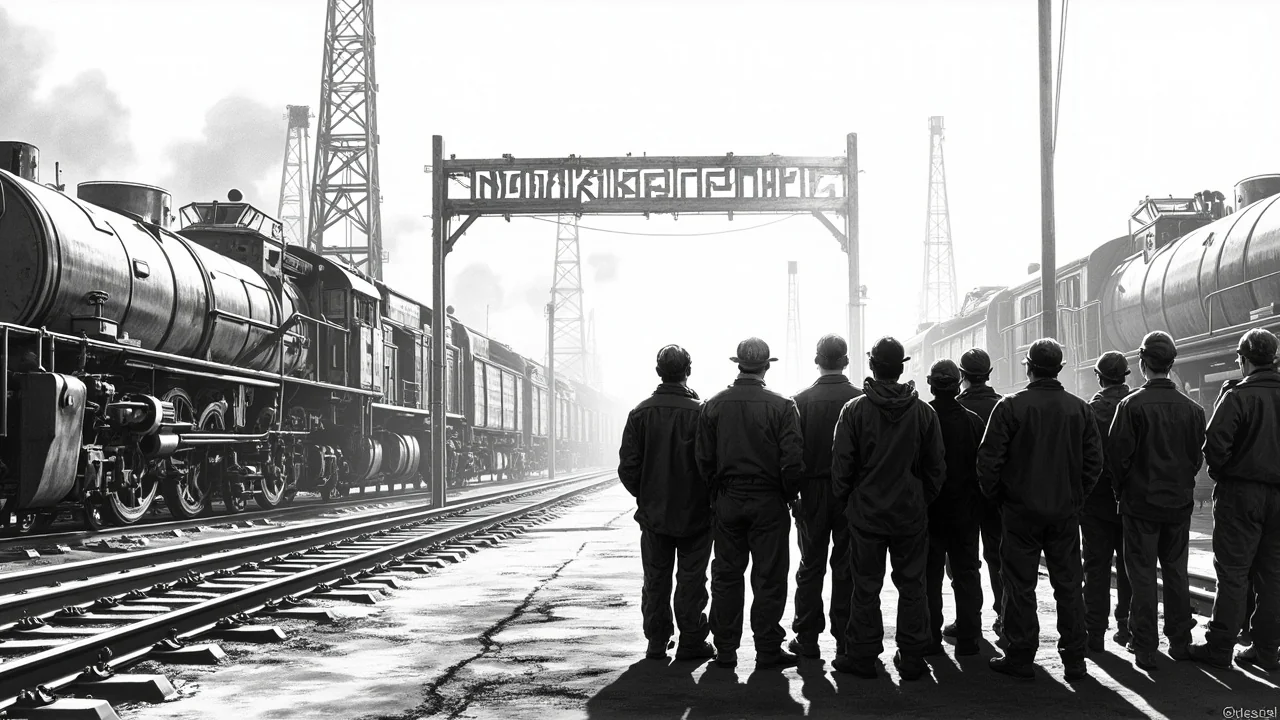
Sweden's railway history is turning a page as Norrköping's 150-year-old marshalling yard prepares for a final shutdown. The decision, confirmed by local project leaders, means the yard will cease all traffic by December 2027. This follows a partial closure scheduled for this December. The move clears the path for the new high-speed Ostlänken line, marking the end of an era for a city built on industry and rail.
"The positive side is that it makes space for Ostlänken," says Josef Erixon, a project leader for Norrköping Municipality. He acknowledges the yard's long service while looking to the future. "We have had great use of the railway for a long time and will continue to do so going forward."
The old yard, a sprawling network of tracks and switches near the city center, has reached its technical lifespan. It lacks electrification and requires significant, costly upgrades. Since 2024, a new, modern marshalling yard in Åby, just outside Norrköping, has taken over operations. Demolition costs for the old facility will be covered within the broader Ostlänken project budget.
The End of an Industrial Landmark
For generations, the rhythmic clatter of shunting freight cars defined the soundscape of central Norrköping. The yard, established during Sweden's rapid industrial expansion, was the logistical heart of a city known as 'Sweden's Manchester.' It connected the textile mills and factories along the Motala River to national and international markets. Its closure is not just an infrastructure change; it's a physical erasure of a key piece of the city's identity.
Walking through the Hageby or Navestad neighborhoods adjacent to the yard, residents have a complex relationship with the site. "You get used to the noise, it becomes a kind of white noise of industry," says local historian Lars Pettersson. "But its absence will be profound. That space has been a constant for 150 years. It's like losing a background character that was always in the city's family portrait."
The Practical Push for Progress
The decision is driven by hard economic and technical realities. Maintaining the antiquated facility is no longer viable. The new Åby yard is automated, electrified, and designed for modern, longer freight trains. It represents the efficiency demanded by contemporary logistics. The Ostlänken project, a major high-speed passenger rail line linking Stockholm and Linköping via Norrköping, requires the land for tracks and stations.
This is a common tension in Swedish urban development: balancing heritage with modernization. In Stockholm, the transformation of the old gasworks into a cultural hub, or in Malmö, the repurposing of shipyard cranes as architectural features, show how industrial relics can be adapted. Norrköping itself has successfully converted old factory buildings into universities and museums. The rail yard, however, presents a different challenge due to its scale and specific function.
What Replaces the Rails?
The million-krona question for Norrköping residents is what comes next. The closure frees up a vast, centrally located area. This presents a unique opportunity for city planning. Initial discussions, as hinted by Josef Erixon, focus on transport infrastructure for Ostlänken. But the long-term potential is much greater.
Could it become a new residential district, like Stockholm's Hammarby Sjöstad, built on reclaimed industrial land? Might it host a park or green space, addressing the need for more recreational areas in the city core? Or could it be a mix of housing, commerce, and cultural venues? The debate will shape Norrköping's next chapter.
"We must be careful not to just create anonymous apartment blocks," says Karin Möller, an urban planner based in the city. "This land has a story. Good Swedish urban design today is about creating communities, not just units. We should incorporate the memory of the site—perhaps through preserved rails, art installations, or the naming of streets and squares."
A National Trend in Local Focus
Norrköping's story reflects a broader trend across Sweden. As the national rail authority modernizes its network, older, centrally located facilities are being consolidated or moved. This frees up valuable urban land but also severs a tangible link to the industrial past. It forces communities to decide what parts of their history to preserve and what to release.
The emotional impact is real, even if the economic logic is clear. The yard is part of the city's cultural memory. Its closure is a tangible example of how Swedish society manages transition, a process often characterized by consensus and long-term planning, yet not without local sentiment and nostalgia.
The Sound of Silence and the Shape of Things to Come
By 2028, the familiar sounds of the yard will be gone. The silence will be noticeable. For some, it will be a relief from the noise. For others, it will feel like a loss. The true test for Norrköping will be how it uses this silence. The space left behind is a blank canvas next to the flowing Motala River and the iconic old industrial buildings.
The city has a strong track record of reinvention. From the decline of the textile industry, it pivoted to education, technology, and culture. The old mill buildings now house campuses and the renowned Visualization Center. The rail yard's transformation is the next major project in this ongoing narrative.
Will it become a symbol of seamless, forward-looking progress, or will it be a missed opportunity to honor its past? The coming years of planning and construction will provide the answer. The decision to close the yard is final. The decision about what it means for Norrköping's future is just beginning. The tracks are being lifted, but the journey of the city continues on a new route.