
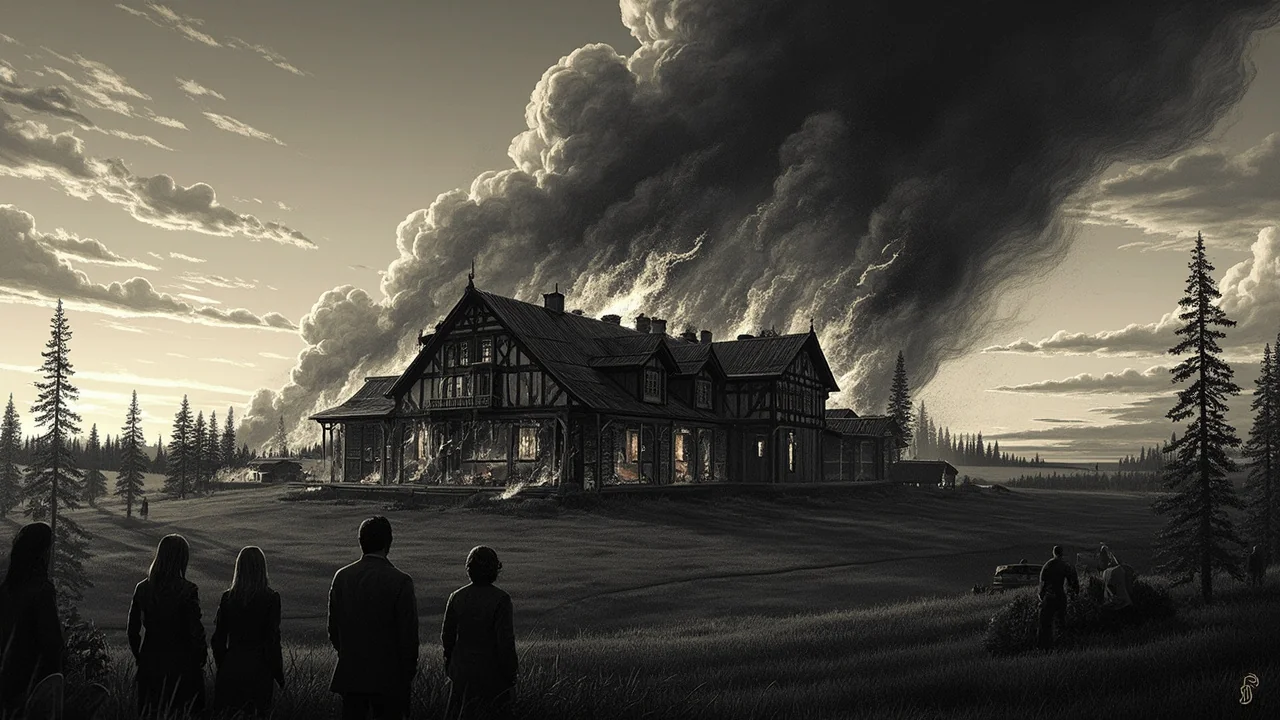
Sweden's historic Prinsnäs manor house, with origins dating back to the 1600s, was engulfed by a devastating fire outside Sävsjö. The first alarm sounded at 8:40 PM on Sunday evening. The blaze began as a chimney fire, igniting in the flue before spreading to the floor structure between the first and second stories. Firefighters initially believed they had extinguished the flames and prepared for monitoring operations. Then, in the early morning hours, the fire roared back to life with renewed intensity. "The fire has taken hold throughout the entire house, and we are working to bring it down," a rescue service operations leader said in a statement on Monday morning. No one was injured in the incident.
A Night of Flames and History
The fight for Prinsnäs was a long and difficult one for emergency crews. This was not a simple house fire. It was a battle against time and timber in a structure that has witnessed centuries of Swedish history. The manor, located in the countryside of Småland, represents a tangible link to Sweden's agrarian past and the system of large estates that shaped the region. Its loss is not just about bricks and mortar, but about collective memory. Local residents reportedly gathered at a safe distance, watching in silence as flames lit up the night sky, consuming a familiar landmark. The emotional impact of such an event in a close-knit community like those around Sävsjö is profound. These buildings are anchors in the landscape, their silhouettes part of the daily view, their stories woven into local identity.
The Unpredictable Nature of Heritage Fires
Fire experts note that fires in very old buildings present unique challenges. The initial classification as a "chimney fire" is common, but dangerously misleading in historical structures. "What often happens in these older manors and farmhouses is that the fire gets into void spaces—between walls, under floors, in the attic," explains Lars Bengtsson, a retired fire safety engineer with experience in heritage properties. "The construction methods from the 17th and 18th centuries used massive timbers and complex joinery. A fire can smolder unseen for hours, traveling along beams before finding a new oxygen source and exploding back into life. It's a nightmare scenario for firefighters." This exact pattern appears to have played out at Prinsnäs. The crews' decision to move to a monitoring phase was standard protocol after the visible flames were knocked down, only for the hidden fire to re-emerge with devastating force.
Cultural Heritage: A Fragile Legacy
The burning of Prinsnäs manor touches on a critical issue in Sweden: the preservation of its physical history outside major cities. While royal palaces and Stockholm's old town are well-protected, hundreds of lesser-known manors, mills, and farmsteads dot the countryside. Their preservation often falls to private owners, historical societies, or municipalities with limited budgets. Fire protection upgrades in these buildings are complex and expensive. Installing modern sprinkler systems can require invasive work that conflicts with preservation principles. Many rely on smoke detectors and hope. This fire will likely reignite debates within the Swedish National Heritage Board and local councils about how to better support the owners of these cultural assets. Is there a need for targeted grants for fire suppression in listed buildings? Should insurance premiums be subsidized? The questions are as old as the timbers that burned.
The Human Element in the Aftermath
While no physical injuries were reported, the psychological and cultural injury is significant. For the owners, the loss is immeasurable. These are often families who have dedicated lifetimes to maintaining a piece of Sweden's story. For the community, it's a loss of a venue for local gatherings, a potential site for school history trips, or simply a beautiful object in the shared environment. In small towns and rural areas, such manors are not remote museums; they are part of the living fabric. They host crayfish parties in August, Christmas markets in December, and serve as a point of local pride. The process now shifts from firefighting to investigation and, eventually, to the question of what comes next. Will there be an attempt to salvage and rebuild, following historical techniques? Or will the site become a quiet, fenced-off ruin, a memorial to what was lost? The answers depend on the extent of the damage, insurance, and the will of those involved.
Looking Forward from the Ashes
As the smoke clears over Sävsjö, the incident at Prinsnäs serves as a stark reminder. Sweden's cultural heritage is not just in archives and books; it's in the wooden beams of old farmhouses and the stone foundations of manors. It is vulnerable. This fire, though a local tragedy, highlights a national concern. How does a modern society actively care for the physical remnants of its past, especially those in private hands? The conversation often focuses on grand projects, but resilience is built one historic roof at a time. The loss of Prinsnäs is a page torn from a local history book. It prompts us to look at the other historic structures in our own communities and ask: are they safe? The memory of this night's orange glow against the Småland sky should be a catalyst for greater vigilance and support. Preserving history requires more than sentiment; it requires active, practical protection. The story of Prinsnäs does not end with the extinguishing of the last ember. Its final chapter will be written in how Sweden responds to prevent the next such loss.