
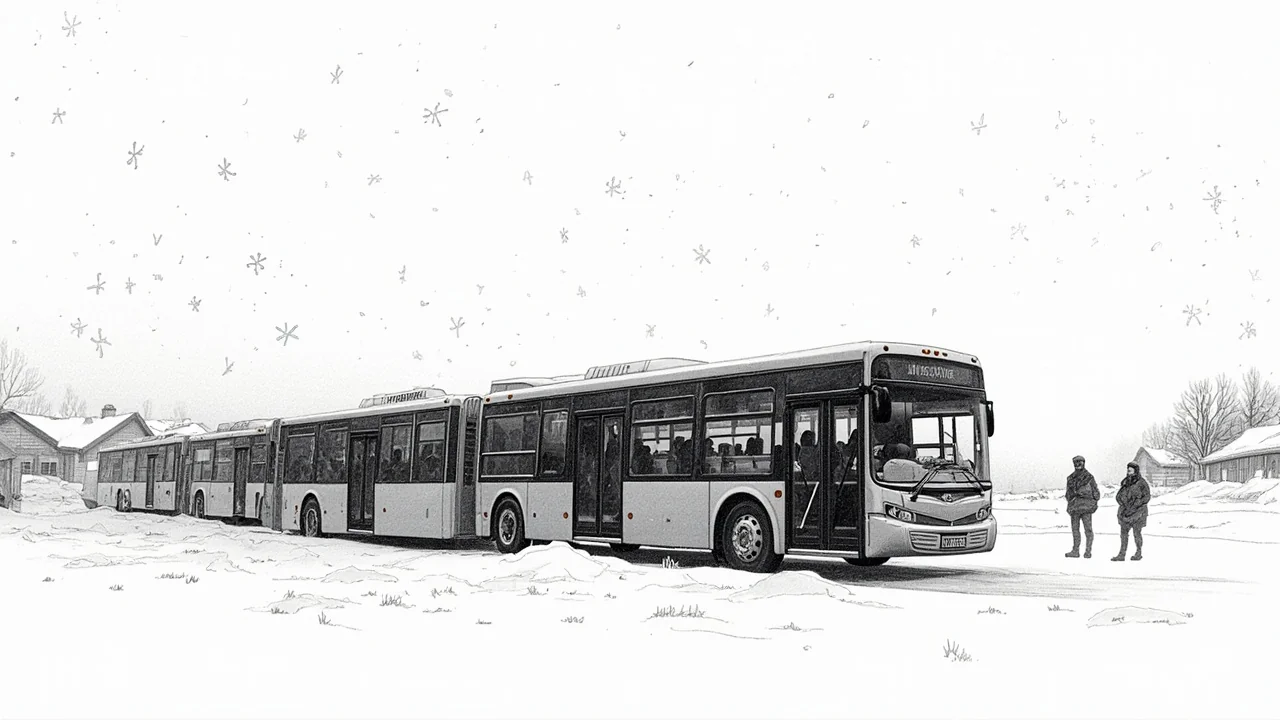
Sweden's public transport faced a major disruption this week as 30 buses were pulled from service in Gothenburg during freezing temperatures. The failure left 13 bus lines cancelled, stranding commuters and prompting an emergency crisis meeting at Västtrafik, the region's transport authority. Sara Ihrlund, Västtrafik's business area manager, confirmed the vehicle shortage was due to unexpected mechanical faults. This incident highlights a recurring vulnerability in Swedish winter infrastructure, raising questions about preparedness in one of the world's most developed public transit systems.
A Chilly Commute in Sweden's Second City
Monday morning in Gothenburg dawned cold and chaotic. Commuters wrapped in thick winter jackets found themselves waiting at bus stops with no service. The familiar blue and white Västtrafik buses were conspicuously absent from many routes. For a city that prides itself on efficient, reliable public transport, the sudden collapse of a significant part of the network felt like a system failure. Parents struggled to get children to school, workers were late for shifts, and elderly residents found themselves isolated. The disruption cut across the social fabric of Sweden's second-largest city, from the central Nordstan area to suburban neighborhoods like Kortedala and Angered. In a nation where punctuality and planning are cultural cornerstones, the unannounced cancellations caused significant frustration.
The Search for Answers at Västtrafik
Inside Västtrafik's offices, managers convened an urgent crisis meeting. Their task was to diagnose a puzzling and widespread problem. According to Sara Ihrlund, the issue was a "vehicle shortage challenge" stemming from mechanical failures across several of their operating companies. The specific nature of the faults was not immediately disclosed, leaving commuters and officials alike in the dark. Was it a fuel line issue in the cold? A problem with electronic systems? A batch of faulty parts? The lack of a quick, public explanation added to the public's unease. This is not the first winter challenge for Swedish transport. While the country is famously adept at handling snow, isolated technical failures in complex modern vehicles can cascade into systemic problems. The incident exposes the tight margins on which even robust systems operate, where the failure of a few dozen vehicles can disrupt travel for tens of thousands.
A Broader Look at Swedish Society and Systems
This bus crisis, while localized, touches on broader themes in Swedish society. Sweden has invested heavily in its public transit, aiming to create a green, accessible, and car-light society, especially in urban centers. This vision is central to the Swedish lifestyle and environmental goals. When a core component fails, it shakes public confidence. For international observers, it might seem ironic that a Nordic nation famed for its winter resilience would have vehicles fail in the cold. But the reality is more nuanced. Sweden's public transport system is a complex web of publicly owned authorities like Västtrafik and private subcontractors who operate the buses. This model, designed for efficiency and competition, can sometimes create fragility if maintenance standards or parts sourcing are not perfectly aligned across the network. The crisis meeting was likely as much about contractual responsibilities and supply chains as it was about spark plugs and diesel.
The Human Cost of Cancelled Connections
Beyond the logistics, the story is about interrupted lives. Public transport in Sweden is more than a utility; it's a social lifeline. It connects students to universities, workers to jobs, and families to each other. In suburbs with lower car ownership, often areas with higher immigrant populations, reliable buses are essential. A cancelled line can mean a missed medical appointment, a late pick-up from daycare, or an hour-long walk in sub-zero temperatures. This human impact is the real measure of the failure. It tests the famous Swedish concept of "tillit" or trust—the social contract that the system will function. For new arrivals learning the rhythms of Swedish society, such a breakdown can be particularly disorienting. It contrasts sharply with the normally seamless experience of taking a bus or tram in cities like Stockholm or Gothenburg, where timetables are gospel and disruptions are rare.
Analysis: Winter Reliability in the Nordic Model
From an expert perspective, this incident serves as a stress test. Sweden's infrastructure is among the world's best, but no system is perfect. The question is how failures are managed and communicated. The initial response—a crisis meeting—is typical of the Swedish approach: methodical, internal, and focused on technical solutions. However, the public communication seemed to lag. In today's connected society, passengers expect real-time information and clear reasons for disruption. This is where even the most advanced systems can stumble. Culturally, Swedes are understanding of weather-related issues, but less forgiving of what appears to be a maintenance or planning failure. The event may prompt a review of winter readiness protocols across all transport subcontractors, ensuring a unified standard for vehicle hardening against cold. It also highlights the dependency on a just-in-time fleet; there is little slack in the system for simultaneous failures.
Looking Ahead: Resilience or Repeated Failure?
The true test for Västtrafik and similar authorities will be what happens next. Will this be a one-off event, quickly resolved and forgotten? Or is it a symptom of a larger issue, such as an aging bus fleet, strained maintenance budgets, or fragmented supplier standards? As Sweden continues to promote a sustainable, public-transit-focused lifestyle, reliability is non-negotiable. The coming days will see if the 13 affected lines are restored fully and if a transparent explanation is offered to the public. For a nation that hosts global events and aims to be a model of functional society, these everyday systems are its foundation. Their failure, even temporarily, is a reminder that the Nordic model requires constant upkeep, investment, and vigilance—especially when the temperature drops. The silent bus stops of Gothenburg this week ask a loud question: is the system as robust as we believe, or are we skating on thin ice?