
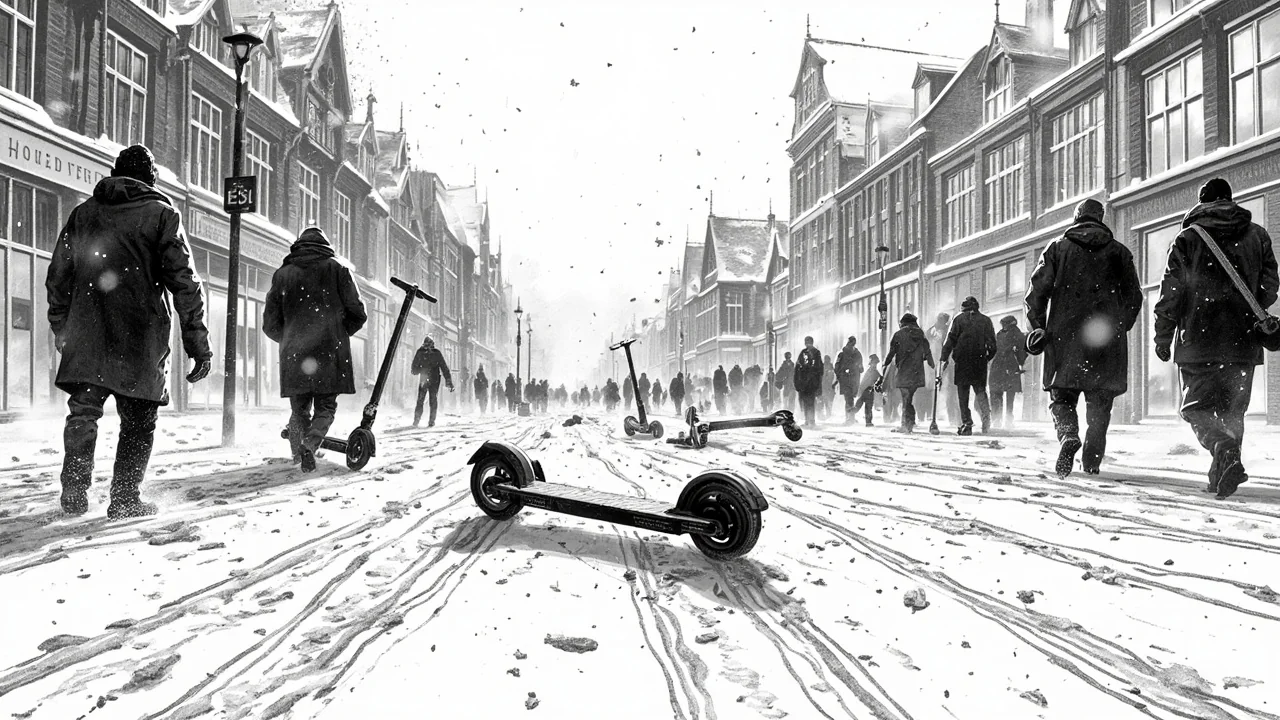
Sweden's sudden snowstorm has exposed a critical flaw in the nation's celebrated micromobility sector. The city of Västerås filed a police report against e-scooter operator Ryde on December 10th. Officials cited the company's failure to quickly remove scooters abandoned in public spaces. This legal action against a permitted operator reveals a growing tension between urban innovation and practical municipal management during harsh Nordic winters.
Janne Thunberg, a snowplow operator in Västerås, knows the problem intimately. His daily route is often blocked by discarded electric scooters half-buried in snowdrifts. "There were even more e-scooters in my way last winter," Thunberg noted, comparing this year's challenges to the previous season. His experience on the front lines of city maintenance highlights the human impact of a systemic logistical failure.
A City's Ultimatum and a Company's Shutdown
The police report represents an escalation in a long-standing conflict. Västerås city officials had reached their limit with improperly parked scooters obstructing sidewalks and roadways. Thomas Wulcan, head of the city's traffic unit, confirmed the action was necessary. He stated the report was filed because Ryde was not sufficiently fast in retrieving misplaced vehicles. This move signals that Swedish municipalities are willing to use legal tools to enforce operational standards on tech-driven rental services.
In response, Ryde has completely shut down its rental system in Västerås. Robert Inde, representing the company, explained the decision was weather-driven. "It is not possible to start an e-scooter now," Inde said, referencing the deep snow and cold. A team is currently working to collect the fleet. Inde admitted a significant number of scooters remain stuck in snow piles across the city. The company is prioritizing recovery of the most badly placed vehicles first.
The Nordic Winter Stress Test
This incident serves as a stark winter stress test for the e-scooter business model in Scandinavia. The sector, often hailed as a symbol of smart city innovation, faces unique challenges in the region. Sudden and heavy snowfall can instantly immobilize a fleet of small, electric vehicles. This creates a massive logistical reversal: instead of distributing scooters, companies must urgently collect them to avoid fines and public obstruction.
Robert Inde acknowledged the learning curve. "We are drawing lessons from this year's sudden snow dump," he stated. He promised improved performance in the future, saying, "We will be faster next year." This commitment points to a recognized need for more robust winter contingency plans. The promise hinges on developing faster response protocols and potentially deploying more staff and equipment ahead of forecasted storms.
The Broader Impact on Swedish Urban Mobility
The situation in Västerås is not an isolated case. Cities like Stockholm, Gothenburg, and Malmö have all grappled with similar issues. E-scooters left on sidewalks become hazardous ice traps for pedestrians. When buried by snowplows, they can damage municipal machinery. The conflict pits the promise of flexible, green transport against the fundamental need for safe and clear public pathways during winter months.
Thomas Wulcan offered a slight reprieve for Ryde, noting the company has since "stepped up" its efforts. This suggests that the police report itself may have served as a catalyst for more serious action. The dynamic shows a common pattern: municipal pressure leading to improved private sector compliance. However, it also raises questions about whether reactive enforcement is sustainable, or if stricter pre-season regulations are required.
Analysis: A Failure of Logistics, Not Technology
The core failure in Västerås is logistical, not technological. The e-scooters themselves are victims of weather. The breakdown occurred in the operational plan for fleet management during extreme conditions. A successful Nordic micromobility company must have a winter strategy as detailed as its summer deployment plan. This includes weather-triggered collection protocols, dedicated winter recovery vehicles, and clear, real-time communication with city authorities.
From an investment perspective, this event highlights a key risk for venture capital flowing into Nordic mobility startups. Business models that work in warmer European climates require significant, costly adaptation for Sweden. Operational resilience during five-month winters is not a secondary feature; it is a primary requirement for survival and licensing. Investors in Stockholm's startup hubs may need to scrutinize winter preparedness more closely.
Looking Ahead: Regulation and Resilience
The path forward likely involves tighter municipal contracts. Cities may mandate specific response times for vehicle removal after snowfall warnings. They could also require companies to demonstrate their winter recovery capacity before granting annual permits. Geofencing technology, which creates virtual parking zones, could be made more stringent or even used to automatically disable scooters in certain areas ahead of major storms.
For snowplow operators like Janne Thunberg, the solution is simple: clear paths. His work is essential for emergency services, public transport, and daily commerce to function. Every minute spent maneuvering around an abandoned scooter is a minute lost in making the city safe and accessible. The efficiency of his work is a public good that directly impacts citizen welfare during winter.
The coming months will test Ryde's promise of improvement. The company's ability to manage this crisis and rebuild trust with Västerås officials will be closely watched by other Swedish municipalities. The incident has set a precedent. Other cities may now feel empowered to take similar legal action if they deem operator response inadequate. This could lead to a broader shake-up in the industry's approach to Scandinavia's toughest season.
Ultimately, the sight of a snowplow blocked by a rented scooter is a powerful symbol. It represents the collision between a fast-moving, tech-enabled vision of urban life and the slow, steady, physical reality of maintaining a city in a harsh climate. For Sweden's e-scooter industry to thrive, it must not just navigate streets, but master the snowdrift. The winter will always come. The question is whether these companies will be ready to meet it.