
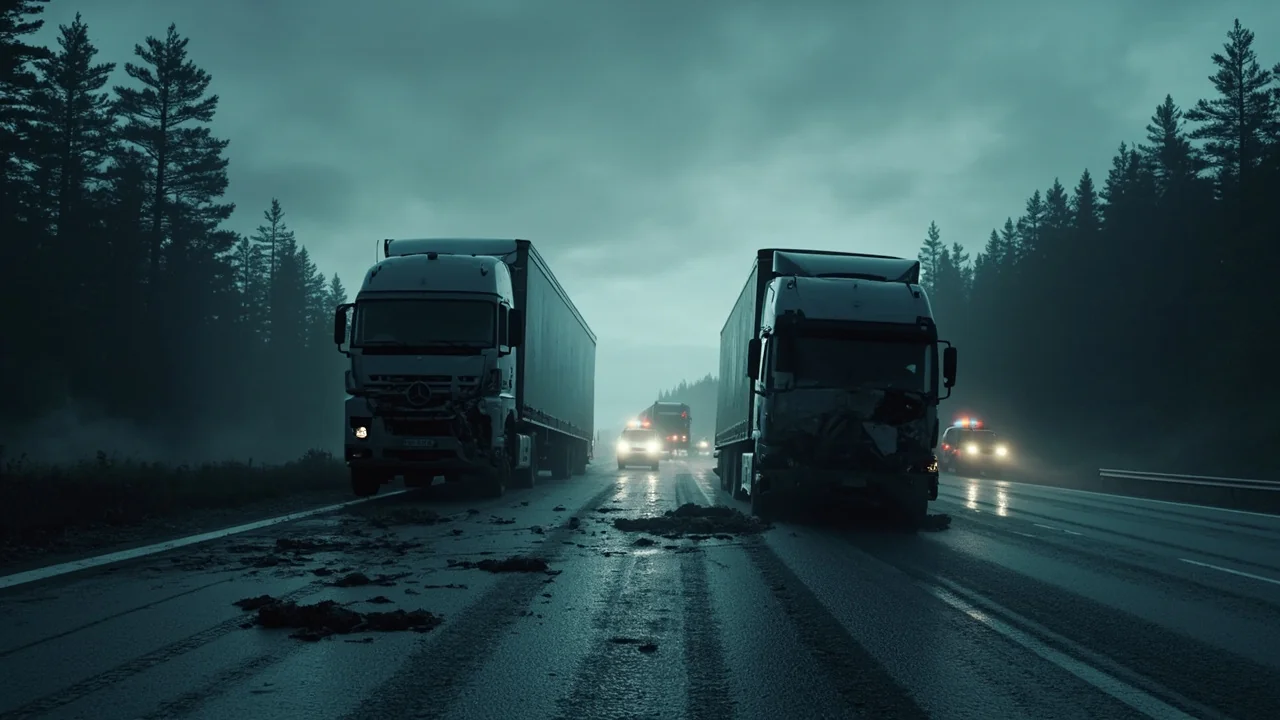
Sweden's vital E4 highway faces a total shutdown southbound near Jättendal after two trucks collided. The crash has caused massive traffic disruption, according to the Swedish Transport Administration. Police, ambulance, and rescue services are on the scene. Initial reports indicate no one was injured, but the incident has brought a key national artery to a standstill during a busy travel period.
For anyone trying to navigate Sweden's long, narrow spine, this is a nightmare scenario. The E4 is more than just a road; it's the country's main circulatory system. It runs from Helsingborg in the south, past Stockholm, and all the way up to the Finnish border at Haparanda. A closure here, in Nordanstig Municipality, creates a ripple effect felt across the entire region. Traffic is being rerouted from Harmånger via Stocka and Strömsbruk—a detour that adds significant time and frustration for commuters and freight haulers alike.
A Nation Grinds to a Halt
Imagine the logistics. Fresh produce heading south from Norrland's farms is delayed. Components for factories in Stockholm's suburbs sit idle. Families on a weekend trip to the coast are stuck in a crawling line of cars. This single crash exposes the fragile dependency Sweden has on this one route. The Transport Administration's warning of "very large traffic impact" is an understatement for those caught in it. It’s a stark reminder of how our modern society, built on just-in-time delivery and mobility, can be undone by a split-second event on a stretch of asphalt.
I spoke with Lars Bengtsson, a long-haul driver who was rerouted. He was philosophical but weary. "You plan your day, your breaks, your delivery windows around the E4," he said, waiting in a queue near Stocka. "When it stops, everything stops. My fridge trailer is full of salmon. Time is literally money, and it's ticking away." His sentiment echoes across the transport sector. Sweden's economy relies heavily on road freight, and the E4 carries a disproportionate share of that weight.
The Human Stories Behind the Detour Signs
Beyond the economic numbers are the personal stories. This isn't just about freight. It's about the nurse trying to get to a shift in Hudiksvall, the student heading home to Sundsvall, the couple traveling to a summer stuga (cottage) on the coast. The recommended detour snakes through smaller municipal roads not designed for this volume or for heavy trucks. It brings unexpected traffic into quiet villages, raising safety concerns for locals. Children cycling to a friend's house now share the road with frustrated, diverted truckers.
This incident also puts Sweden's infrastructure resilience in the spotlight. "We have a classic bottleneck problem," explains traffic analyst Mia Karlsson. "For long stretches, especially in regions like Hälsingland, there are very few alternative routes of the same standard. When the E4 fails, the alternatives are often older, winding roads through population centers. The system lacks redundancy." This crash, while an accident, acts as a sudden stress test, revealing the system's weak points.
A Cultural Reliance on the Open Road
Swedes have a unique relationship with their cars and their long-distance travel. The concept of 'långfärd'—a long journey—is woven into the culture, whether for accessing nature, visiting distant family, or the classic summer migration to a summer house. The E4 facilitates this lifestyle. A closure disrupts more than commerce; it disrupts a fundamental Swedish freedom: the ability to traverse their long, beautiful country with relative ease. The frustration is palpable on social media and traffic apps, a digital chorus of sighs from thousands of stranded motorists.
There's also a silent anxiety that follows any major crash, even one with no reported injuries. How close did it come? What if a family car had been between those two trucks? It's a reminder of the shared vulnerability we accept every time we merge onto the highway. The swift response of emergency services is a small comfort, a testament to the system that exists to pick up the pieces when things go wrong.
Looking Ahead: Are We Too Dependent?
The clean-up and investigation will take hours. The wreckage will be cleared, the road surface inspected, and eventually, the traffic will flow again. But the question lingers like diesel fumes in the air. As Sweden continues to debate climate goals and rail investment, incidents like this highlight another urgent need: diversification of transport corridors. Can high-speed rail for passengers and dedicated freight lines relieve this pressure? Or are we destined to remain hostages to the E4, holding our breath every time fog settles over Mälaren or ice forms near Gävle?
For now, the detour signs are up. The GPS systems are recalculating. Life, and logistics, find a way—just a much slower, more complicated one. The crash on the E4 is a temporary event, but it tells a permanent story about a nation connected, and disconnected, by a single road. When will we build the alternatives that make us less vulnerable to a single moment of brake failure or lost concentration? The thousands sitting in traffic today would likely say: sooner rather than later.