
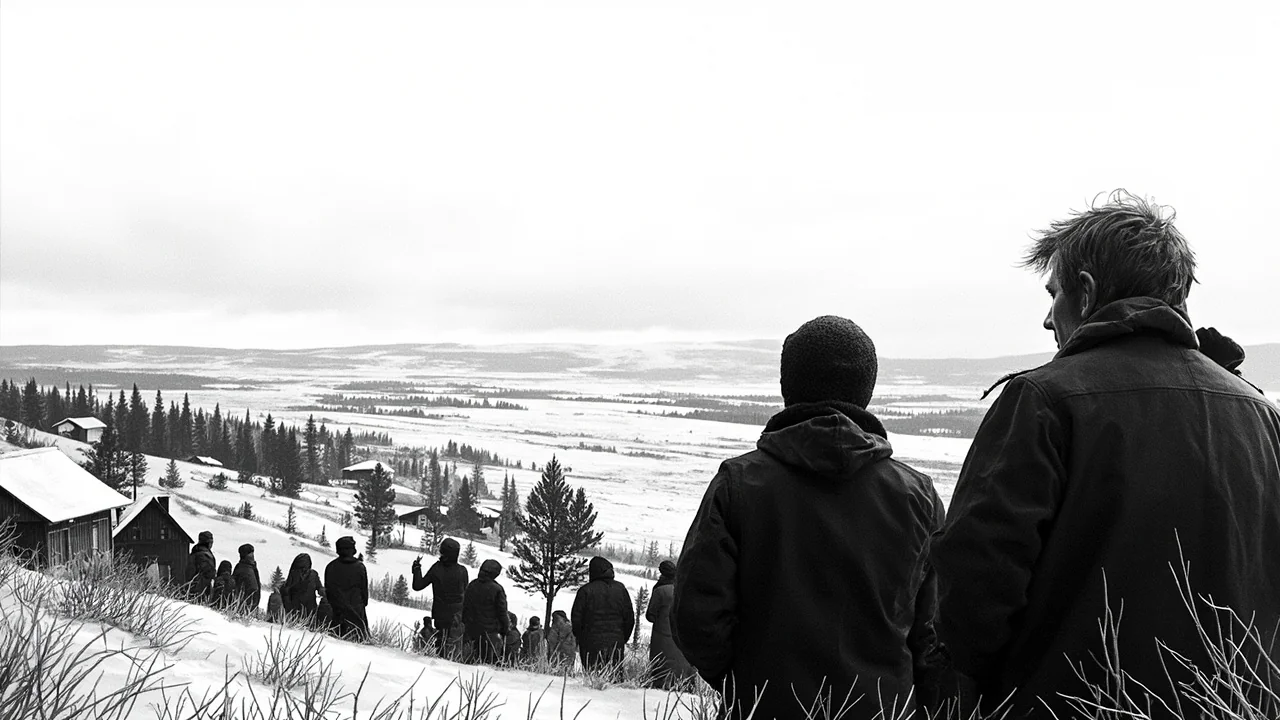
Sweden's state-owned mining company LKAB is demanding accelerated land acquisitions to relocate 6,000 Kiruna residents within ten years. The firm warns that normal construction paces are insufficient for this scale of urban transformation. Stefan Hämäläinen, LKAB's director of community development, stated the project requires a villa every other day and a multi-family house every other month by 2030. This urgency stems from ongoing mining expansions that necessitate moving entire neighborhoods. The Kiruna municipal board will review LKAB's formal proposal this Monday, setting the stage for a critical decision on land use and development.
The Scale of the Construction Challenge
LKAB's targets highlight a massive infrastructure deficit in northern Sweden. Building a villa every other day equates to over 180 homes annually, while multi-family units must rise monthly. Hämäläinen emphasized that this pace must be several times faster than typical Swedish norms. The company argues that only direct control over land and construction can meet these deadlines. This approach bypasses traditional municipal planning processes, raising questions about local autonomy. The Swedish government has historically supported mining interests, but this move tests the limits of corporate involvement in public planning.
LKAB's Proposal and Municipal Resistance
LKAB seeks to purchase the land, fund infrastructure, and oversee building replacements for homes, hotels, and shops. Hämäläinen insists this isn't an encroachment on Kiruna's planning monopoly. He said the goal is to collaborate with Kiruna kommun and lift the financial burden. However, Swedish law grants municipalities exclusive control over land use planning, known as planmonopol. Past Riksdag decisions have reinforced this to ensure democratic local governance. The upcoming board meeting at Kiruna's civic center will debate whether to cede some authority to LKAB for faster execution.
Historical Context of Kiruna's Relocation
Kiruna's relocation isn't new, mining-induced subsidence has forced gradual moves for years. The current phase affects 6,000 more residents, compounding housing shortages. Previous relocations involved coordinated efforts between LKAB, the municipality, and national agencies. Swedish Parliament policies on regional development have allocated funds, but bottlenecks persist. Stockholm politics often prioritize economic growth in the north, yet balancing this with community welfare remains contentious. The government district in Rosenbad has monitored this, but local solutions are preferred.
The Role of National Agencies and Funding
National agencies like the Swedish Housing Agency and Transport Administration could be involved if projects stall. Swedish government policy often delegates such matters to locals, but crises trigger central support. Riksdag decisions on mining and housing in 2023 included provisions for accelerated permits in strategic areas. LKAB's proposal taps into this, arguing that Kiruna's move is vital for Sweden's mineral supply. The company's direct appeal to politicians underscores the high stakes. References to Rosenbad and the Riksdag building indicate that national attention is growing.
Upcoming Decision and Future Steps
The Kiruna municipal board's Monday meeting will scrutinize LKAB's letter and land purchase request. Voting results could sway future government policy Sweden on similar projects. If approved, LKAB would assume unprecedented control, potentially reshaping Kiruna's urban landscape. If rejected, construction delays might prompt appeals to higher authorities, including the Swedish government. The outcome will influence how Stockholm politics address regional development conflicts. As deadlines loom, all eyes are on Kiruna to see if corporate efficiency can coexist with democratic planning in Sweden's far north.
| Construction Target | Frequency Required by 2030 | Annual Equivalent |
|---|---|---|
| Villa | Every other day | 182 villas |
| Multi-family house | Every other month | 6 buildings |
| Table: LKAB's aggressive building targets to relocate 6,000 Kiruna residents. Source: LKAB statement. |
Conclusion: A Test for Swedish Governance
The Kiruna relocation embodies a larger test for Swedish governance structures. Can the Swedish Parliament and government adapt policies to support rapid development without undermining local rights? LKAB's urgency is undeniable, but the solution must align with Sweden's democratic principles. The coming months will reveal whether this crisis fosters innovation or conflict in Stockholm politics and beyond. For now, 6,000 residents await a decision that will redefine their community and potentially Swedish land use policy for decades.