
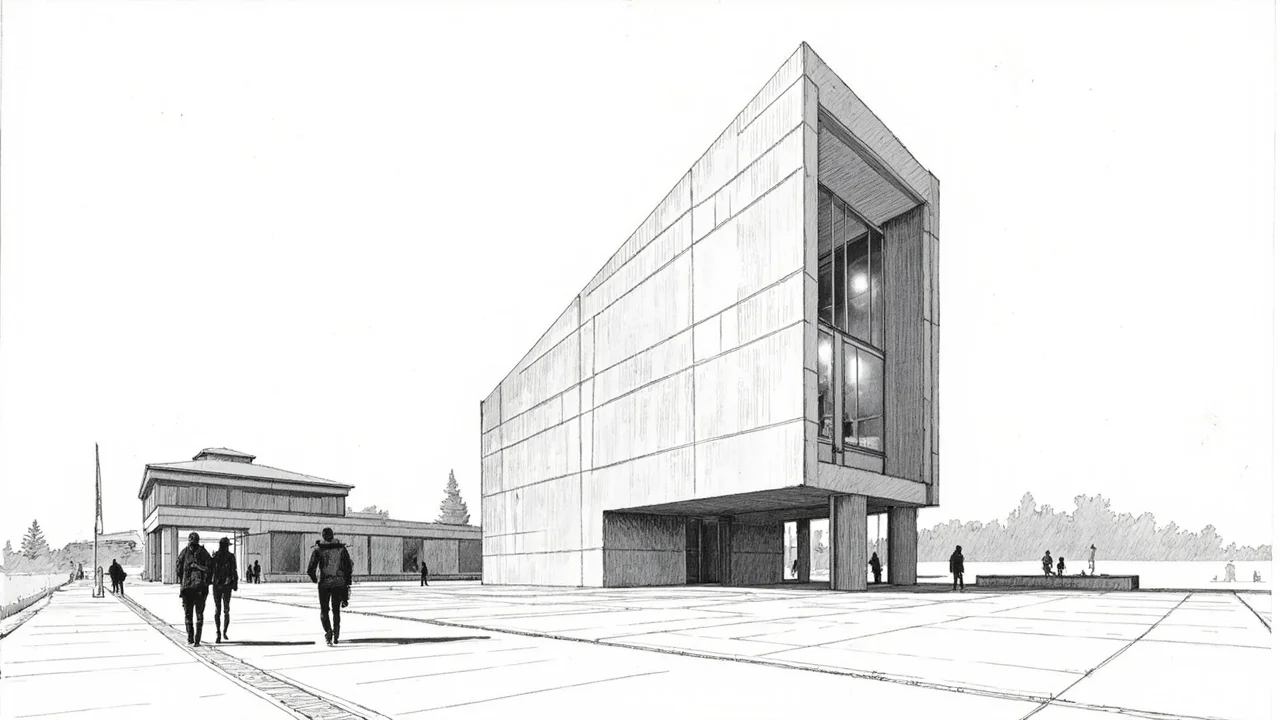
Norrköping City Council has committed 112 million Swedish kronor to construct a new central municipal archive, addressing critical storage and accessibility issues. The planned facility, set for completion in 2028, will replace current inadequate basement storage in the city hall. This significant investment underscores a growing recognition of archival preservation as a core function of local government in Sweden.
A Solution to Cramped and Insecure Storage
For years, Norrköping's city archives have been housed primarily in the cramped cellar of the rådhuset, or city hall. Officials state the collection has simply outgrown its current premises. The basement environment presents challenges for both preserving historical documents and providing a safe, functional workspace for staff. The new building, planned for a site on Albrektsvägen currently occupied by a garage, promises a modern, purpose-built solution. The adjacent old fire station building will remain untouched, preserving a piece of the city's architectural heritage while making space for its documented history.
'Beyond a better work environment and security, the municipality wants the archive to become more accessible for visitors and those parts of the administration that need to consult records,' a municipal spokesperson said in a statement. This move aligns with broader Swedish public sector goals of enhancing transparency and public access to official documents, a principle deeply rooted in the country's Offentlighetsprincipen (principle of public access).
Planning and Procurement on a Strict Timeline
The project timeline is ambitious, with construction slated to begin in 2027 and the building ready for occupancy in 2028. This four-year planning and construction window is typical for Swedish municipal projects of this scale, which require detailed procurement processes under the LOU (Lagen om Offentlig Upphandling). The 112 million SEK budget will cover demolition of the existing garage, construction of the new archive building, and fitting it with specialized climate control and security systems essential for long-term document preservation.
Such infrastructure projects are decided by the Kommunfullmäktige, the city's elected assembly, following review by relevant committees. The funding likely originates from the municipality's capital investment budget, separate from its operational expenses. This decision reflects a strategic priority placed on safeguarding civic records, which include everything from centuries-old property deeds and council minutes to more recent digital records.
The Broader Significance of Municipal Archives
Analysts view this investment as part of a necessary modernization wave for Swedish regional archives. 'City archives are the memory of a municipality,' says Karl Strand, a professor of archival science at Linköping University. 'They are not just storage rooms; they are active institutions crucial for administrative continuity, legal evidence, historical research, and public trust. When they are relegated to unsuitable spaces like damp basements, that memory and trust are physically at risk.'
Norrköping's approach—constructing a dedicated, accessible building—is increasingly seen as best practice. It moves the archive from a passive, back-office function to an active public resource. Researchers, genealogists, journalists, and citizens seeking information on local government decisions all stand to benefit from improved access. Furthermore, a consolidated, modern archive increases efficiency for the city's own administration, saving time and resources when retrieving vital records.
Balancing Historical Preservation with Future Needs
The choice of location is noteworthy. By placing the new archive beside the historic fire station, the city is creating a subtle dialogue between different forms of preservation: one architectural, the other documentary. The garage demolition shows a pragmatic approach to urban development, replacing a non-historical structure with one designed to last for generations. The new building's design, yet to be finalized, will need to meet strict functional requirements while complementing the surrounding cityscape, a common challenge in Swedish urban planning.
This project also hints at the evolving nature of archives themselves. While the core function remains the preservation of physical documents, modern archives must also manage born-digital records. The new facility will undoubtedly require robust IT infrastructure to handle the growing volume of electronic documentation produced by the municipality, ensuring today's digital decisions are preserved for tomorrow's historians.
A Model for Other Swedish Municipalities?
Norrköping's decisive action may set an example for other Swedish cities and towns grappling with similar archival overcrowding. Many municipal archives across Sweden are housed in repurposed and often suboptimal spaces. As legal retention periods for documents lengthen and the volume of material grows, the pressure on these facilities increases. A dedicated, well-budgeted project like this one provides a clear roadmap.
The success of the initiative will ultimately be measured by its usage. Will the new, accessible location lead to more citizens engaging with their local history? Will it streamline municipal operations? The 112 million SEK investment is a substantial bet by Norrköping's policymakers that the answer is yes, affirming that a city's history is worth investing in, preserving properly, and placing within reach of its people. The real value will be realized not in 2028 when the doors open, but in the decades of preserved history and enabled transparency that follow.