
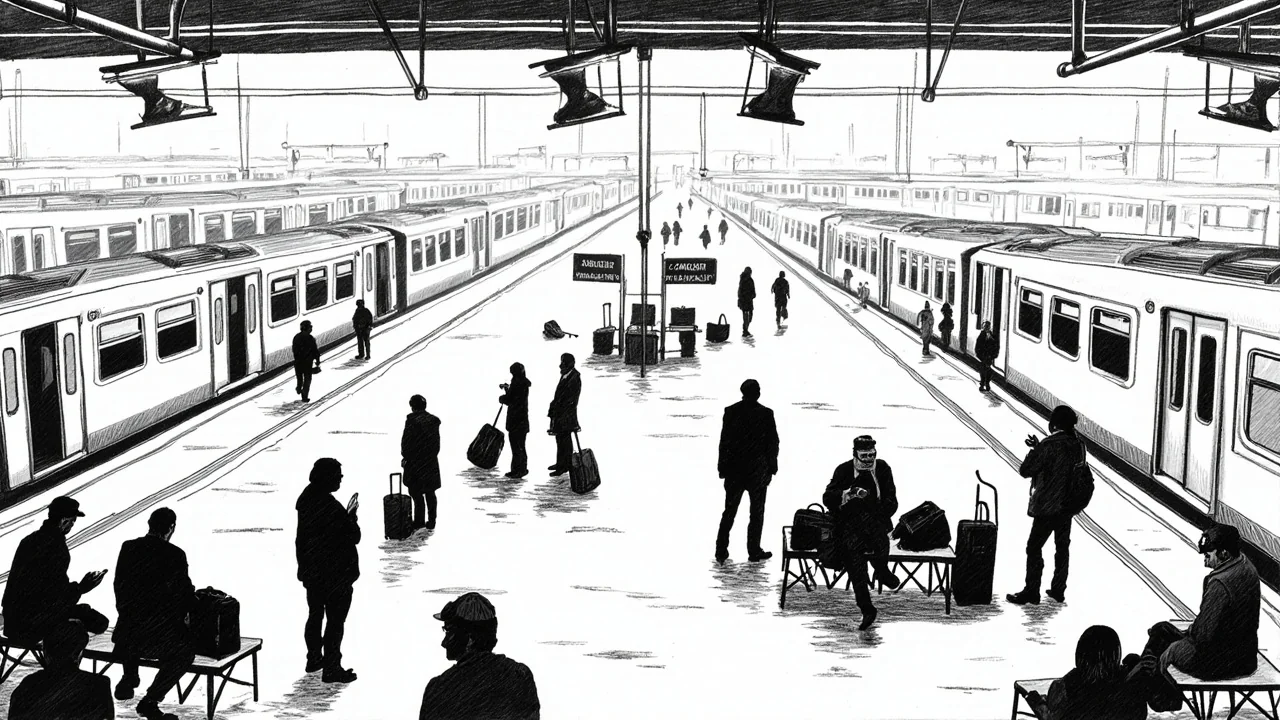
Sweden's northern rail network faces a severe vehicle shortage, forcing the cancellation of ten train departures to and from Umeå. Operator Norrtåg announced the cancellations on its website, citing an inability to get trains to the depot following a snowstorm in Västernorrland and the Swedish Transport Administration's closure of the Botniabanan coastal line. The situation has created a vehicle deficit across all routes Norrtåg serves, with the company now scrambling to organize replacement bus services.
For passengers like Elin Sundström, a student at Umeå University, the cancellation meant a missed crucial seminar in Örnsköldsvik. 'I checked the app this morning and saw my train was gone,' she told me, waiting at Umeå Centralstation. 'No text, no email. Just gone. Now I'm trying to find a bus, but it's chaos. This is my third winter up here, and the trains always seem to break when we need them most.' Her frustration is a common refrain across Norrland, where rail is a lifeline, not a luxury.
The disruption stems from a powerful snowstorm that swept through Västernorrland County. Heavy snow and high winds led the Transport Administration to preemptively close the Botniabanan, a critical modern rail line connecting Umeå with the south. This closure stranded rolling stock, preventing trains from reaching Norrtåg's maintenance depot for deployment. 'As a consequence of the challenging weather and the Transport Administration's shutdown of the Botniabanan, vehicles have not been able to reach the depot,' Norrtåg stated plainly online. The result is a systemic shortage, crippling schedules across the region.
A Region Grinds to a Halt
The impact extends far beyond Umeå's city limits. Norrtåg operates regional services throughout northern Sweden, connecting towns and cities across vast, sparsely populated areas. Cancellations ripple through the network, affecting connections in Sundsvall, Östersund, and smaller communities along the coast. For residents without cars, these trains are essential for work, healthcare, and visiting family. 'When the train stops, my world gets very small,' said Lars Mikkonen, a retiree in Nordmaling. 'The bus replacement might come, but it takes twice as long and doesn't run as often. In winter, that's a big problem.'
This incident highlights a persistent vulnerability in Sweden's otherwise admired transport system. The country invests heavily in its railways, but the northern network faces unique stresses. Harsh winter conditions test infrastructure and equipment relentlessly. While the Swedish preference for lagom—moderation and sufficiency—works in many societal areas, some argue it leads to underinvestment in redundancy for critical northern infrastructure. There's no buffer when things go wrong.
The Search for Solutions and a Cultural Divide
Norrtåg says it is working 'intensively' on replacement traffic, primarily buses. However, bus replacements are a poor substitute. They have less capacity, take longer due to road conditions, and are not equipped for passengers with mobility issues in the same way modern trains are. They also lack amenities like wifi and work tables, crucial for the many students and professionals who use these routes.
The situation reveals a cultural and geographic divide within Sweden. Stockholm's Arlanda Express might delay for ten minutes, making headlines. In the north, entire services vanish for days with less national attention. 'There's a feeling we are forgotten down here, or up here, depending on your perspective,' said Karin Berg, a local politician from the region. 'The state talks about a cohesive country, but cohesion requires reliable connections. When the train fails, that cohesion frays.'
This isn't just about inconvenience. It has economic consequences. Umeå is a growing university city and a hub for bio-tech and digital industries. Reliable transport is key to attracting talent and business. Repeated winter failures tarnish that proposition. 'Companies considering a move here always ask about logistics,' said a business development officer who asked not to be named. 'We boast about the Botniabanan. Then we have to explain days like today. It doesn't inspire confidence.'
A System Under Pressure
Analysts point to a combination of factors. The rail system is fragmented, with the state-owned Transport Administration owning the tracks and private operators like Norrtåg running the trains. Coordination during crises can be challenging. Furthermore, cost-saving measures over years have left little slack in the system. There are no spare trains sitting in a shed in Umeå. Each vehicle runs a tight schedule, and a single disruption cascades.
'This is a classic case of a high-utilization, low-resilience model,' explained transport analyst Jens Falk. 'It's efficient on paper and in mild conditions. But Sweden is not a mild country. The north demands a system built for extremes, not just averages. Investment in more robust snow-clearing equipment, more standby vehicles, and better crisis protocols is needed. Otherwise, this will happen every winter.'
Passengers are left navigating the fallout. At Umeå's station, the digital departure boards showed more red 'Inställt' (Canceled) notices than scheduled departures. The customer service desk had a long, quiet queue of people seeking answers. There was no anger, just a weary resignation—a very Swedish form of disappointment. People scrolled their phones, called employers, and sighed. The famous Swedish ködisciplin (queue discipline) held, even in frustration.
Looking Beyond the Snowstorm
The immediate fix relies on the weather clearing and the Botniabanan reopening. Once the line is safe, Norrtåg can reposition its trains and slowly restore service. Full normalization could take days, as crews and equipment are out of position. In the meantime, buses will lumber along snowy highways, carrying the stranded.
But the larger question remains: Is this acceptable for a modern Nordic nation? Sweden aims for a fossil-free future, with rail as a cornerstone of green transport. That vision falls apart if the system cannot handle Nordic winters. The social democratic ideal of equal living conditions across the country is tested when regions are isolated by failing infrastructure.
For now, the people of northern Sweden demonstrate their famed sisu—a Finnish term for grit and perseverance warmly adopted in the north. They bundle up, find alternatives, and carry on. But as climate change promises more volatile weather, with predictions of heavier, wetter snow for Scandinavia, the pressure on this system will only grow. Today's cancellations are a warning. The question for policymakers in Stockholm is whether they are listening, or if the pleas from the north are lost in the winter wind.
Will Sweden invest in the resilience needed to keep its northern heartland connected, or will winter isolation remain an accepted part of life above the 63rd parallel? The answer will define the region's future far more than any single snowstorm.