
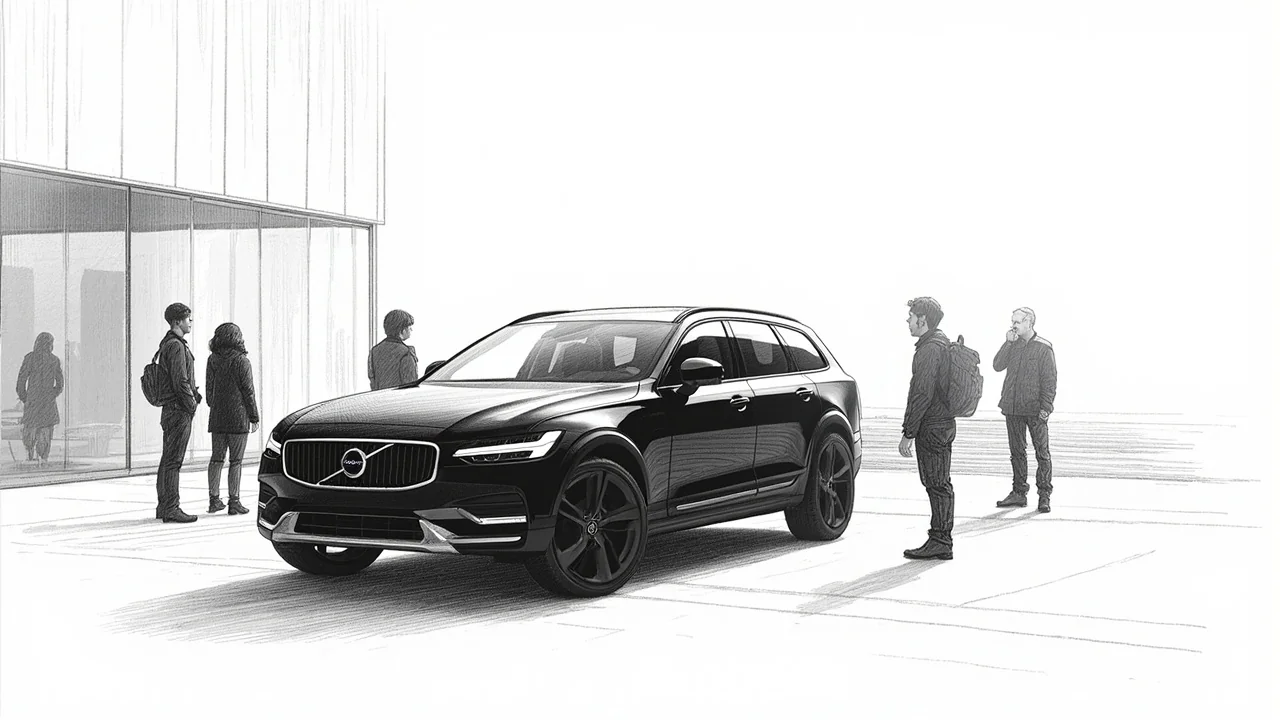
Swedish automaker Volvo Cars is launching its new EX60 electric SUV into a tough market. The move is a direct attempt to reverse the company's declining sales as global demand for electric vehicles softens. Company leadership calls the EX60 its first car built on a completely new technological base. It is designed to be the successor to Volvo's all-time bestseller, the XC60.
Volvo Cars CEO Håkan Samuelsson unveiled the vehicle on Wednesday evening. He is betting heavily on this mid-size SUV to reignite the company's performance. "The EX60 is the first with an entirely new technology base, making it even more important than the XC60," said Erik Severinson, Volvo Cars' Chief Commercial Officer. The launch comes from Volvo's headquarters in the Gothenburg business district, a key hub in the Nordic innovation landscape.
A Launch Against the Current
The EX60 enters a market experiencing a notable pullback in consumer demand for electric vehicles. Competition is fierce, with both legacy automakers and new electric vehicle startups vying for market share. This slowdown presents a significant challenge for Volvo, which has committed to a full transition to an electric portfolio. The company's sales figures have been stuttering, putting pressure on the launch of this new model to deliver immediate impact. The success of the XC60, a dominant force in the premium mid-size SUV segment for years, sets a high bar for its electric successor.
Technological Foundation and Strategic Importance
Executives emphasize that the EX60 is not merely an electric version of an existing car. It is built on a new, dedicated electric vehicle platform. This architecture is designed to optimize range, performance, and interior space specifically for electric propulsion. This shift represents a substantial investment in research and development, reflecting the kind of deep-tech innovation seen in Stockholm's startup scene. The platform will likely underpin several future models, making its debut in the EX60 a crucial test. Volvo's strategy mirrors approaches by leading Nordic fintech firms: using a new, scalable core technology to power a next-generation product line.
Positioning in the Nordic Business Ecosystem
The launch is a focal point for Swedish industry. Volvo Cars, a major player in Sweden's export economy, operates at the intersection of traditional manufacturing and cutting-edge technology. Its pivot to electric vehicles draws on the same talent pools and venture capital that fuel Stockholm's startup districts like Östermalm and Södermalm. The company's ability to compete hinges on integrating software and digital services into the vehicle, an area where Nordic tech expertise is strong. Investors who back Swedish venture capital funds in mobility and climate tech are watching this launch closely as a bellwether for the industry.
Market Analysis and Competitive Landscape
The premium electric SUV segment is crowded. The EX60 will compete directly with vehicles like the Tesla Model Y, the Audi Q6 e-tron, and the BMW iX3. Its unique selling proposition rests on Volvo's established reputation for safety, Scandinavian design, and now, a pure-electric dedicated platform. Pricing and final specifications will be decisive factors. Analysts will be looking at initial orders and delivery timelines to gauge early consumer reception. The vehicle's performance will also influence perceptions of Sweden's capacity for large-scale industrial innovation beyond its prolific startup ecosystem.
Executive Vision and Future Roadmap
Håkan Samuelsson's tenure has been defined by an aggressive electrification strategy. The EX60 is a central pillar of that plan. In statements, leadership has framed the car as a statement of intent: proving that a traditional automaker can execute a full technological transition. "This is more than a new car, it's the foundation of our next chapter," Severinson's statement implies. The commercial rollout over the coming months will be a critical test of Volvo's marketing and distribution strength. Success could solidify Sweden's position as a leader in the European electric vehicle transition.
The Path Forward for Volvo Cars
The immediate future for Volvo is inextricably linked to the EX60. Production capacity, supply chain stability, and software reliability will be under intense scrutiny. The company has staked its near-term growth on this model's ability to capture the spirit of the XC60 for a new, electric era. As the vehicle reaches showrooms in key markets like Europe, China, and the United States, each sales report will be a verdict on Volvo's ambitious transformation. For the Swedish business community, the EX60 is more than a car, it's a test of legacy industrial strength adapting to a disruptive, electric future.