
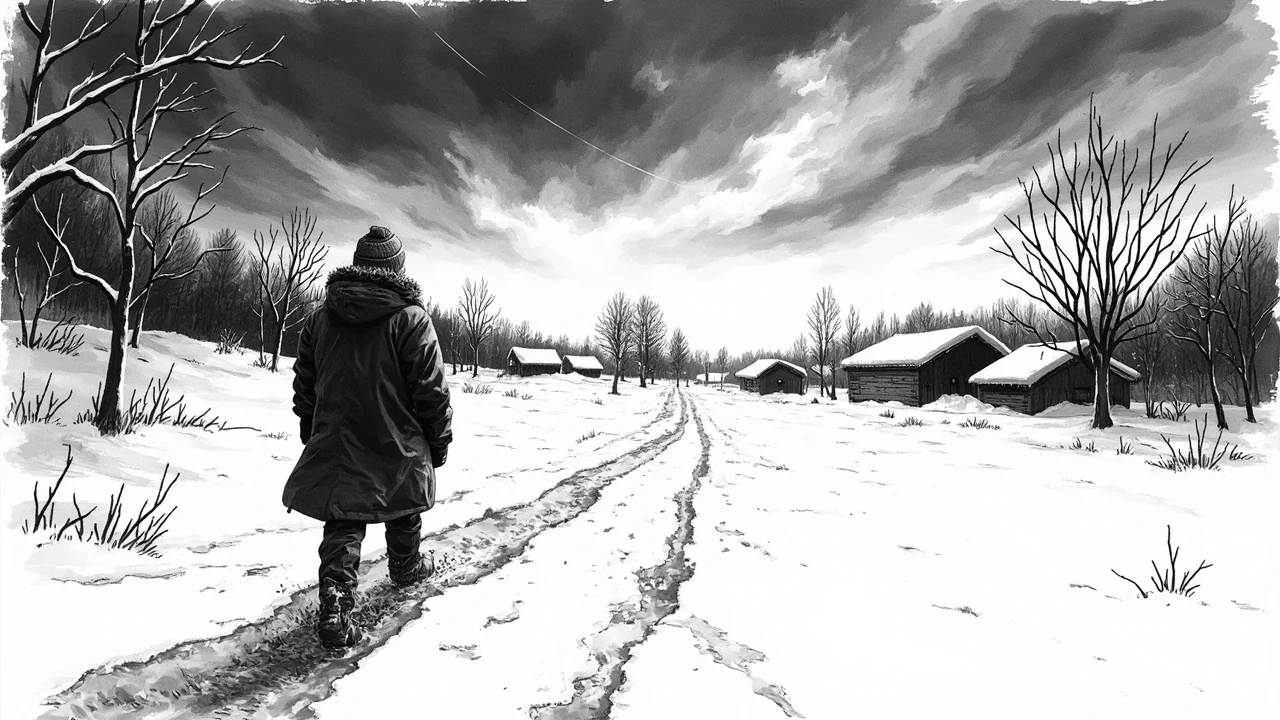
Sweden's intense snowfall is now giving way to a treacherous new challenge as rain falls on frozen roads. The Swedish Meteorological and Hydrological Institute (SMHI) has issued fresh warnings, predicting a difficult day with a mix of snow and rain. "Road conditions will be problematic in a large part of the country," says meteorologist Gustav Åström at SMHI. This shift marks the latest chapter in a winter defined by back-to-back storms, testing the nation's resilience and its famous relationship with harsh weather.
For weeks, Swedes have navigated the disruptions caused by storms Johannes and Anna. These systems brought heavy snow combined with strong winds, paralyzing transport and becoming a dominant topic in workplaces and schoolyards. The landscape transformed into a pristine, if cumbersome, winter postcard. Now, rising temperatures introduce a more insidious hazard. The promised rain, landing on surfaces still chilled from the prolonged cold, creates a perfect recipe for black ice—a transparent, nearly invisible glaze that makes roads and pavements dangerously slick.
The Sneaky Danger of Black Ice
This phenomenon, known as 'isbildning' or 'halka,' is a well-known but dreaded feature of the Swedish winter. It often forms in the early morning or evening. Unlike slush or snow, black ice offers no visual warning. One moment the pavement looks merely wet; the next, it becomes a skating rink. For a society where walking and cycling remain common modes of transport year-round, even in cities like Stockholm and Gothenburg, this poses a significant public safety risk. Emergency rooms typically see a spike in wrist and hip fractures during such conditions.
"It's a cowardly and problematic situation," says Lars Bengtsson, a veteran taxi driver in Stockholm, using a common Swedish expression. "You prepare for snow, you have your winter tires on, but this ice is something else. It catches everyone off guard, even us who drive every day." His sentiment echoes across commuter forums and local news comment sections, where residents share tips about the most slippery stretches in their neighborhoods, from the cobblestones of Stockholm's Gamla Stan to the steep hills of Gothenburg's Haga district.
A Society Geared for Winter, But Tested
Sweden is a country built to handle winter. There's a national sense of preparedness, from mandatory winter tires to well-funded municipal snow clearance budgets. The concept of 'fika'—a coffee break—might be seen as a social bulwark against the dark and cold. Yet, this particular weather pattern tests that preparedness. It's not the deep cold or the heavy snow that's most challenging, but the unpredictable transition in between.
The SMHI warnings trigger a well-rehearsed chain of events. Municipal road crews switch from plowing snow to spreading brine and gravel. Public service announcements flood radio and social media, reminding people to wear proper footwear with good grip. Schools and parents weigh the risks for children walking or cycling to class. This collective response is a key part of Swedish societal trust—the expectation that authorities will warn and act, and citizens will heed the advice.
Cultural Patience Wears Thin
There's a distinct cultural attitude toward weather in Sweden. Complaining about it is almost a national pastime, yet there's an underlying acceptance of its power. "Det är så det är med vädret"—"That's just how the weather is"—is a common, resigned phrase. However, after weeks of storms, that patience can wear thin. The shift to icy rain feels like a fresh insult, delaying the longed-for, gentle thaw of spring.
This period also impacts local traditions and daily rhythms. Outdoor ice rinks, a cherished winter fixture, begin to soften and become unsafe. Planned winter market events or 'vinterbad' (cold plunges) might be reconsidered. The simple act of walking the dog becomes a cautious expedition. The weather dictates the rhythm of life in a very direct way, forcing a slowdown and increased caution upon the entire population.
Expert Perspective on a Changing Climate
Meteorologists point out that while variable winter weather is normal, the intensity and frequency of these rapid shifts—from heavy snow to rain and back—are consistent with broader climate change predictions for the Nordic region. Winters are becoming more volatile. "We see more precipitation overall, and it often falls as rain near the coasts even in mid-winter, while inland areas get snow," explains a climate researcher at a major Swedish university. "This creates exactly these borderline situations where ice formation becomes a major hazard." This isn't just a few bad days; it's a glimpse into a potential new normal for Swedish winters, where freeze-thaw cycles dominate.
The economic impact is also tangible. Public transport delays ripple through the economy. Slippery conditions lead to more workplace accidents and sick leave. The retail sector feels it too, as people choose to stay home rather than risk a trip to the shops. Conversely, hardware stores might see a run on ice grips for shoes and bags of melting salt.
Navigating the Invisible Hazard
So, how does a society navigate this? The answer lies in a blend of technology, community, and individual responsibility. Weather apps like SMHI's are checked with the same frequency as social media. Neighbors might sprinkle sand on a shared staircase. There's an unspoken rule to clear not just your driveway, but also the public sidewalk in front of your home. This civic duty, often codified in local ordinances, is a practical manifestation of the Swedish principle of 'duktighet'—roughly meaning conscientiousness and capability.
As Wednesday's conditions develop, the nation will collectively slow down. Commutes will take longer. People will walk like penguins, a recommended technique for stability on ice. The conversation will continue, a mix of grumbling and practical advice. The weather warning is more than a forecast; it's a social signal to shift gears, to prioritize safety over speed, and to look out for one another on slippery paths. It's a reminder that in Sweden, living with nature means respecting its power, even in its most treacherous and invisible forms. Will this icy finale to a stormy winter be the trigger for more discussions about adapting urban infrastructure for a more volatile climate? Only the thaw will tell.