
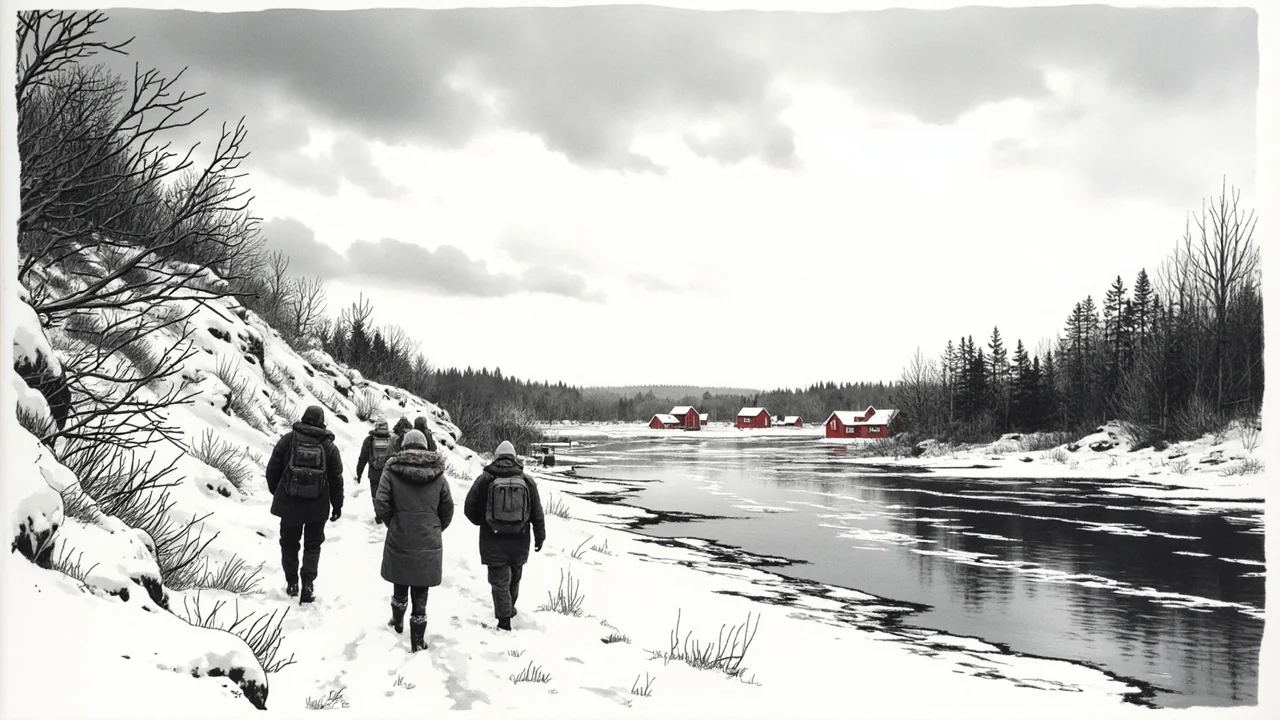
Sweden's Meteorological and Hydrological Institute (SMHI) has issued a yellow warning for sudden black ice along the country's West Coast. The alert covers Gothenburg, western Halland, and western Skåne from 04:00 to 12:00 on Tuesday. Rain falling on cold road surfaces is expected to create treacherous conditions, with risks of public transport delays and cancellations. Authorities urge all drivers to adapt their speed to the road conditions.
This sudden weather shift is a classic, dangerous Swedish winter phenomenon. It catches many by surprise each season. The warning comes as many residents are returning to work and school after the holiday period. For international readers, a 'yellow' warning in Sweden's three-tier system (yellow, orange, red) signifies a potential hazard that requires public awareness and caution.
The Invisible Threat on Morning Roads
Black ice, or 'ishalka', is particularly perilous because it's often invisible. A road that looks merely wet can be a sheet of ice. This happens when rain or drizzle falls on surfaces that are at or below freezing. The western coastal regions are prone to this due to maritime influences. Mild, moist air from the sea can bring rain over land that has been chilled by clear, cold nights.
"It's the most deceptive hazard we face on winter roads," says traffic safety analyst, Erik Lundström. "Drivers lose traction without any visual cue. Braking distances become meaningless. The only safe approach is extreme caution when SMHI issues these warnings, especially on bridges, shaded forest roads, and higher ground."
A Disruption to the Post-Holiday Rhythm
The timing of this warning is significant. Tuesday marks a full return to normalcy for much of Sweden after the extended Christmas and New Year break. Commuter traffic in Gothenburg—Sweden's second-largest city—will be heavy. Public transport systems, including trams and buses, are preparing for potential disruptions. Västtrafik, the regional public transport authority, has advised passengers to check real-time updates before traveling.
For parents, the warning adds a layer of anxiety to the school run. Many children cycle or walk to school in Sweden, even in winter. Icy sidewalks pose a significant slip-and-fall risk. In neighborhoods like Majorna in Gothenburg or Helsingborg's city center, residents are likely laying out extra gravel or sand on their driveways and pathways—a common Swedish practice known as 'sanda'.
Cultural Readiness and Winter Mindset
Swedes have a complex relationship with winter. There's a cultural expectation of preparedness, embodied by the word 'beredskap'. Most drivers have winter tires (with studs or friction variants) legally required from December 1st to March 31st. Yet, black ice is the great equalizer. It challenges even the most experienced driver and the best-equipped vehicle.
This event also highlights the trusted role of SMHI in daily Swedish life. People check its forecasts and warnings with the same routine as checking the time. The institute's credibility is high. When SMHI speaks, Swedes generally listen. This communal trust in official weather advice is a key part of the society's resilience to harsh climates.
Beyond the Coast: A National Winter Pattern
While this warning is localized, it reflects a broader winter reality across Sweden. Similar conditions can occur around lakes Mälaren and Vänern, and in inland areas during specific temperature fluctuations. The phenomenon tests the infrastructure. Road maintenance contractors are on standby to salt and gravel the priority roads, but they cannot cover every street simultaneously.
From a societal perspective, these warnings also test the flexibility of Swedish work culture. Many employers, especially in the affected regions, may offer flexible start times or remote work options on such days. This pragmatic adaptation to weather is a subtle but important aspect of Swedish lifestyle, balancing productivity with safety and common sense.
Expert Perspective on a Changing Climate
Meteorologists are increasingly examining how climate change influences these specific winter hazards. While winters are generally becoming milder in Sweden, volatility is increasing. Periods of deep cold can be more abruptly interrupted by mild, wet Atlantic air. This can actually increase the frequency of freeze-thaw cycles that lead to black ice.
"We're not necessarily seeing fewer icy events," explains climate researcher, Dr. Anna Kjellström. "We're seeing different patterns. The rain-on-snow or rain-on-frozen-ground events might become a more prominent feature of our winters, even as the overall season shortens. This requires continuous adaptation in how we plan our transport and infrastructure."
A Community Response to a Silent Hazard
The real story of a day like this unfolds in community actions. Neighbors will message each other on local Facebook groups like 'Grannar i Västra Frölunda' warning about particularly icy hills. School janitors will be out before dawn, sanding the schoolyard paths. Bus drivers will exercise profound caution. There's a collective, unspoken agreement to slow down and look out for one another.
It's a reminder that Swedish society, often perceived as individualistic, mobilizes a strong communal ethic in the face of natural challenges. The 'ishalka' warning is not just a meteorological bulletin. It's a signal for a shared, cautious approach to the day. It prompts a nationwide recalibration of pace and attention.
As the Tuesday morning commute begins under grey, drizzling skies, the success of the day will be measured not in speed, but in safety. The muted, careful progress of cars on the E6 motorway and the quiet patience at tram stops will tell the real story. It's a story of a society that has learned, through harsh experience, to respect the invisible dangers of its beautiful, formidable winter. Will this seasonal challenge become more complex as Sweden's climate continues to evolve?