
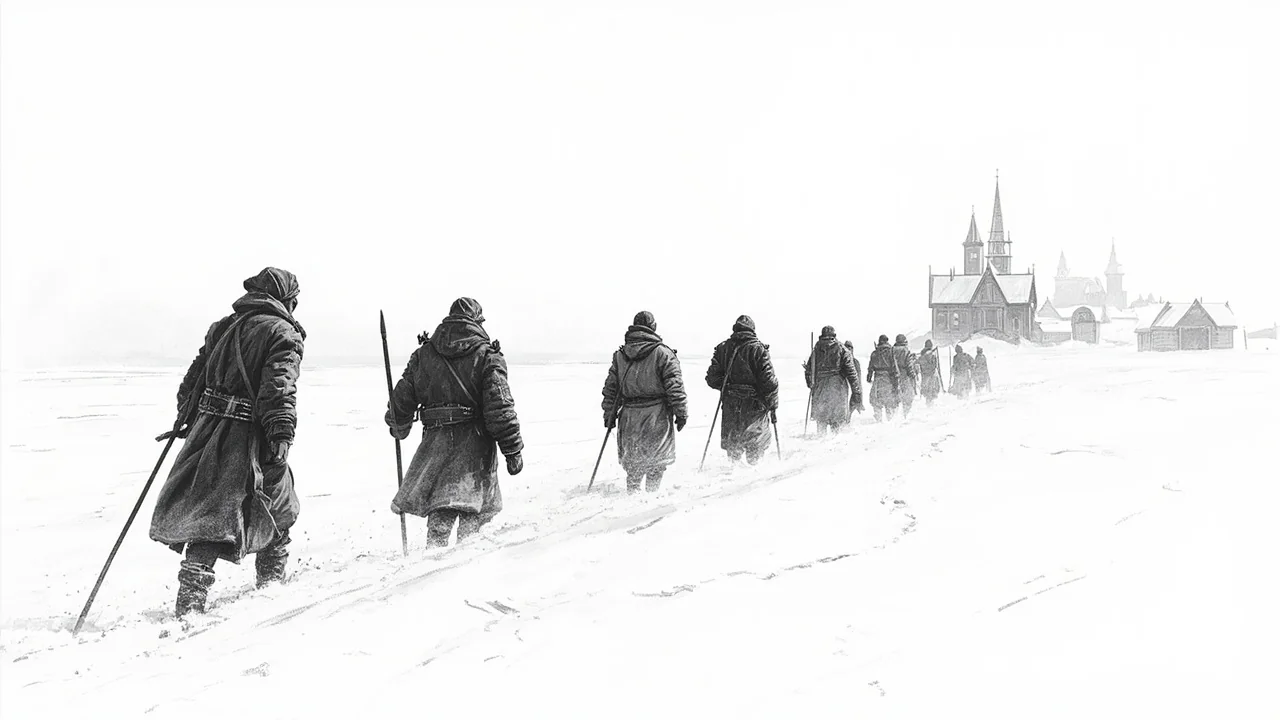
Swedish schoolchildren in Åsele are playing outside three times daily despite temperatures plummeting to -30 degrees Celsius this week. While much of the country bundles up against one of the coldest snaps of the year, the playground at Centralskolan is alive with movement, football games, and the sounds of play, with no official cold-weather limit to keep them indoors.
A Daily Routine in the Deep Freeze
Teacher Linda Danielsson oversees the outdoor breaks at the school in this Västerbotten community, which has recorded some of Sweden's lowest temperatures. "We are outside every day," Danielsson says, describing a flexible approach adapted to the conditions. "Sometimes we can let the children be outside for half the break when it's really cold. But we are out every day." This commitment to daily fresh air, a cornerstone of Swedish educational philosophy, doesn't waver even during a severe cold spell. The children are outside for their breaks a minimum of three times each school day.
Football and Movement Over Shivering
The image of children standing still, shivering in the cold, isn't what Danielsson observes. Instead, she sees active play that generates its own warmth. "Many play football during the breaks even though it's this cold," she notes, adding a touch of humor about the practical realities. "It looks a bit clumsy with some shoes. But they manage it really well. It's rare that they stand still." This activity is key, the children's own energy and movement are their primary defense against the biting cold. It turns the break from a test of endurance into a normal, albeit frosty, part of their school routine.
The Cultural Context of 'Friluftsliv'
This practice is deeply rooted in the Swedish concept of friluftsliv – the love of open-air life. It's a cultural norm that emphasizes the benefits of being outside in all weathers for both physical and mental well-being. In Stockholm's parks, like Tantolunden or Hagaparken, you'll see parents with infants bundled in prams parked outside cafes year-round. What happens in Åsele is an extension of this ethos, applied within the school structure. There's a strong societal belief that there's no such thing as bad weather, only unsuitable clothing. While urban schools might have stricter formal policies, the spirit of embracing the outdoors connects communities across Sweden.
Preparation and Pragmatism on the Ground
The approach in Åsele is guided by pragmatism, not a rigid rulebook. The decision to shorten a break, or in very rare circumstances, keep children inside, lies with the supervising adults on the ground. They assess the actual conditions – factoring in wind chill, moisture, and the children's preparedness – rather than a simple thermometer reading. This local autonomy trusts teachers and staff to make common-sense calls. The priority is ensuring the children are properly dressed with layers, good winter boots, mittens, and hats. The focus is on enabling safe outdoor play, not simply prohibiting it once a specific temperature is hit.
A Lesson in Resilience and Normalcy
For the children of Centralskolan, playing in the deep cold is simply normal. It's a part of their winter reality in northern Sweden. This routine builds a form of resilience and a different relationship with nature. The alternative – being cooped up indoors for weeks during the long winter – is seen as less healthy and less appealing. The sounds of a football game in -30°C weather are, in this context, sounds of a functioning childhood. It reflects a lifestyle adapted to its environment, where life, including play and education, continues alongside the elements rather than stopping for them.
Contrasting with Urban Perceptions
This scene might seem startling to those in milder climates or even in larger Swedish cities where snow removal and indoor amenities can lead to a more temperature-controlled daily life. The practice highlights a regional variation in living with Sweden's climate. In places like Åsele, adapting to extreme cold is an essential life skill learned young. The school playground becomes a training ground for that adaptation, demonstrating that with the right habits and clothing, a large part of the Swedish winter remains accessible for play and socializing.
The Broader Swedish Embrace of Outdoors
This story from Åsele is a vivid microcosm of a national identity tied to nature. It connects to traditions like celebrating Lucia in candlelit processions through the dark December, or the collective joy of the first spring sunshine in a Stockholm square. The commitment to outdoor time is woven into the fabric of Swedish society, from forest preschools to after-work jogging paths lit by reflective markers. The children playing football in the bitter cold are participating in that enduring tradition. They are learning that their world, however frosty, is there to be engaged with, a lesson that shapes a distinctly Swedish approach to life, season by very cold season.