
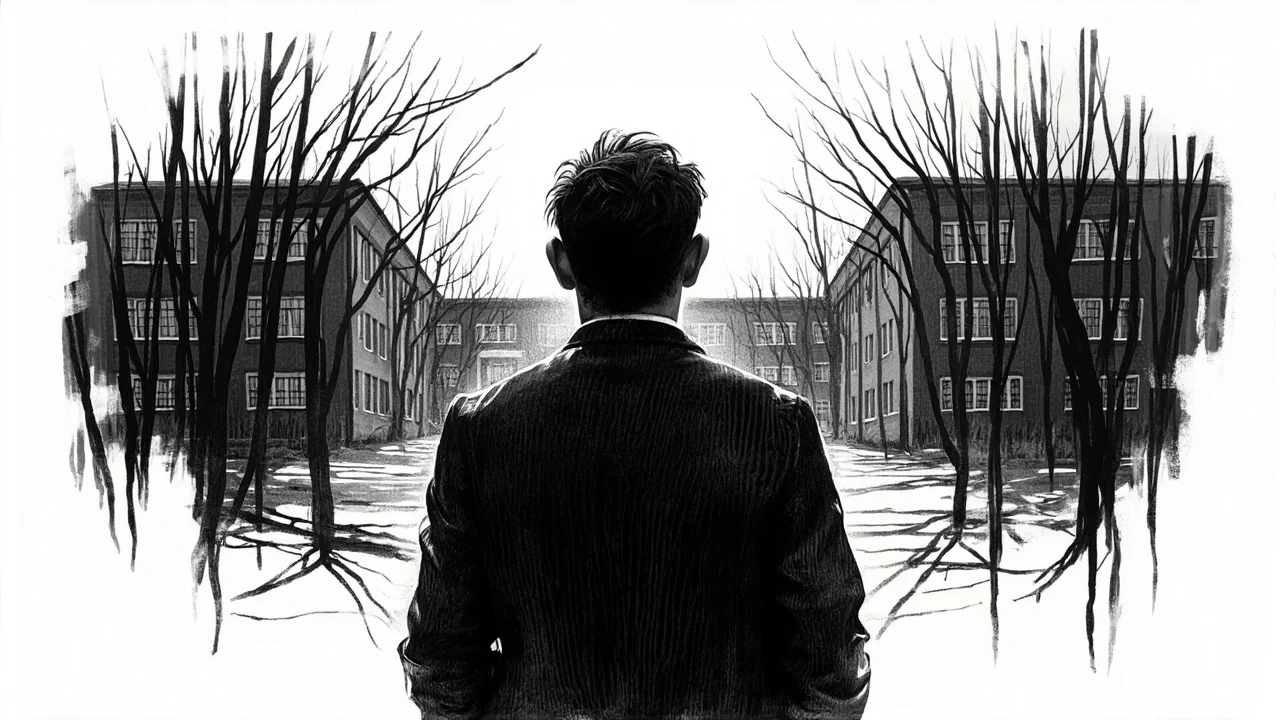
Swedish school shooting survivor Mattias Molin describes a year of suffering and community in the wake of the attack at Campus Risbergska. One year after shots echoed through the halls of Campus Risbergska in Örebro, the headmaster of the adult education school, Mattias Molin, still struggles to process the events of February 4, 2025.
– There is still a feeling of unreality, he says.
For Molin and his colleagues, the crisis work continues every day. He reflects on a year that defies simple description.
– I don't know what to say. It's a completely unreasonable year, full of suffering but also of community and mutual dependence on each other.
The Day That Shattered a School
Ten teachers and students were killed and six injured when 35-year-old Rickard Andersson opened fire inside the school. Mattias Molin was eating in the lunch restaurant when loud bangs began to sound. His first thought was of an accident, perhaps a caretaker dropping a cabinet.
With a colleague, he began running toward the noises. When they reached the main corridor, they saw students pouring out of classrooms in panic.
– Some screamed 'they're shooting, they're shooting'. Then new volleys of shots came and we realized it was a live situation.
His focus became getting as many people out of the rooms as possible. He says he literally threw students out. Soon, the shots grew closer and he realized he himself needed to leave.
Hiding from the Unthinkable
Together with a colleague, he hid in a shelter inside the school. Outside, they heard shots and screams.
– You understand that it involves people fleeing for their lives.
When the fire alarm started, it drowned out the other sounds. Hours later, they could leave the room with the police tactical unit. In the corner of his eye, he saw bloodstains on the floor further away.
Outside the school, he met colleagues who told him they had seen dead people being carried out by police. His immediate thought was the need to take care of one another.
– Early on, we saw that we needed each other in this.
The Long Path Forward
That thought has been key to handling the year that has passed, Molin believes. The most important thing has been the sense of community, and making space to share grief, talk, and meet in their core mission, which is teaching.
Instruction resumed about a month after the shooting. Though it was tough, it was appreciated and functioned as a form of safe zone for many. Since August, they are back in the same premises as before.
– The place is associated with trauma, so it's a challenge for many. But I think we take steps every day by continuing to come to school, to have our lessons.
This act of return, of persisting in a space marked by tragedy, speaks to a deeply Swedish resilience often unspoken. It's not about grand declarations, but the quiet commitment to daily life and community, or gemenskap, a word Molin returns to. The school's response mirrors a broader Swedish societal trend of seeking collective solutions and support systems in the face of individual trauma.
Life in the Aftermath
Returning to the same classrooms has been a profound challenge. Every corridor and hallway holds a memory. For the students, many of whom are immigrants learning Swedish, the school was meant to be a gateway to a new life. It became the site of a national tragedy instead.
Molin notes that the rhythm of the school day, the structure of lessons, has provided a crucial framework. It creates a necessary normalcy. The shared daily rituals, like fika, have taken on new significance as moments of quiet connection and check-ins.
There is no guidebook for this. The support from the wider Örebro community has been vital, but the internal work within the school walls is a daily, personal process for each teacher and student.
A Community Forged in Crisis
The attack on Campus Risbergska sent shockwaves through Sweden, a nation where such violence in schools is rare. It sparked national conversations on safety, mental health, and community cohesion. For the staff and students, those large debates are secondary to the immediate, human task of healing.
The mutual dependence Molin describes is perhaps the most enduring outcome. In a culture that often values self-reliance and lagom – just the right amount – this explicit need for one another has been both a hardship and a saving grace.
A year on, the feeling of unreality lingers. But so does the commitment to move forward together, one school day at a time, within the very walls where everything changed. The story of this school is now forever part of the fabric of Swedish society, a tragic reminder of vulnerability and a testament to the slow, steady work of rebuilding a community.