
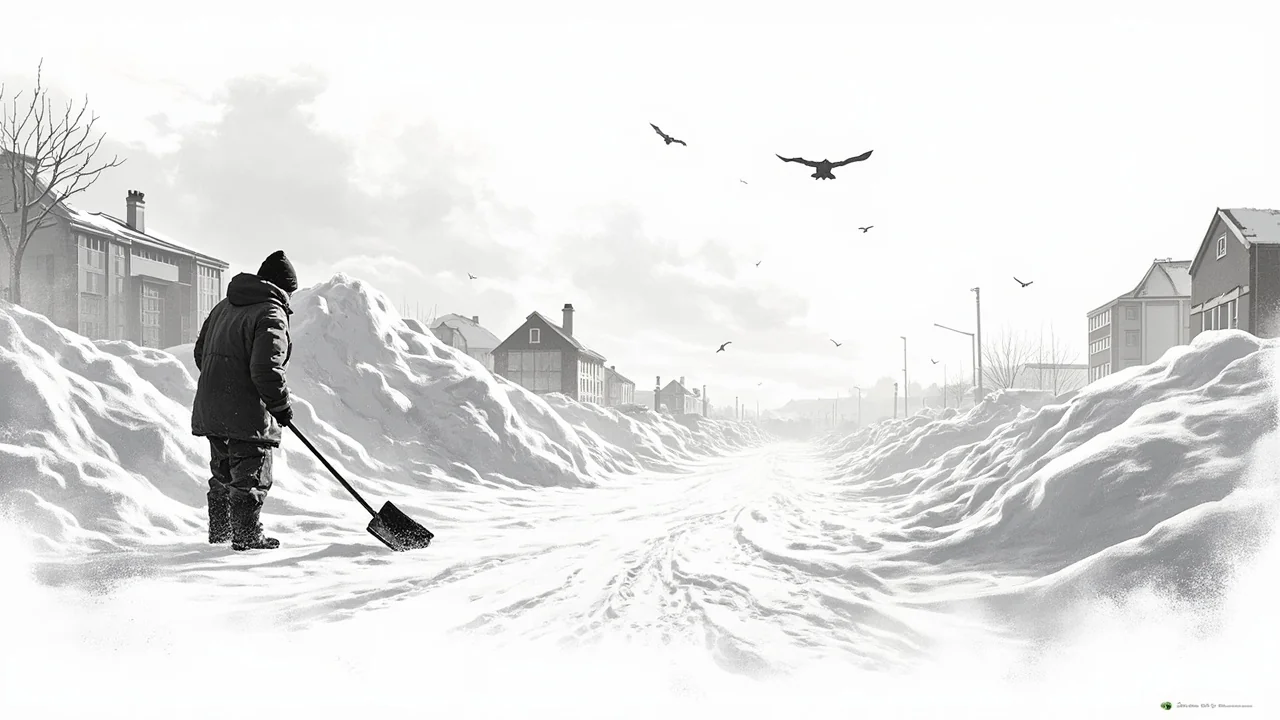
Sweden's capital is buried under a mountain of snow and a wave of citizen frustration. Stockholm's heavy snowfall since New Year's Day has led to nearly 12,000 complaints to the city's Traffic Office in January alone. That figure almost matches the total number of snow-related complaints received during the entire 2023/2024 winter season. The sheer volume of reports reveals a city struggling to keep up and a population deeply invested in how their public spaces are managed.
Victor Chu, from Stockholm's Traffic Office, acknowledges the public's strong feelings. "Stockholm residents are engaged, and for that we are grateful," he said. His statement hints at the dual nature of the situation. While the complaints represent a logistical challenge, they also signify a community that cares intensely about its shared environment. This engagement is a cornerstone of Swedish civic life, but this winter, it's being tested by relentless weather.
Walking through neighborhoods like Södermalm or Vasastan this week tells the story. Sidewalks are narrow corridors carved through walls of ploughed snow. Bus stops are partially buried. Bicycle lanes, a symbol of Stockholm's green ambitions, have vanished entirely in many areas. For parents with strollers, the elderly, and people with mobility issues, the city has become an obstacle course. The complaints pouring in are not just about inconvenience; they are about accessibility and safety.
A City Grinds to a Halt
The core issue extends beyond uncleared sidewalks. Stockholm's public transport system, a source of pride for the efficient city, has been repeatedly disrupted. Buses have been stuck or delayed. Commuters have faced long, cold waits. The snow has highlighted the fragile balance between urban infrastructure and nature's force. In a society built on predictability and planning, this winter has been a masterclass in unpredictability.
Local businesses are feeling the impact too. Cafés in picturesque squares see fewer customers braving the trek. Retail shops report quieter days. The snow, while beautiful in postcards, dampens the casual foot traffic that sustains many city-center enterprises. Meanwhile, the sound of snow blowers and ploughs has become the unofficial soundtrack of Stockholm in January, a constant reminder of the ongoing battle.
The Anatomy of a Complaint
What fills 12,000 complaint forms? The reports range from specific hazards to systemic failures. A dangerously icy crossing near Odenplan subway station. An unploughed street in Årsta preventing garbage trucks from collecting bins. A blocked pedestrian path along the popular Djurgården waterfront. Each report represents a personal encounter with a civic shortcoming, a moment where the social contract between resident and city government felt broken.
"Some people just want to talk, to vent their frustration. Others are deeply frustrated and want immediate action," says a city official, summarizing the emotional range behind the data. This distinction is key. For some, filing a report is a cathartic act, a way to participate. For others, it's a demand for accountability in a system they fund through taxes. Both mindsets are valid and both contribute to the unprecedented volume.
The Cultural Context of Complaining
To understand this surge, one must understand the Swedish relationship with authority and community. Swedes generally have high trust in public institutions. This trust comes with high expectations. When services like snow clearance—a fundamental winter task in Scandinavia—falter, that trust is directly challenged. The act of filing a formal complaint, or felanmälan, is not taken lightly. It is the official channel for rectifying problems, a process ingrained in the Swedish model.
There's also the concept of allemansrätt, or the public right of access. It grants everyone the freedom to roam the countryside. While primarily about nature, this right reflects a broader cultural belief in accessible shared space. When snow blocks that access within the city itself, it conflicts with a deeply held value. The complaints are, in a way, citizens defending their right to their own city.
Capacity Versus Climate
The Traffic Office's challenge is immense. They must prioritize: main roads and public transport routes first, then secondary streets, and finally sidewalks and bike paths. But with continuous snowfall, the job is like shoveling during a blizzard. As soon as an area is cleared, a new layer covers it. The resources—personnel, vehicles, salt, gravel—are finite. This winter is pushing that capacity to its limit, exposing the thin margin between normal operations and crisis management.
Climate change adds a cruel twist. Winters in Stockholm are becoming more volatile, with periods of intense snowfall followed by thaw and freeze cycles. This creates harder, icier conditions more difficult to clear than fresh powder. The city's infrastructure and strategies are built on historical weather patterns that may no longer be reliable. The complaints of today might be a signal to invest in more resilient systems for tomorrow.
Voices from the Snowy Streets
Elin, a nurse living in Kungsholmen, shares her daily struggle. "My 15-minute walk to the bus takes 30 minutes now. I'm exhausted before my shift even starts. I reported three separate icy patches on my street. It's not anger, it's just necessity." Her sentiment is practical, not punitive.
Meanwhile, Markus, a retiree in Bromma, has a different view. "I remember worse winters in the 80s. We managed then. But back then, we had more local caretakers, vaktmästare, who knew every inch of their area. Now it's all centralized and anonymous." His comment touches on a societal shift from hyper-local management to streamlined, district-wide services, which can lose the granular touch needed for effective snow clearance.
Looking Beyond the Winter
The real story of the 12,000 complaints may unfold in the spring. How will the city respond? Will this data lead to changed protocols, increased winter budgets, or new investments in equipment? Victor Chu's gratitude for public engagement will be measured by what that engagement produces. A public meeting in a community hall in Enskede or a revised snow clearance map on the city's website could be the tangible outcomes.
This episode is more than a seasonal headache. It's a stress test for Stockholm's civic fabric. It examines the efficiency of municipal government, the patience of the populace, and the communication between them. The snow will eventually melt, revealing not just asphalt and cobblestones, but also the strength of the city's foundations. Will Stockholm learn from this buried winter, or simply hope for a milder one next year? The answer will shape how the city weathers all future storms.