
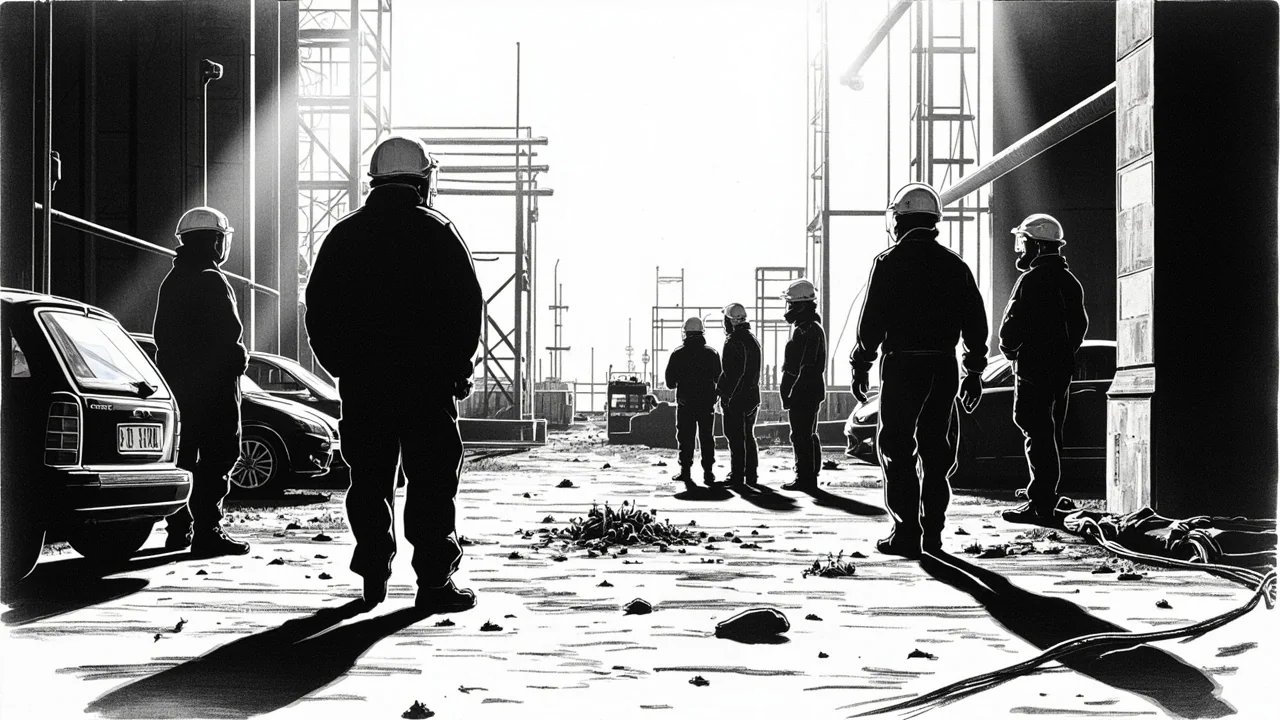
Sweden has recorded its first fatal workplace accident of 2024, a death at an industrial facility in Skellefteå that is now under dual investigation by police and the national work environment authority. The incident occurred at Berco Produktion AB, a company that builds superstructures for light vehicles. A 65-year-old man, a pensioner who had previously worked at a mechanical workshop, was found dead on the premises. He was reportedly on site in connection with the sale of a metal lathe.
A Morning Tragedy in Skellefteå
The man was last seen alive around 9 a.m. He was discovered shortly before 11 a.m. The fatal incident happened somewhere in that two-hour window. No witnesses have come forward. "It is unknown how the accident occurred. There are no witnesses," said police investigator Patrik Åström. No one is currently suspected of a crime, but a police investigation is underway to determine the exact circumstances. Parallel to the criminal probe, the Swedish Work Environment Authority, Arbetsmiljöverket, has launched its own investigation. This will examine the workplace environment and whether the company failed in its preventative safety duties. The authority confirmed it registered a report of a death at Berco Produktion but declined to comment further on the specific case.
A Company in Mourning
Berco Produktion has stated it is fully cooperating with both police and the Work Environment Authority. The company has offered crisis and counseling support to its employees. "It is with great sadness that we have received the news that a person has died. Our thoughts go out to the person's family, friends, and colleagues. We deeply regret this tragic loss," said Stefan Petersén, Chairman of the Board for Berco Produktion AB, in a press statement. The statement underscores the human impact of the tragedy, which ripples through a small community and a specific workplace. For the employees of Berco, returning to the site of the accident presents a significant psychological challenge, one the company says it is addressing with professional support.
The National Context of Workplace Safety
This fatality marks a grim start to the year for occupational safety in Sweden. According to statistics from the Work Environment Authority, 52 people died in workplace accidents across the country in 2023. Each number represents a similar story of sudden loss, investigation, and mourning. Sweden prides itself on high standards of worker protection and a strong social contract between employers, unions, and the state. A fatal accident, therefore, is not just a personal tragedy but a systemic question. It prompts scrutiny of whether those high standards were maintained in this specific instance. The dual investigation model is standard. The police focus on potential criminal negligence, while Arbetsmiljöverket assesses broader compliance with Sweden's extensive Work Environment Act. Their findings can lead to injunctions, fines, or mandated changes in company procedures.
The Unanswered Questions
The lack of witnesses creates a significant challenge for investigators. They must piece together the final moments of the man's life from physical evidence alone. The detail that he was a pensioner and former workshop employee present for a machinery sale adds a layer of complexity. Was he acting as a buyer, a seller, or a consultant? What was his exact relationship to the active work areas of Berco Produktion at that moment? These are questions the investigations will seek to answer. The type of equipment involved—a metal lathe—is a powerful industrial tool known to pose serious risks if safety protocols are not meticulously followed. Lathes can involve rotating parts with immense force, presenting hazards of entanglement, crushing, or being struck by ejected material.
Analysis: The Gap Between Policy and Practice
From a policy perspective, this incident highlights the constant tension between established safety regulations and their application on the factory floor. Sweden has a robust legal framework for workplace safety, emphasizing preventative measures and systematic environment work. Companies are legally required to identify risks, implement controls, and provide continuous training. Yet, statistics show fatalities still occur, often in industrial and construction settings. Experts often point to factors like subcontracting, time pressure, complacency, or temporary lapses in protocol as contributors. The investigation into Berco will scrutinize the company's documented risk assessments, its safety training records, and the specific conditions present on the day of the accident. It will ask whether this was a freak, unforeseeable event or a failure in the safety management system.
What Happens Next?
The immediate next steps are forensic and administrative. Police and technical experts will continue to examine the scene. The Work Environment Authority's inspectors will interview employees, review documents, and observe operations. Both processes take time; a final report from Arbetsmiljöverket can take many months. For the family of the deceased, the wait for answers will be agonizing. For the company, the coming period involves managing operational continuity while under intense scrutiny and supporting a traumatized workforce. The broader conversation in Sweden will likely revisit the national goal of 'zero vision' for workplace fatalities—an ambition that feels distant on days when the first death of the year is recorded in January. This single incident in Skellefteå serves as a stark reminder that economic activity, even in advanced economies, carries inherent human risk. The true measure of a society's commitment to safety is not just its laws, but how thoroughly they are enforced and lived by, every single day, in places just like that mechanical workshop.