
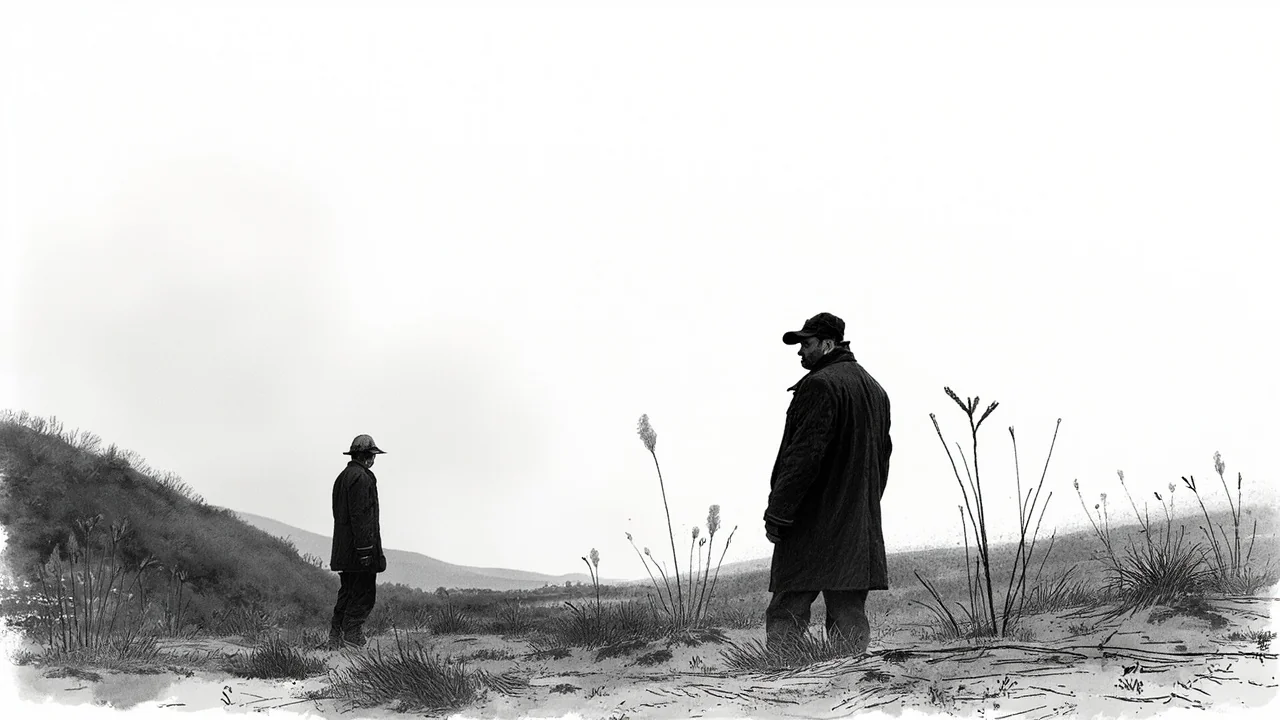
Two Swedish workers have died following a suspected workplace accident at a site in Söderhamn Municipality. This incident adds to the somber reality of Sweden's workplace safety record, where fatal accidents, while declining, still claim lives every year.
The two middle-aged men lost their lives in connection with the incident. Police have launched a preliminary investigation to determine if a crime was committed.
'The criminal classification is currently gross negligence causing another's death in connection with a workplace accident,' said police press spokesperson Wayne Seretis.
The news sent a ripple of grief through the local community. Söderhamn, a coastal town in Hälsingland, is a place where industry and community are closely intertwined. Workplaces there are not just sites of employment but social hubs where colleagues often become like family.
A Community in Mourning
While the specific company and exact nature of the work have not been disclosed by authorities, such tragedies resonate deeply in Sweden's smaller municipalities. The loss is felt by more than just the immediate families. It touches coworkers, neighbors, and the entire fabric of the local society.
In towns across Sweden, from the industrial heartlands to forestry communities, workplace safety is a continual topic of discussion. Swedes pride themselves on high standards and a strong social contract between employer and employee, making any fatal breach of that safety especially jarring.
The Investigation Begins
The launch of a preliminary investigation for gross negligence causing death is a standard but critical procedure in such cases. The Swedish Police and the Swedish Work Environment Authority (Arbetsmiljöverket) will likely collaborate closely.
Their task is to meticulously piece together the events that led to the fatalities. This process involves examining the site, interviewing witnesses and colleagues, and reviewing company safety protocols and training records. The goal is to establish whether safety regulations were violated and if those violations rise to the level of criminal negligence.
This investigative phase is crucial not only for potential legal proceedings but for preventing future accidents. The findings can lead to changed practices industry-wide, a small legacy from a profound loss.
The Human Cost of Industry
Behind the official statements and police classifications are two families who have received the worst possible news. The impact of such a loss is immeasurable, creating a void that extends far beyond the workplace.
Sweden has made significant strides in improving workplace safety over decades. Strong unions, comprehensive legislation, and a cultural emphasis on collective well-being have driven down accident rates. Yet, as this incident starkly reminds us, risk can never be fully eliminated in industrial and construction environments.
Each statistic in the annual reports from the Work Environment Authority represents a personal story, a family altered, and a community mourning. The two men who died near Söderhamn are now part of that solemn count.
A Look at Safety and Responsibility
Workplace safety in Sweden is governed by the Work Environment Act (Arbetsmiljölagen), which places the ultimate responsibility on the employer. The principle is that it is the employer's duty to ensure the work environment is safe and that all accidents are prevented as far as is reasonably possible.
When a fatal accident occurs, the system is designed to ask tough questions. Was the risk assessed? Were the correct safety measures in place and were they used? Were employees properly trained and informed? The investigation into the Söderhamn incident will seek answers to these questions.
For the colleagues left behind, the trauma is dual. They grieve for their friends while also confronting the unsettling reality that their own workplace was the scene of a tragedy. Companies often provide crisis support in such situations, recognizing the deep psychological impact on the workforce.
A Sobering Reminder
As spring arrives in Hälsingland, a region known for its beautiful UNESCO-listed decorated farmhouses and serene landscapes, a cloud of sorrow hangs over one part of Söderhamn. The contrast between the peaceful setting and the violent suddenness of an industrial accident is a painful one.
This tragedy serves as a sobering reminder of the inherent dangers in many vital professions. It underscores the constant need for vigilance, training, and a culture where safety is never compromised for convenience or speed.
The coming days will see flowers laid at a factory gate, moments of silence observed at shift changes, and a community grappling with a sudden loss. The official investigation will proceed methodically, but for those affected, the questions are both simpler and more profound: How did this happen? And how do we go on?
The ultimate test of Sweden's much-vaunted work environment model comes in the aftermath of failures. The focus now is on uncovering the truth, supporting the bereaved, and ensuring that the lessons from this loss are learned, so that other families in other Swedish towns are spared the same anguish.