
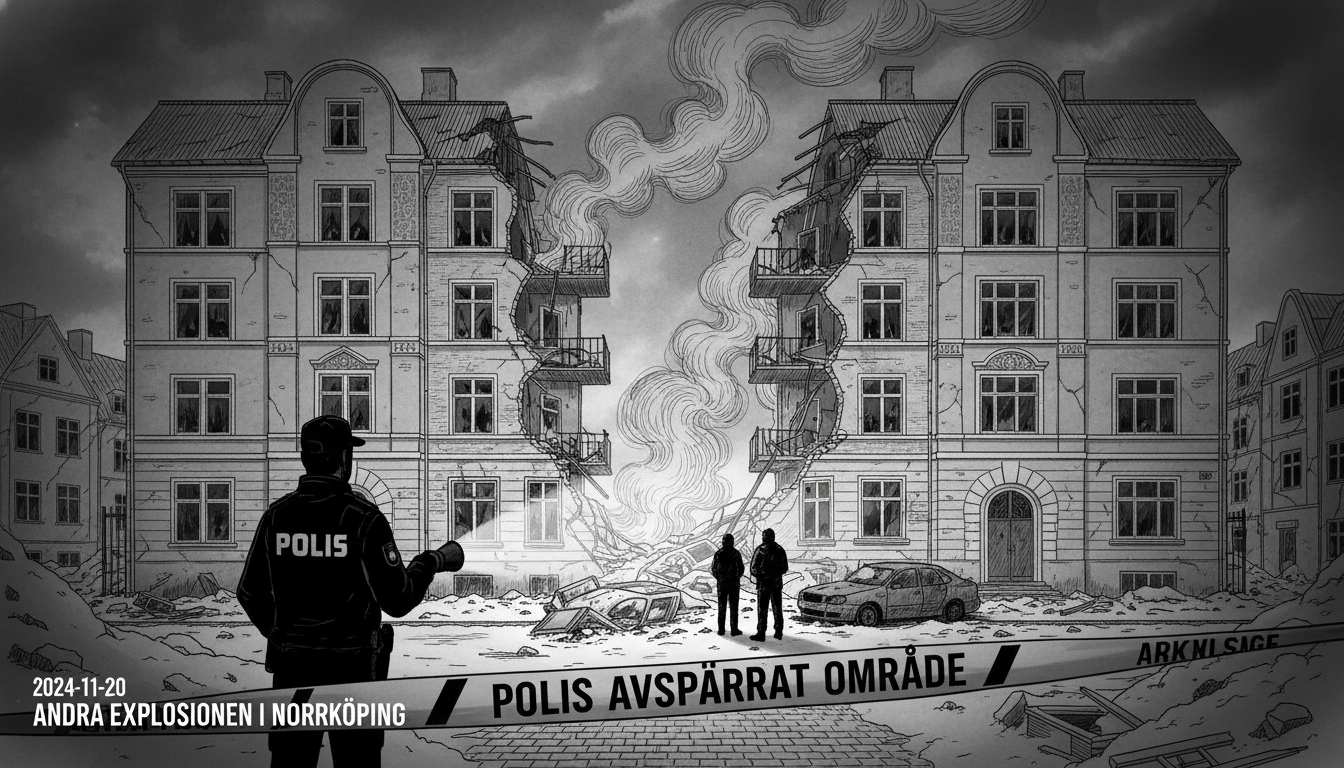
Another powerful explosion has shaken residents in the Swedish city of Norrköping, marking the second such incident within hours. Emergency services received multiple calls reporting a loud blast around 11:05 PM, with witnesses describing a massive bang that echoed through the neighborhood.
Police quickly established a security perimeter around the affected apartment building. The explosion caused substantial damage to the building's entrance and shattered numerous windows. Residents were instructed to remain indoors while investigators examined the scene.
This evening's explosion comes just hours after another blast occurred early Sunday morning around 5 AM. That previous incident caused major damage to another building entrance and sent a man in his seventies to the hospital.
Authorities have classified the case as public destruction and violation of laws concerning flammable and explosive goods. The national bomb protection unit has been dispatched to assist local police. No injuries have been reported from the latest explosion, and investigators currently have no suspects in custody.
These back-to-back explosions in Norrköping raise serious concerns about public safety in Swedish urban areas. Many residents now question the frequency of such dangerous incidents in their communities. The pattern suggests coordinated criminal activity rather than random acts of violence.
Swedish society has been grappling with increasing organized crime in recent years. Explosions targeting residential buildings have become more common in several cities. These incidents often relate to gang conflicts and criminal disputes that spill into residential neighborhoods.
International readers might find this particularly concerning given Sweden's reputation as a safe, orderly society. The reality is more complex, with urban areas experiencing growing challenges with organized crime. These explosions represent the visible manifestation of deeper social issues affecting Swedish communities.
For expats and international residents in Sweden, understanding these societal trends is crucial. While most areas remain safe, certain urban neighborhoods face recurring security challenges. The Swedish approach combines law enforcement responses with social prevention programs, though the effectiveness remains debated among policy experts.
What happens next will depend on police investigations and potential breakthroughs in identifying those responsible. Community members hope for quick arrests to restore a sense of security in their neighborhood. The coming days will reveal whether these explosions were isolated incidents or part of a broader pattern affecting Swedish cities.