
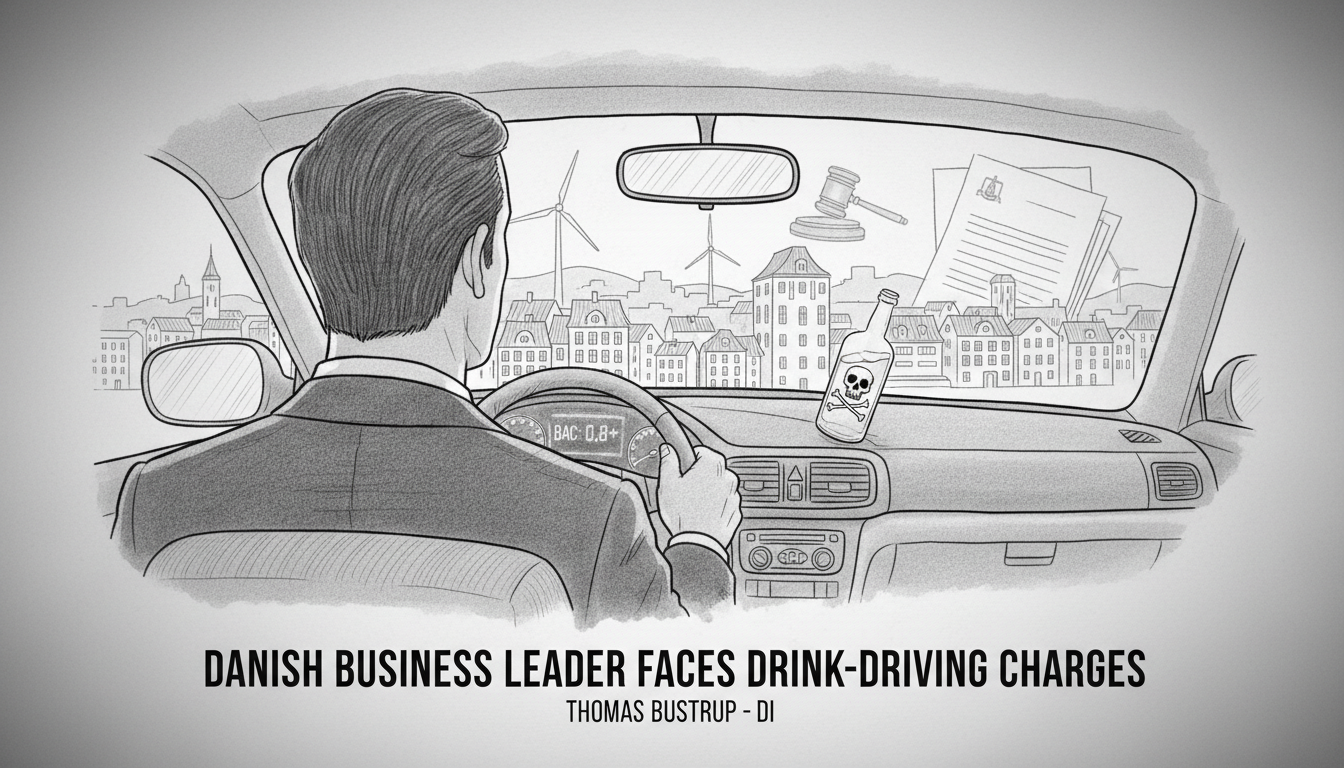
Thomas Bustrup, the Deputy Director General of the Confederation of Danish Industry (DI), has been formally charged with drink-driving. The case will proceed to court on the island of Bornholm in early December. Bustrup has received an official reprimand from his employer, Denmark's most powerful business lobby.
"Words cannot describe how deeply I regret my actions," Bustrup said in a statement. "I naturally and emphatically distance myself from drink-driving. I have therefore taken a number of measures in recent months to ensure the situation is not repeated."
DI's Director General, Lars Sandahl Sørensen, stated he views the matter with the "utmost seriousness." He confirmed Bustrup received the "strongest possible reprimand" and has been assured that necessary steps and precautions are being implemented. Neither executive wished to comment further on the case. DI did not provide specific details about the alleged incident.
This development places a spotlight on corporate governance and personal conduct at the highest levels of Danish commerce. DI represents over 20,000 Danish companies, including major exporters like Vestas, Ørsted, and Maersk. The organization is a central voice on trade policy, labor market rules, and the green transition, frequently advising the government in Copenhagen.
Drink-driving charges for a senior figure in such a pivotal organization are exceptionally rare in Denmark. The country has strict laws and a strong social stigma against driving under the influence. For a business leader whose role involves advocating for regulatory stability and corporate responsibility, the personal lapse carries significant reputational weight. It creates an immediate contradiction between the expected conduct of a representative body and the actions of one of its top two officials.
The timing is also notable. DI is consistently engaged in high-stakes negotiations affecting Danish business news and the Copenhagen trade environment. These discussions cover everything from energy taxation to export promotion for Danish renewable energy firms. While the legal process is personal, the incident inevitably casts a shadow, however temporary, on the organization's public standing. Stakeholders, from member companies in the Øresund region to international partners, expect unimpeachable integrity from those shaping economic policy.
What happens next hinges on the court's ruling in December. The most immediate impact is internal, concerning leadership credibility within the sprawling DI apparatus. For the broader Danish economy today, the incident is a stark reminder that personal accountability remains paramount, even in the corridors of power in Copenhagen's business districts. The organization will likely seek to compartmentalize the issue, but the story has already breached the confines of a private personnel matter.