
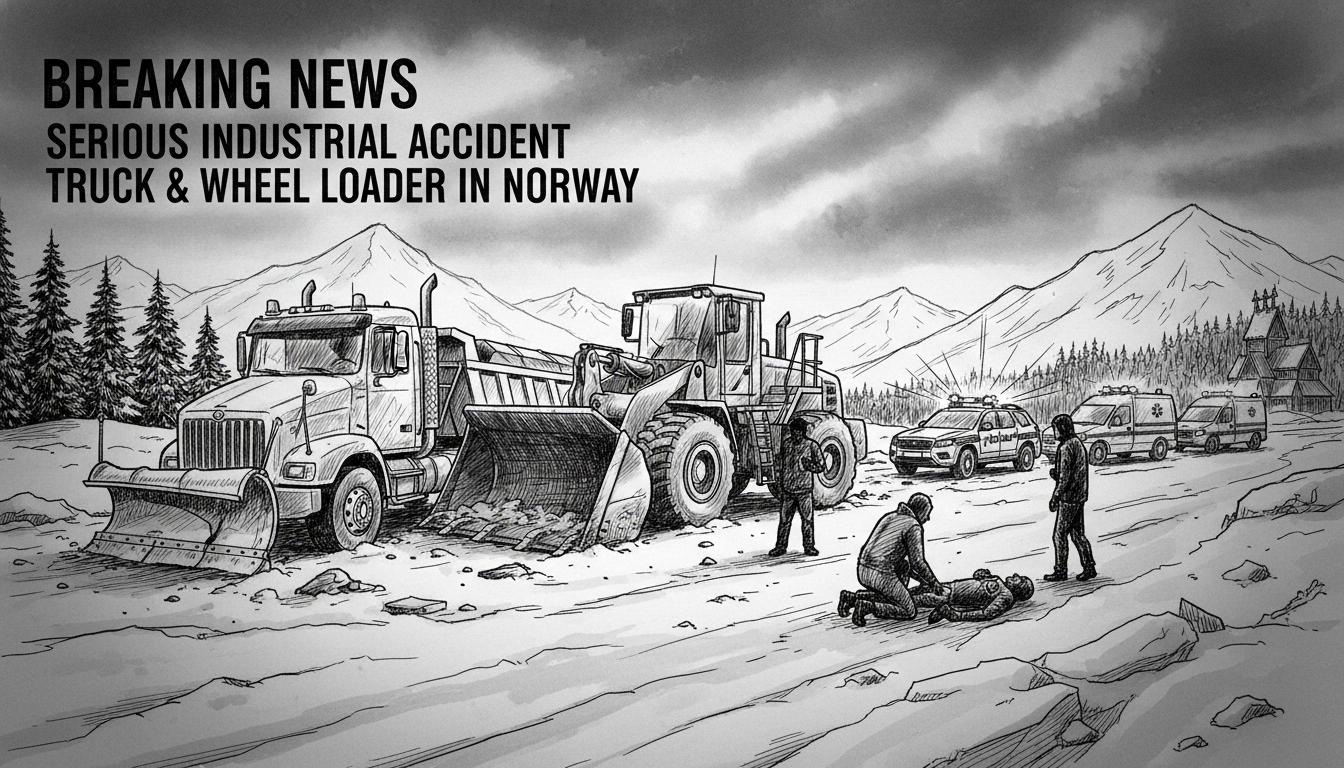
Emergency services responded to a serious industrial accident involving a truck and wheel loader in Norway. The incident required life-saving first aid on site according to operational manager Henrik Larsen. All emergency agencies deployed to the location with air ambulance assistance mobilized. Police confirmed the accident appears serious for the truck driver involved. The wheel loader operator initially reported the incident to authorities around 8:30 AM. Only the two drivers were involved in the accident according to official statements. Operational manager Larsen noted extremely slippery conditions at the scene contributed to the incident.
Industrial accidents in Norway's transportation and construction sectors require immediate response from multiple emergency services. The country maintains strict workplace safety protocols overseen by the Norwegian Labour Inspection Authority. These regulations stem from Norway's commitment to worker protection in hazardous industries. The quick deployment of air ambulance services demonstrates Norway's emergency response capabilities. These services operate across challenging terrain and weather conditions throughout the country.
Norway's industrial safety record generally ranks among Europe's best, but accidents persist in transportation and construction. The country's challenging winter conditions frequently contribute to workplace incidents. Icy roads and slippery surfaces present particular dangers for heavy vehicle operators. These conditions test even experienced drivers operating industrial equipment.
Workplace safety remains a priority in Norwegian policy discussions. The Storting regularly reviews industrial safety regulations and emergency response protocols. Recent parliamentary debates have focused on strengthening protections for transportation workers. These discussions often reference Norway's northern regions where winter conditions persist for months.
The incident highlights ongoing challenges in Norway's industrial sectors despite generally strong safety records. Emergency response coordination between police, medical services, and specialized units like air ambulance demonstrates Norway's comprehensive approach to workplace safety. The country invests substantially in emergency preparedness and response capabilities.
Industrial accidents in Norway typically trigger thorough investigations by multiple authorities. The Norwegian Labour Inspection Authority will likely examine equipment maintenance records and operator training. Police typically investigate potential regulatory violations while health authorities review medical response effectiveness. These parallel investigations aim to prevent similar incidents through improved safety measures.
Norway's approach to industrial safety combines strict regulation with advanced emergency response systems. The country maintains specialized response teams for different types of workplace accidents. This structure ensures appropriate resources deploy quickly to incidents involving heavy machinery, hazardous materials, or remote locations. The system represents decades of refinement in workplace safety protocols.
What does this mean for Norway's industrial safety standards? The incident will likely prompt review of current procedures for operating heavy vehicles in slippery conditions. Norwegian authorities consistently use such accidents to identify potential improvements in safety protocols. The country's methodical approach to workplace safety has produced one of Europe's lowest rates of industrial fatalities.