
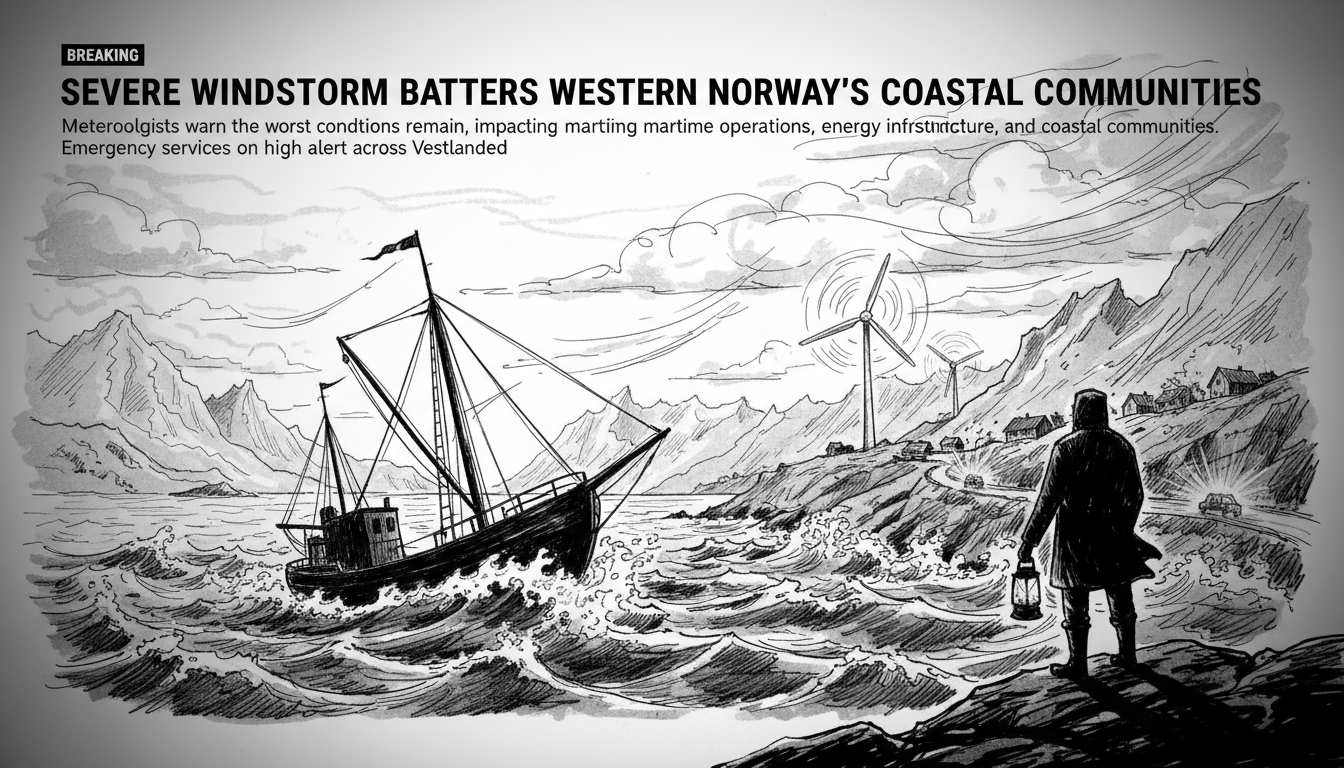
A powerful windstorm continues to pound Norway's Vestlandet region, with meteorologists warning the worst conditions remain ahead. The severe weather system has caused widespread disruption across coastal communities from Bergen to Stavanger. Emergency services remain on high alert as the storm maintains its intensity over the Norwegian Sea.
Western Norway's mountainous terrain amplifies wind speeds through narrow fjords like Sognefjorden and Hardangerfjorden. This geographic phenomenon creates dangerous conditions for maritime traffic and coastal infrastructure. The storm's timing coincides with peak fishing and tourism seasons, compounding economic impacts.
Norwegian authorities have activated emergency response protocols used during previous extreme weather events. The country's robust civil protection system springs into action during such natural disasters. Coastal municipalities maintain specialized teams for storm response and evacuation procedures.
Energy infrastructure faces particular strain during such weather events. Offshore oil installations in the North Sea implement safety protocols when winds exceed operational limits. Norway's petroleum sector maintains strict weather thresholds for worker safety and environmental protection.
Meteorologists note these intense autumn storms have become more frequent in recent decades. Climate researchers point to warming Arctic waters as a contributing factor. The Norwegian government continues investing in climate adaptation measures for vulnerable coastal regions.
What does this mean for international observers? Norway's approach to natural disaster management offers lessons in coordinated emergency response. The country integrates local knowledge with national resources effectively. This storm demonstrates both Norway's vulnerabilities and strengths in facing extreme weather.
The situation highlights Norway's ongoing balancing act between economic development and environmental protection. Coastal communities depend on maritime industries while facing climate change impacts directly. Policy makers must address these competing priorities in national planning.
Emergency management officials urge residents to secure outdoor objects and avoid unnecessary travel. The storm's impact will be assessed across multiple sectors once conditions improve. Norway's response will inform future climate adaptation strategies throughout the Nordic region.