
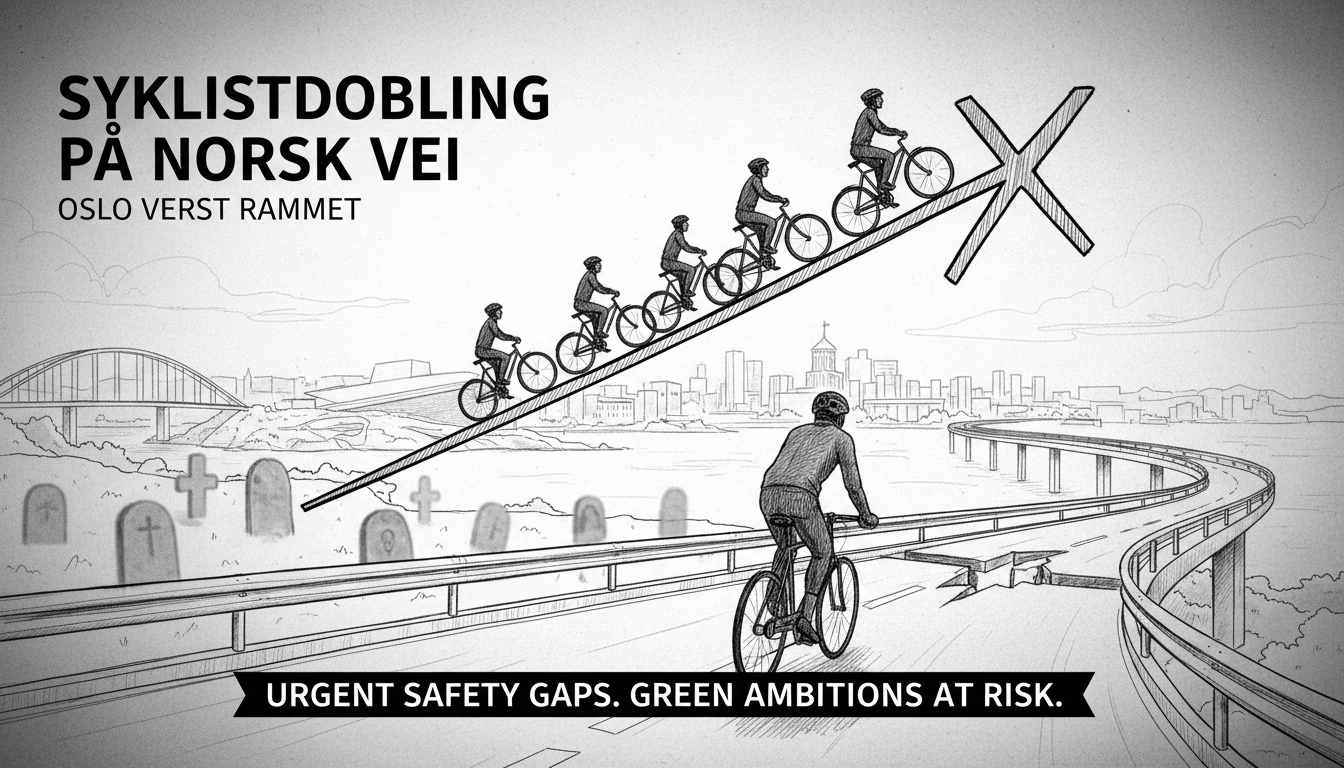
A troubling spike in cyclist deaths is raising urgent questions about road safety priorities in Norway. Preliminary traffic accident figures show ten cyclists have lost their lives on Norwegian roads so far this year. This number is double the figure from the same period last year. Four people died in traffic during November alone, with one of those fatalities being a cyclist. The total number of traffic fatalities in the first eleven months of the year stands at 102, according to official statistics. Oslo has recorded seven road deaths this year, the highest number in the capital in thirteen years. These figures point to a clear and disturbing trend that demands immediate policy attention.
The sharp increase comes despite Norway's long-standing reputation for progressive urban planning and investment in cycling infrastructure. Cities like Oslo and Bergen have actively promoted cycling as a green alternative to cars. The government has implemented car-free zones and expanded bike lane networks. Yet, these latest statistics suggest a dangerous disconnect between infrastructure investment and actual safety outcomes. The data forces a difficult conversation about whether current measures are sufficient. It also questions if the rapid push for more cyclists is outpacing the creation of safe corridors for them.
This issue sits at a complex intersection of transportation, urban development, and public health policy. Norway's transport authorities face the dual challenge of reducing overall car dependency while protecting vulnerable road users. The situation in Oslo is particularly telling. The city's aggressive moves to limit car access in the city center were designed to improve air quality and safety. The rising death toll indicates these policies may have unintended consequences or require complementary safety upgrades. Road design, vehicle speed limits, and driver awareness campaigns all require scrutiny in light of these figures.
For international observers and residents, the trend is a sobering reminder. Nordic countries are often seen as leaders in sustainable urban living. Norway's struggle highlights that the transition to greener cities is fraught with practical risks. The safety of cyclists is a global challenge, but it is magnified in countries with long, dark winters and mixed road conditions. The government must now analyze whether the increase is due to more cyclists on the road, changes in driver behavior, or flaws in road design. Concrete action, not just policy goals, will be needed to reverse this trend and restore confidence in Norway's vision for safe, sustainable transport.