
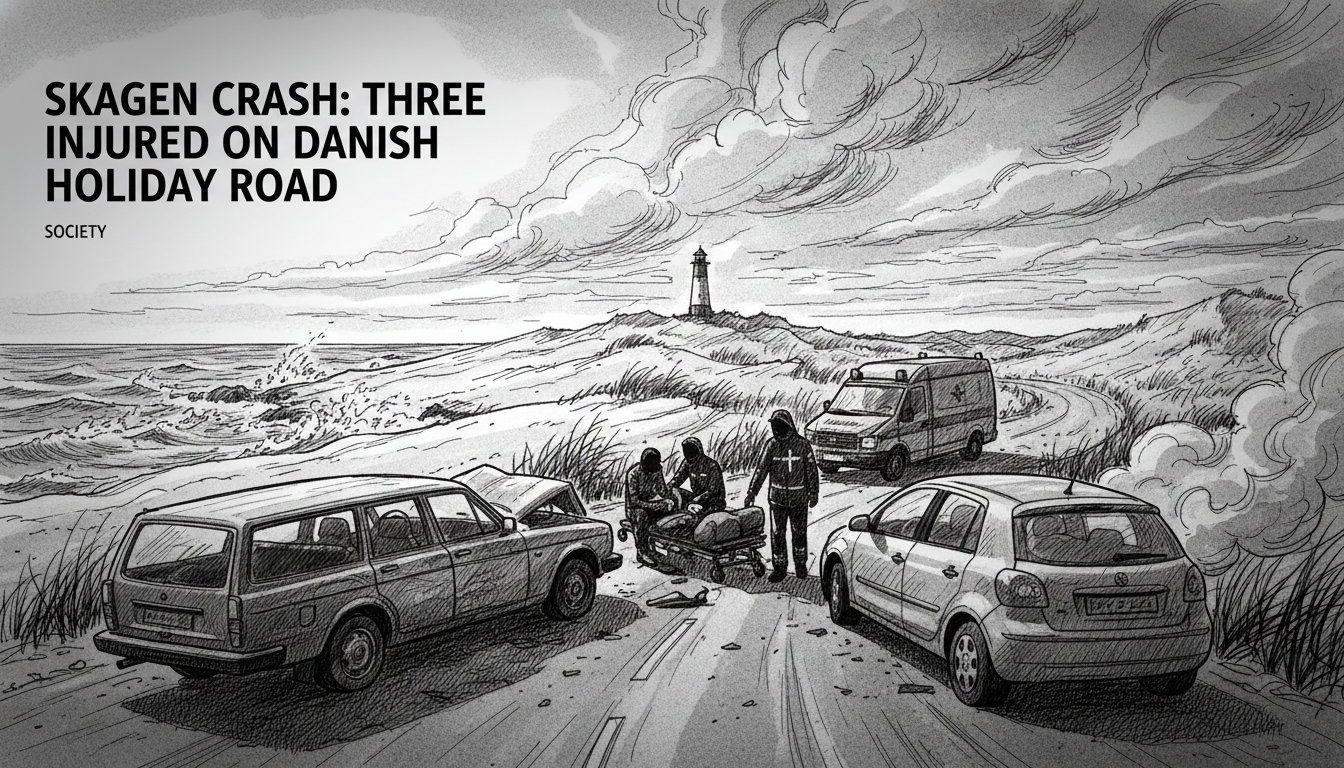
Denmark traffic accident on the key Frederikshavnsvej road in Skagen has left three people injured, with two requiring urgent transport to a major hospital. Emergency services rushed to the scene Monday afternoon after a collision involving two vehicles blocked the northern town's main artery. The incident highlights seasonal safety concerns on roads leading to popular tourist destinations.
Police received the alert at 4:27 PM, prompting a significant emergency response. Two ambulances, escorted by police, transported patients toward Aalborg University Hospital over 60 kilometers away. The distance underscores the seriousness of the injuries and the logistical challenges in Denmark's northernmost region. A police duty manager confirmed the injured were seriously hurt but could not detail their conditions or confirm if lives were at risk.
Traffic was blocked in both directions on Frederikshavnsvej, causing disruption in the picturesque town. The road serves as Skagen's primary connection to the rest of Denmark. A specialized vehicle inspector was dispatched to the site to begin the technical investigation into the crash's cause. Police have not released details about the vehicles involved or potential contributing factors like speed or weather.
The Investigation Begins
Determining the precise cause will be a meticulous process led by the car inspector. These experts examine vehicle mechanics, tire marks, and debris patterns. They also consider driver statements, witness accounts, and road conditions at the time. In Denmark, such investigations aim to establish factual causes for both potential legal proceedings and future prevention strategies. The findings can influence regional traffic safety campaigns, especially in areas with high seasonal traffic fluctuations.
Skagen, with its famous light and beaches, sees its population swell during summer months. Frederikshavnsvej experiences increased traffic from tourists, caravans, and commercial vehicles. This accident occurred in late afternoon, a time when visibility can change and drivers may be tired. Local authorities often increase road safety messaging during peak season, focusing on speed awareness and driver attentiveness.
A Community Responds
For residents of Skagen, incidents like this resonate deeply. The town's relatively isolated location means serious medical emergencies require lengthy transfers to major hospitals in Aalborg. The community relies heavily on this single main road for all essential services and connections. Any major blockage not only represents a tragedy but also isolates the town temporarily, affecting local businesses and daily life.
Danish road safety statistics generally show a positive long-term trend, with fewer serious accidents annually. However, regional roads outside major motorways can present specific risks. Narrower routes, mixed traffic with cyclists, and higher speeds on open stretches are common factors. The Danish Road Directorate continually analyzes accident blackspots, implementing measures like better signage or road modifications.
Broader Context of Danish Road Safety
Denmark has one of the world's lowest traffic mortality rates, a point of national pride tied to its welfare model. This achievement stems from rigorous vehicle standards, strict drink-driving laws, and extensive cycling infrastructure separating bikes from cars. Yet, every serious accident prompts reflection on whether enough is being done. Safety campaigns frequently target young male drivers and the dangers of distraction, particularly mobile phone use.
Summer presents unique challenges. More drivers unfamiliar with local roads navigate holiday areas. Increased recreational vehicle traffic can lead to slower-moving convoys and impatient passing maneuvers. Weather conditions, while generally mild, can include sudden rain showers or glare from the Nordic summer sun, especially in coastal areas like Skagen. Police typically increase patrols on key holiday routes during July and August.
The Human Cost Beyond Statistics
Behind the police bulletins and road closure notices are individuals and families facing sudden crisis. The dispatch of two ambulances with police escorts indicates a prioritization of speed and safety for the patients. Aalborg University Hospital is the major trauma center for Northern Jutland, equipped to handle severe injuries. The nature of the escort suggests concerns about traffic delays affecting critical care timelines.
Such events also strain local emergency resources. Skagen's police and medical responders must manage the immediate scene, provide first aid, and secure the area for investigation. They coordinate with regional centers for patient transfer while managing growing traffic queues. Their work continues long after the road reopens, with paperwork, family liaison, and supporting the technical investigation.
Looking Ahead: Prevention and Awareness
As the investigation proceeds, the focus will shift from immediate response to understanding and prevention. The car inspector's report will be crucial. If a mechanical fault like brake failure is found, it could trigger a vehicle recall. If driver error is a factor, it may reinforce the need for targeted education. Sometimes, road design issues like unclear signage or a dangerous junction are identified, leading to municipal infrastructure projects.
For now, the people of Skagen and the many visitors traveling to enjoy its natural beauty are reminded of the fragility of road safety. The incident on Frederikshavnsvej is a sobering interruption to the summer season. It raises quiet questions about our collective responsibility on the road. Do we adjust our driving enough for unfamiliar routes? Do we factor in fatigue during long holiday journeys? The answers to these questions, reflected in our daily choices, ultimately shape the safety statistics we all share.
The road has likely reopened, the traffic flow restored. But for the three injured individuals and their families, and for the responders who helped them, the effects of Monday afternoon will last much longer. Their experience becomes part of Denmark's ongoing effort to protect every person on every journey, especially on the scenic roads that lead to our summer escapes.