
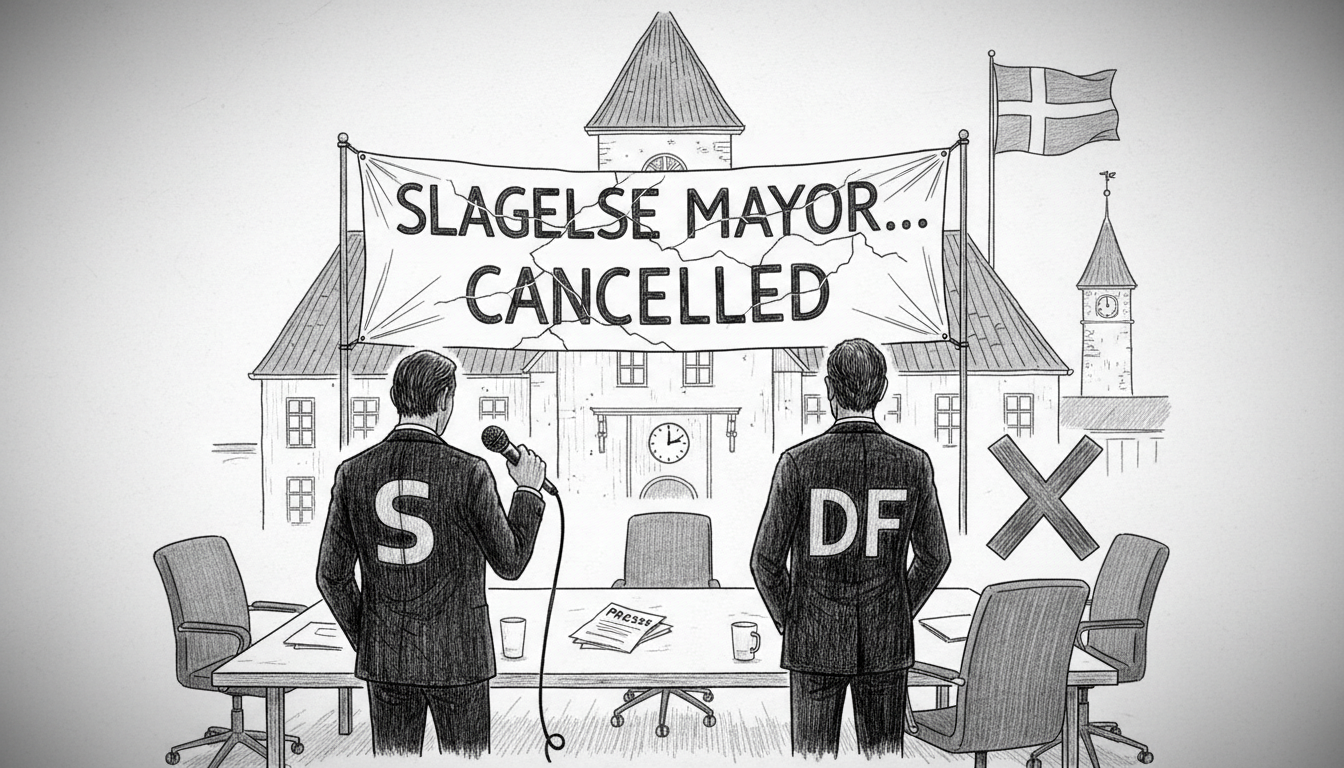
Slagelse remains the final Danish municipality without an appointed mayor for the coming four-year term. Political negotiations have reached another impasse after Sunday's scheduled press conference was abruptly canceled.
Social Democrat lead candidate Britt Hunley withdrew the announcement about presenting a new municipal leadership arrangement. She confirmed the cancellation in a text message to media outlets. The development marks another twist in Slagelse's prolonged political negotiations.
This situation emerged after the Socialist People's Party abandoned the election night agreement on Friday. That original deal would have secured Knud Vincents another four years as mayor. By Saturday, five parties appeared to reach a new consensus on municipal leadership.
Yet the agreement collapsed before formal announcement. The Danish People's Party reportedly failed to attend crucial negotiations. Multiple sources confirmed Henrik Brodersen from the Danish People's Party did not appear for scheduled talks.
Hunley stated directly, "Henrik Brodersen from the Danish People's Party did not show up. That is his decision." This absence proved decisive. Without the Danish People's Party's participation, the remaining parties can only gather 13 mandates, falling short of a majority.
This pattern of broken agreements reflects Danish municipal politics tradition. Similar situations occurred this year in Slagelse, Sorø, and Ringkøbing-Skjern municipalities. In each case, political figures abandoned previous commitments to support alternative candidates.
Danish municipal governance operates through coalition-building after local elections. Parties must secure majority support within the council to install a mayor. The process often involves delicate negotiations and sometimes last-minute changes.
Slagelse's political deadlock leaves the municipality in administrative limbo. Municipal services continue operating under existing arrangements, but long-term planning and major decisions await permanent leadership.
International observers might find Danish municipal politics surprisingly volatile despite the country's reputation for political stability. Local agreements frequently unravel as parties recalculate their positions and alliances.
What happens next in Slagelse remains uncertain. Parties could resume negotiations, seek new coalition partners, or potentially trigger new elections if no workable majority emerges. The situation demonstrates how local political dynamics can defy national trends and expectations.
The prolonged uncertainty affects municipal administration and citizen confidence. Residents await clarity about who will lead local government and implement election promises. The delay also impacts municipal employees who require clear direction from leadership.
Danish political experts note such situations test the resilience of local democracy. They show how personal decisions by individual politicians can override party discipline and reshape local governance outcomes.